Tokyo National Museum: A Visitor Guide for Families

Quick answer
- The Tokyo National Museum in Ueno Park is Japan's oldest museum and holds the largest collection of Japanese art, from samurai armour to Buddhist statues.
- Tickets. Adults pay ¥1,000 and university students ¥500.
- Hours. The museum is open 9:30 to 17:00, and until 20:00 on Fridays and Saturdays, with last entry 30 minutes before closing.
Is the Tokyo National Museum Worth Visiting?
Yes, if you want to see real samurai armour, swords and Buddhist statues in one place. The Tokyo National Museum, founded in 1872, is the oldest museum in Japan and has the country's largest collection of Japanese art, including many National Treasures.
It stands at the north end of Ueno Park, a few minutes' walk from Ueno Zoo and the science museum, so it fits into a family day in Ueno.
 ONO
I have been, and I recommend it. You see Japan's history in the real objects.
It is also free for children and teenagers, which makes it an easy place to try. If the children tire after an hour, you have lost nothing.
It is not a hands-on museum. Most objects are behind glass, and the rooms are quiet. With young children, choose a few rooms rather than trying to see everything.
Tokyo National Museum Tickets and Prices
Entry to the collection galleries costs ¥1,000 for adults, and children are free. Prices below are for the regular collection (called the TNM Collection Exhibitions) in October 2026.
| Visitor | Price |
|---|---|
| Adults | ¥1,000 |
| University students | ¥500 |
| Under 18, and high, junior high and elementary school students | Free, with proof of age |
| Over 70 | Free, with proof of age |
| Visitors with disabilities, plus one carer | Free, with a disability certificate |
- Bring passports for teenagers, since free entry needs proof of age.
- Special exhibitions are ticketed separately and usually cost more. A special exhibition ticket also gets you into the collection galleries on the same day.
- Buy online to skip the queue. The museum sells collection tickets online through asoview, valid for two months from purchase, and warns that queues at the main gate can be over 30 minutes at busy times.
- Free days in 2026. The collection galleries are free for everyone on 19 May, 21 September and 3 November.
Opening Hours and Closed Days
The museum opens at 9:30 and closes at 17:00, with later evenings at the end of the week.
| Day | Hours |
|---|---|
| Tuesday to Thursday, and Sunday | 9:30 to 17:00 |
| Friday and Saturday | 9:30 to 20:00 |
| Sunday before a Monday holiday | 9:30 to 20:00 |
| Monday | Closed (open on a holiday, then closed the next day) |
- Last entry is 30 minutes before closing.
- Kuroda Memorial Hall closes at 17:00 even on late evenings.
- Year-end closure. The museum closes from 26 to 31 December 2026.
- Special exhibitions can keep different hours. Check the official site before you go.
The quietest time is a weekday morning at opening. Weekends and holidays are busier, especially during a popular special exhibition.
What to See in the Six Buildings
The museum is a group of six buildings around a courtyard, and you cannot see all of them in one visit. Start with the Honkan.

- Honkan (Japanese Gallery). The main building faces the gate. It shows Japanese art in chronological order on one floor and by type on the other, including swords, armour, sculpture, lacquer, ceramics, kimono and ukiyo-e prints. If you only see one building, see this one.
- Heiseikan. This building holds Japanese archaeology, including the haniwa clay figures and dogu figurines, and most of the big special exhibitions.
- Toyokan (Asian Gallery). It shows art from China, Korea, Southeast Asia, India and Egypt, including an Egyptian mummy.
- Gallery of Horyuji Treasures. A quiet modern building holds treasures given by Horyuji Temple in Nara, many from the 7th and 8th centuries.
- Hyokeikan. This domed building from 1909 is worth a photo from outside.
- Kuroda Memorial Hall. The hall, just outside the main grounds, shows paintings by Kuroda Seiki.
Displays rotate, because paper and textiles cannot be shown for long, so the exact objects change through the year.
Highlights Children Enjoy
Children usually enjoy the things that look like stories, such as warriors, gods and strange figures. Aim for these rooms.
Samurai swords and armour
The Honkan has rooms for swords and for arms and armour. Full suits of armour, with helmets and face masks, are the favourite of most children.
Ask them which warrior they would want to be.

Buddhist statues
The sculpture galleries hold statues of the Buddha and the guardian kings, some carved over a thousand years ago. These are sacred figures, so explain to children that people still pray to images like these in temples.
Ask them to find the calm faces and the fierce ones.

Clay figures in the Heiseikan
The haniwa, clay figures of warriors, horses and houses placed on ancient tombs, and the older dogu figurines, are some of the oldest things in the museum. Their simple faces appeal to young children.
Folding screens and ukiyo-e
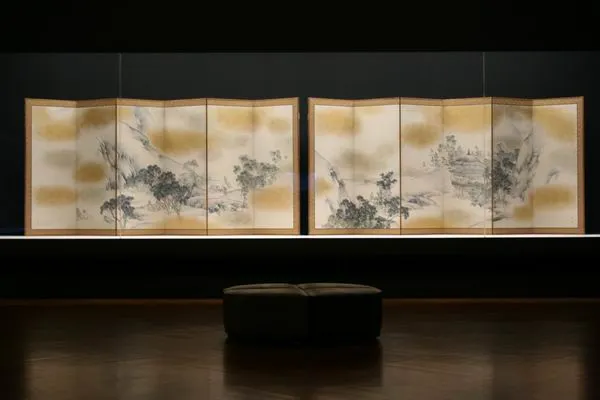
Painted folding screens and woodblock prints suit older children who like drawing. Look for animals and waves.
Visiting the Tokyo National Museum with Kids
A two-hour visit works for most families, with an hour in the Honkan, a break, then one more building.
Strollers. The museum lends strollers at the Honkan information counter, and every exhibition building has lifts or ramps. All floors are accessible except the teahouses in the garden.
When it is very crowded, the museum may ask you not to use a stroller in the galleries, so bring a carrier as well.
Baby changing. The toilets in the Honkan, Heiseikan, Toyokan, Gallery of Horyuji Treasures, Main Gate Plaza and Kuroda Memorial Hall have baby beds.
Lockers. Each exhibition building has lockers for bags. Suitcases are not allowed anywhere on the museum grounds, so leave them at your hotel or in a station locker.
Food. Eating and drinking are not allowed in the galleries, but there are a restaurant and cafés on the grounds.
Photos. Photos are allowed in the collection galleries with a hand-held camera or phone. Flash, tripods, monopods and selfie sticks are not allowed, and you cannot photograph works marked with a no-photography sign.
Photography is generally not allowed in special exhibitions.
Keep it short. Let the children choose what to look at, and leave while they are still interested. Ueno Park outside has space to run, and Ueno Zoo is next door.
How to Get to the Tokyo National Museum
The museum is at the north end of Ueno Park, at Ueno Park 13-9.
| From | Line | On foot |
|---|---|---|
| Ueno or Uguisudani Station | JR | About 10 min |
| Ueno Station | Tokyo Metro Ginza and Hibiya lines | About 15 min |
| Nezu Station | Tokyo Metro Chiyoda Line | About 15 min |
| Keisei Ueno Station | Keisei Line | About 15 min |
From JR Ueno, walk straight through the park past the fountain to the main gate. From Asakusa, the Ginza Line reaches Ueno in about 5 minutes.
A Family Day in Ueno
Ueno has enough for a full day with children, all within the park.
- Morning. Visit the Tokyo National Museum at opening, when it is quietest.
- Lunch. Eat in the park, or in the department stores by the station.
- Afternoon. Go to Ueno Zoo, free for primary-school children and younger, or see the dinosaurs at the National Museum of Nature and Science.
- Late afternoon. Walk down Ameyoko, the market street under the railway.
For more on the park, see our Ueno Park guide. For ideas across the city, see things to do in Tokyo with kids.
If you would like a day like this planned around your children's ages, naps and lunch, that is what our private Tokyo tour with kids is for. For a day built entirely around museums, ask about a custom tour, or browse our tours in Tokyo.
Frequently Asked Questions
- How much is the Tokyo National Museum?
-
Adults pay ¥1,000 and university students ¥500 for the collection galleries. Visitors under 18 and over 70 enter free with proof of age. Special exhibitions are ticketed separately.
- Is the Tokyo National Museum free for children?
-
Yes. Visitors under 18, including elementary, junior high and high school students, enter the collection galleries free. Bring a passport or other proof of age for teenagers.
- What day is the Tokyo National Museum closed?
-
It is closed on Mondays. If Monday is a national holiday, the museum opens that day and closes on the Tuesday instead. It is also closed from 26 to 31 December 2026.
- How long do you need at the Tokyo National Museum?
-
Two hours covers the Honkan and one more building. Allow half a day to add a special exhibition or the Gallery of Horyuji Treasures.
- Can you take photos in the Tokyo National Museum?
-
Yes, in most of the collection galleries, with a hand-held camera or phone and no flash. Tripods and selfie sticks are not allowed, and photography is generally not allowed in special exhibitions.
- Can I bring a stroller or a suitcase?
-
Strollers are fine and can be borrowed at the Honkan information counter, though the museum may limit them when crowded. Suitcases are not allowed anywhere on the grounds.
Tokyo National Museum
Address
13-9 Uenokoen, Taito City, Tokyo 110-8712
Nearest station
Ueno Station (Shinkansen / Keihin-Tohoku / Yamanote / Utsunomiya / Ueno-Tokyo / Takasaki / Jyoban / Ginza)
Sources
https://www.tnm.jp/modules/r_free_page/index.php?id=113&lang=en
https://www.tnm.jp/modules/r_free_page/index.php?id=128
https://www.tnm.jp/modules/r_free_page/index.php?id=127
https://www.tnm.jp/?lang=en
Plan a Private Day with a Local

Every tour is private, for your group only, and planned with you before you arrive. From US$550 per group for a day on foot in Tokyo or Yokohama, or from US$890 for a day trip by train to Kamakura, Hakone or Mt. Fuji. Travelling with children? See our Tokyo private tour with kids.
Free Consultation

Japan Trails Newsletter
Free Newsletter Sign‑Up
Subscribe to our newsletter and receive a handpicked list of restaurants that Japanese locals go to.
-
 Tokyo Station Marunouchi Building: Red-Brick History, Domes and Photo Spots
-
 Things to Do in Ueno, Tokyo: A Family Guide
You might also like
-
 Kaneiji Temple, Ueno: A Visitor's Guide
-
 Ameyoko Market, Tokyo: A Guide for First-Time Visitors
-
 National Museum of Nature and Science, Ueno (Tokyo): Visitor Guide with Kids
-
 National Museum of Western Art, Tokyo: A Visitor's Guide
-
 Yanaka and Nezu, Tokyo: A Walking Guide to the Old Town
-
 Ueno Zoo Tokyo: A Family Guide for 2026
-
 Kappabashi Street: Tokyo's Kitchen Town, with Kids
-
Things to Do in Ueno, Tokyo: A Family Guide