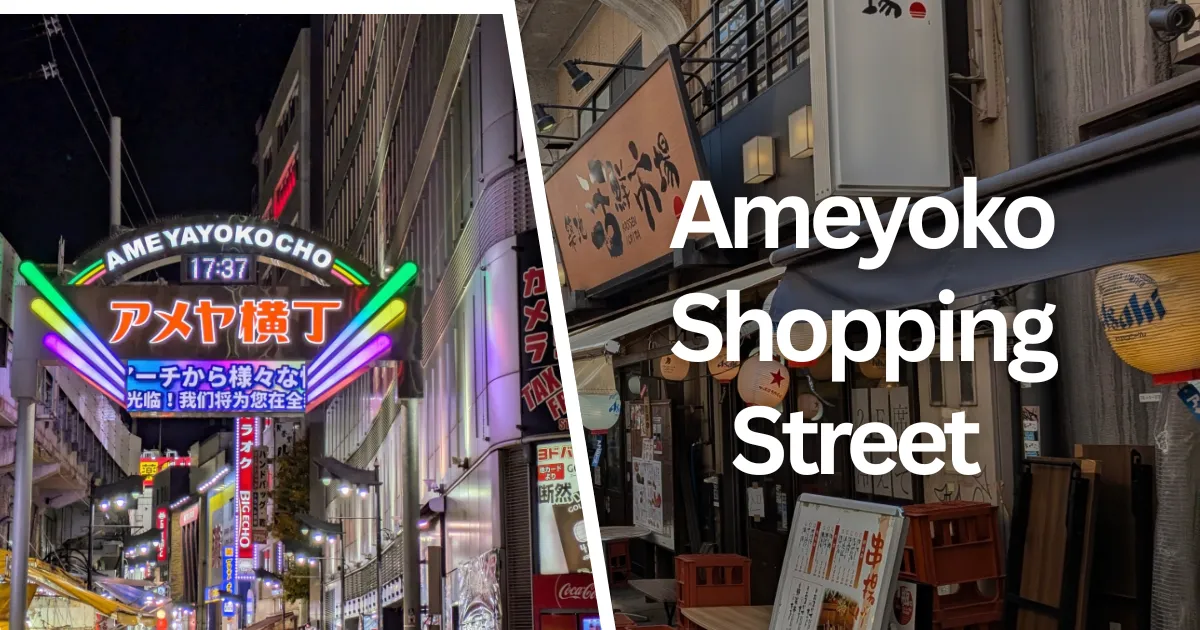
Ameyoko Shopping Street Tokyo Complete Guide
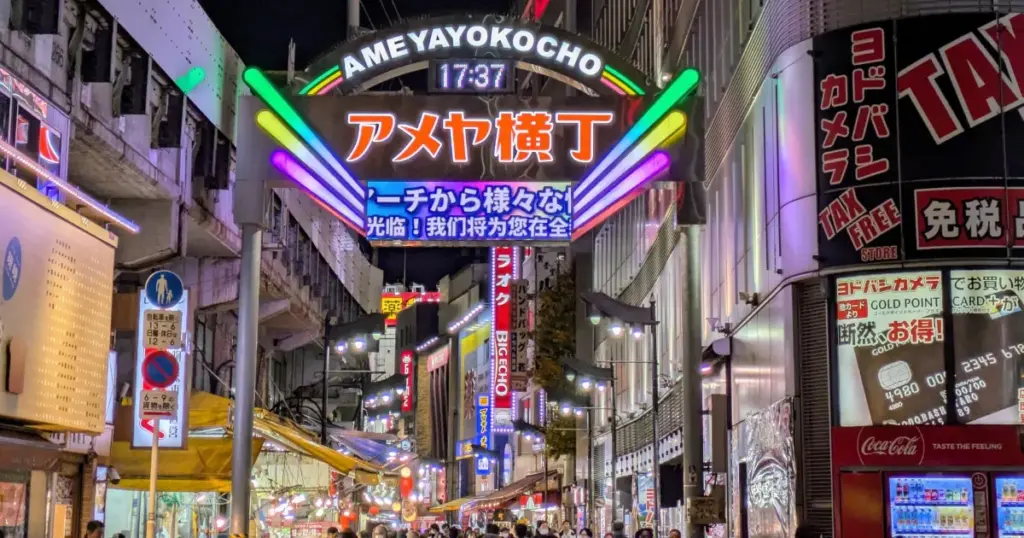
Ameyoko Shopping Street (officially Ameya Yokocho) stands as Tokyo’s most vibrant open-air market, stretching 500 meters between JR Ueno Station and Okachimachi Station.
Born from post-World War II black markets in 1945, this historic shopping district has evolved into a bargain hunter’s paradise featuring over 400 shops selling everything from fresh seafood and street food to fashion, cosmetics, and souvenirs.
With its energetic vendors, affordable prices, and authentic downtown Tokyo atmosphere, Ameyoko offers international travelers an unforgettable shopping experience just minutes from Ueno Park.
Ameyoko History
Ameyoko Shopping Street history begins in the chaotic aftermath of World War II when desperate Tokyo residents created black markets to survive food shortages and rationing systems.
The name “Ameyoko” derives from two sources: “Ameya Yokocho” (Candy Store Alley) referencing the hundreds of sweet shops that emerged in 1945-1947, and “America Yokocho” (America Alley) reflecting the flood of American military goods sold after 1950.
Today’s bustling marketplace preserves the energetic spirit of those difficult times while offering modern shopping convenience and cultural diversity.
The Birth of Black Markets: Tokyo’s Post-War Survival Strategy (1945-1946)
Following Japan’s surrender in August 1945, Tokyo lay devastated by air raids with collapsed government food distribution systems, leading to the emergence of approximately 45,000 black market stalls across the city.
The area beneath the Yamanote Line railway tracks between Ueno and Okachimachi stations became Tokyo’s largest black market, later known as Ameyoko, where vendors sold rice, vegetables, American military supplies, and candy, taking advantage of the location’s proximity to major railway stations.
Though illegal and partly controlled by yakuza organizations who established territorial boundaries, these black markets proved essential for Tokyo’s survival and economic recovery during the post-war period.
The Candy Boom and Name Origins: Ameya Yokocho Era (1946-1950)
During 1946-1947, severe sugar shortages created massive demand for sweets, particularly in the Tohoku region, leading Ueno’s black market dealers to specialize in selling candy to travelers at Ueno Station, with merchants from northeastern Japan buying wholesale and reselling at three to four times the markup back home.
The concentration of hundreds of candy shops inspired the nickname “Ameya Yokocho” (Candy Store Alley), and in 1946 the Tokyo municipal government began legalizing operations by constructing buildings to house the businesses, marking the transition from illegal black market to semi-regulated marketplace.
In 1949, merchants—many of them repatriated Japanese soldiers from mainland Asia—established the Ameyoko Merchants Association, which continues to operate today, coordinating market activities and preserving the area’s unique character against modernization pressures.
American Goods Influx and Dual Identity: America Yokocho (1950-1960)
The Korean War’s outbreak in June 1950 sparked Japan’s economic recovery and flooded Tokyo markets with contraband American goods, leading shops near Okachimachi Station to specialize in U.S. merchandise like Hershey’s chocolate, Zippo lighters, Ray-Ban sunglasses, and military items, earning the area the nickname “America Yokocho” (America Alley).
This American goods district gradually merged with the neighboring candy alley, creating a unified marketplace called “Ameyoko”—a name reflecting both its “Ameya” (candy) and “America” origins.
Throughout the 1950s-1960s, Ameyoko demonstrated remarkable adaptability by continuously shifting its inventory from candy to canned goods, then to fresh fish, exotic imported foods, and eventually clothing and cosmetics, allowing it to survive economic changes that destroyed other post-war markets.
Ameyoko Today

Ameyoko Shopping Street today features a vibrant mix of traditional market stalls, modern shops, and international cuisine vendors spread across approximately 500 meters.
The district divides into two main sections: an open-air market along Ameyoko Street and the covered Ameyoko Plaza directly beneath JR railway tracks.
Over 400 shops offer extraordinary product diversity at competitive prices, from ultra-fresh seafood to streetwear fashion, making Ameyoko Tokyo’s most eclectic shopping destination.
Fresh Seafood and Produce: Morning Market Atmosphere
Ameyoko’s long-established seafood vendors like Second Kanekami Sanko Store (since 1945) and fruit sellers such as Tawara Product offer Tokyo’s most affordable fresh products with energetic calls and haggling—a rarity in modern Tokyo’s fixed-price culture.
The market’s theatrical “tatakiuri” selling style, where vendors dramatically slam down boxes while shouting prices to draw crowds, originated in post-war black markets and epitomizes Ameyoko’s distinctive atmosphere.
This combination of affordable pricing, negotiable deals especially at closing time, and showmanship-driven sales techniques continues to delight visitors seeking an authentic taste of old Tokyo commerce.
Fashion, Cosmetics, and Discount Shopping
Ameyoko offers fashion enthusiasts extraordinary bargains with discount clothing, sneakers, designer accessories, and cosmetics priced 30-50% below department stores, while military surplus stores sell authentic American goods reminiscent of the 1950s era, including leather jackets and vintage equipment.
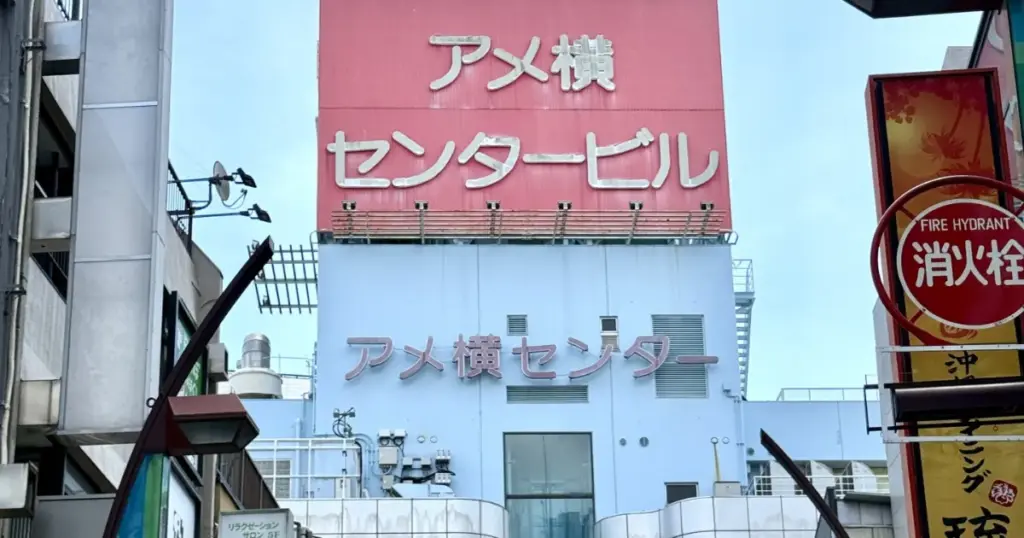
The Ameyoko Center Building’s third floor houses specialty shops like camera stores, vinyl record shops, and pop fashion boutiques, contributing to the market’s reputation for hidden treasures and unique finds unavailable in mainstream Tokyo districts.
Drugstores throughout Ameyoko attract international tourists with deeply discounted Japanese cosmetics, skincare products, and health supplements, offering tax-free shopping and authentic beauty products at a fraction of department store costs.
Ameyoko Plaza: Covered Shopping Under Train Tracks
Ameyoko Plaza occupies the atmospheric covered space beneath the JR Yamanote Line elevated tracks, featuring small boutiques, international eateries, and specialty food shops, with the constant rumble of passing trains overhead adding to the market’s distinctive character.
The plaza’s maze-like layout with narrow alleys, intersecting passages, neon signs, hanging merchandise, and colorful posters creates visual chaos that contrasts sharply with Tokyo’s typically organized shopping districts.
This slightly chaotic atmosphere represents authentic “shitamachi” (downtown) Tokyo culture, offering an adventure for explorers seeking the old Tokyo experience.
Ameyoko Food Guide
Ameyoko Shopping Street food scene ranks among Tokyo’s most diverse and affordable.
Street food vendors offer Japanese classics like takoyaki (octopus balls), yakitori (grilled chicken skewers), and fresh seafood bowls alongside international specialties including Korean BBQ, kebabs, Chinese dumplings, and Southeast Asian dishes.
The multicultural food landscape reflects Ameyoko’s history as a marketplace where diverse communities traded goods and shared culinary traditions.
Must-Try Street Food and Snacks
| Food Type | Popular Vendors | Price Range | Characteristics |
|---|---|---|---|
| Seafood Bowls | Minatoya Shokuhin | ¥800-¥1,500 | Ultra-fresh tuna, salmon, negitoro |
| Takoyaki | Multiple vendors | ¥300-¥500 | Crispy outside, creamy inside |
| Yakitori | Various stalls | ¥200-¥400 per skewer | Grilled over charcoal |
| Taiyaki | Traditional shops | ¥150-¥300 | Fish-shaped sweet pancakes |
| Karaage | Chicken Man | ¥400-¥700 | Halal-friendly fried chicken |
| Kebabs | International vendors | ¥500-¥800 | Turkish and Middle Eastern |
Minatoya Shokuhin’s seafood bowls, particularly their “Tokumori Don” featuring generous portions of tuna, salmon, negitoro, squid, and salmon roe, represent Ameyoko’s best value proposition with Tsukiji Market-quality freshness at a fraction of sushi restaurant costs.
Takoyaki vendors throughout the market cook octopus-filled batter balls fresh daily, serving them piping hot with bonito flakes, seaweed, and special sauce.
The crispy exterior and creamy interior contrast makes takoyaki a perfect walking snack while exploring Ameyoko’s bustling alleys.
International Cuisine: Korean, Chinese, and Southeast Asian Flavors
Ameyoko’s proximity to Kimchi Yokocho (a Korean market established in 1947) influences its international food scene, with Korean BBQ restaurants, kimchi shops, and butcher stores clustering near Okachimachi, reflecting the area’s multicultural heritage from post-war black market days when Japanese, Korean, Chinese, and Taiwanese merchants traded side-by-side.
Chinese dumpling shops, noodle restaurants, Sichuan eateries, and Southeast Asian vendors offering Thai pad thai, Vietnamese pho, and Indonesian satay create a true international food court atmosphere, allowing visitors to sample multiple cuisines during a single visit.
Establishments like Chicken Man, which specializes in halal-friendly karaage with various sauce options, demonstrate Ameyoko’s welcoming attitude toward Tokyo’s growing international tourist population and accommodation of diverse dietary requirements.
Traditional Japanese Sweets and Confectionery
Despite moving beyond its “Candy Store Alley” origins, Ameyoko maintains excellent traditional Japanese confectionery shops selling dorayaki, mochi, senbei, and seasonal wagashi, while bulk candy stores like Futaki no Kashi offer approximately 7,000 items perfect for souvenir shopping.
Long-established tea shops draw long lines for their matcha soft-serve ice cream, whose rich green tea flavor and creamy texture make it irresistible on warm days.
Black sesame soft-serve represents another unique option, though the dark color stains clothing easily—a practical consideration for parents.
FAQ About Ameyoko Shopping Street Tokyo
Essential visitor questions focus on access routes, best visiting times, shopping tips, and cultural etiquette. These practical details help international travelers maximize their Ameyoko experience.
The following FAQ addresses the most important logistics for first-time visitors.
- How do I get to Ameyoko Shopping Street?
- Scrollable
Departure Point Transportation Time Fare Details JR Ueno Station Walk 1 min Free Exit from Hirokoji Exit or Shinobazu Exit JR Okachimachi Station Walk 1 min Free Exit from North Exit Tokyo Metro Ueno Station Walk 3 min – Exit 5B Tokyo Station JR Yamanote Line + Walk 10 min ¥140 To Ueno Station Shibuya Tokyo Metro Ginza Line + Walk 28 min ¥210 To Ueno Station Shinjuku JR Chuo + Yamanote Line + Walk 25 min ¥210 To Ueno Station - How do I get to Ameyoko Shopping Street?
-
Ameyoko is located immediately outside JR Ueno Station’s Hirokoji Exit or Shinobazu Exit, making it impossible to miss.
Look for the Yodobashi Camera electronics store—Ameyoko’s entrance sits directly across the street.
- What are the opening hours and best times to visit?
- Scrollable
Time Period Characteristics Crowd Level Recommendations Early Morning (9:00-11:00) Fresh seafood arrives Low-Medium Best for seafood shopping Lunch (11:00-14:00) Peak street food sales High Excellent for eating Afternoon (14:00-17:00) Full energy, all shops open High Best overall experience Evening (17:00-19:00) Produce discounts Medium-High Bargain hunting time Late December New Year shopping rush Extremely High Cultural experience but crowded - What are the opening hours and best times to visit?
-
Ameyoko shop hours vary widely, with most operating 10:00 AM to 7:00-8:00 PM, seafood vendors opening as early as 9:00 AM, and restaurants staying open until 10:00 PM or later, as each business sets its own schedule.
Late December is Ameyoko’s busiest period, when hundreds of thousands of shoppers pack the market for traditional New Year’s ingredients, creating an almost festival-like atmosphere.
- Can I negotiate prices at Ameyoko?
-
Price negotiation is acceptable at many Ameyoko vendors, especially for produce, seafood, and fashion, making it one of few Tokyo districts where haggling remains culturally appropriate, with discounts often available for bulk purchases or late-day perishable inventory.
Show genuine interest, ask politely, and respect refusals—traditional market stalls welcome friendly haggling, though restaurants and chain stores typically don’t negotiate.
- Is Ameyoko good for tourists and international visitors?
-
Ameyoko offers international tourists an authentic Japanese shopping experience with a welcoming multicultural atmosphere, basic English-speaking vendors, and visual shopping that transcends language barriers, while providing exceptional value for souvenirs, snacks, cosmetics, and street food unavailable in modern malls.
Its convenient location next to Ueno Park allows easy combination with other Ueno attractions like museums, the zoo, and temples in a single day’s itinerary.
Conclusion of Ameyoko
Ameyoko Shopping Street conclusion emphasizes the market’s unique position as living history, cultural melting pot, and bargain shopping paradise.
The district’s transformation from post-war black market necessity to beloved Tokyo institution demonstrates Japanese resilience and adaptability.
For international visitors to Tokyo, Ameyoko offers authentic downtown Tokyo experiences, unbeatable prices, diverse street food, and fascinating cultural insights unavailable in the city’s polished modern districts.
Japan Trails Newletter

Explore Tokyo with a Local!!

We offer tailored private tours designed for small groups. Prices start from 200 USD per person, and every itinerary can be fully customized.