Senso-ji Temple (Asakusa Temple): The Ultimate Guide

Tokyo is famous for its modern skyline and fast-paced lifestyle, yet Senso-ji Temple offers a deep connection to the city’s ancient spiritual roots.
Located in Asakusa, this historic Buddhist temple attracts millions of visitors every year.
This guide explains not only what to see at Senso-ji, but how to experience it in a meaningful and culturally respectful way.
Senso-ji Temple Overview
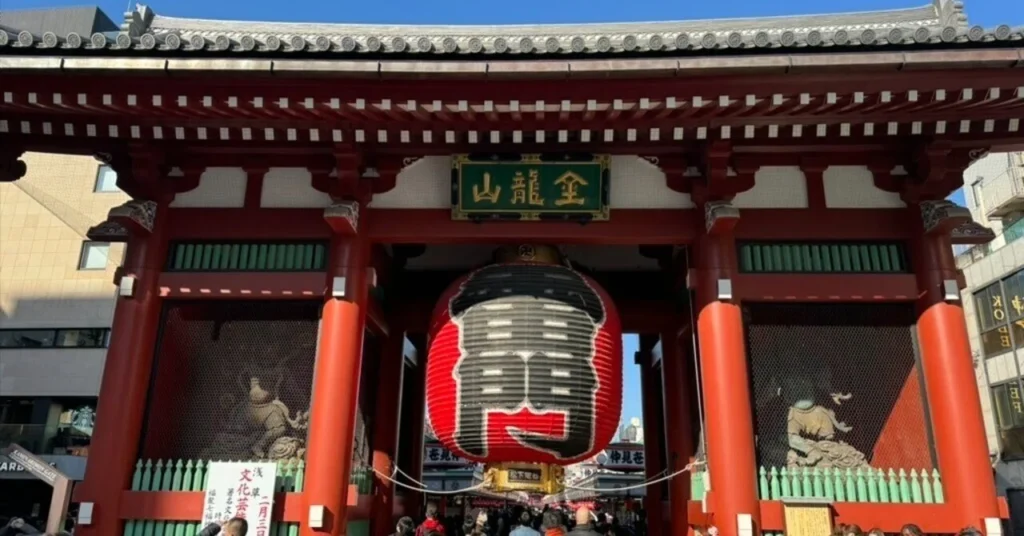
Senso-ji Temple is widely recognized as the oldest Buddhist temple in Tokyo.
Its origins are closely tied to the everyday lives and beliefs of ordinary people rather than political power.
Understanding this background adds depth and meaning to any visit.
The Origins of Senso-ji and the Legend of Kannon
Senso-ji was founded in the year 628, making it the oldest temple in Tokyo.
According to legend, two fishermen discovered a statue of Kannon, the Bodhisattva of Compassion, in the Sumida River.
The statue repeatedly returned to them, leading the local community to enshrine it.
The temple’s principal image of Kannon is a hidden Buddha and has never been publicly displayed.
Senso-ji’s Role in Tokyo’s History
During the Edo period, Asakusa developed as a temple town and entertainment district for common people.
Senso-ji became a place where merchants, artisans, and travelers could freely worship.
This open and inclusive spirit still defines the area today.
Senso-ji symbolizes postwar recovery because it was rebuilt through donations from ordinary citizens after World War II.
Asakusa Access Guide
Senso-ji is one of the most accessible major temples in Tokyo.
Clear transportation options make it easy even for first-time visitors.
Knowing your route in advance helps reduce travel stress.
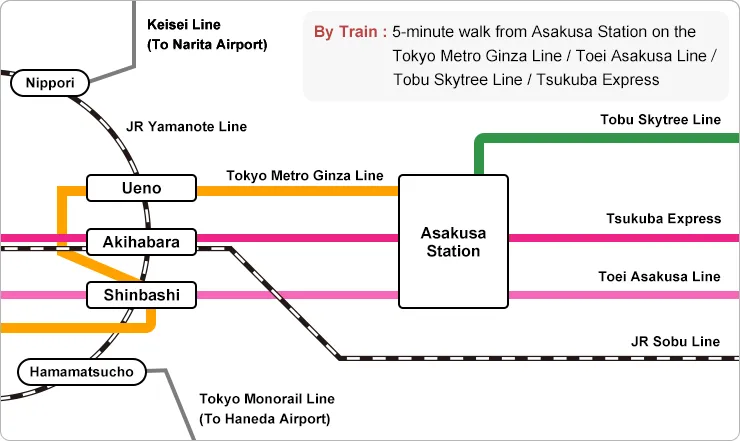
Nearest Stations and Train Lines
Senso-ji is within walking distance of several stations all named “Asakusa.”
Each station is served by a different railway line. All routes are clearly signposted and tourist-friendly.
From any Asakusa Station, it takes about five minutes on foot to reach Kaminarimon Gate.
- Tokyo Metro Ginza Line – Asakusa Station
- Toei Asakusa Line – Asakusa Station
- Tobu Skytree Line – Asakusa Station
Access from Major Areas in Tokyo
Travel times vary slightly depending on transfers, but all routes are straightforward.
Shinjuku offers multiple options depending on time and preference.
Ueno is especially close to Asakusa.
Asakusa is one of the easiest traditional sightseeing areas to reach from central Tokyo.
| Departure Area | Route | Approx. Time |
|---|---|---|
| Shibuya | Ginza Line (direct) | 30 min |
| Shinjuku | JR or subway + transfer | 35–40 min |
| Tokyo Station | JR + Ginza Line | 20 min |
| Ueno | Ginza Line | 5 min |
Kaminarimon Gate & Nakamise Street
The experience of Senso-ji begins before entering the temple grounds.
Walking through Kaminarimon Gate and Nakamise Street gradually shifts visitors into a traditional atmosphere.
This approach is an essential part of the visit.
Kaminarimon Gate: Meaning and Photo Tips
 ONO
ONOKaminarimon is the most beautiful gate in Japan.
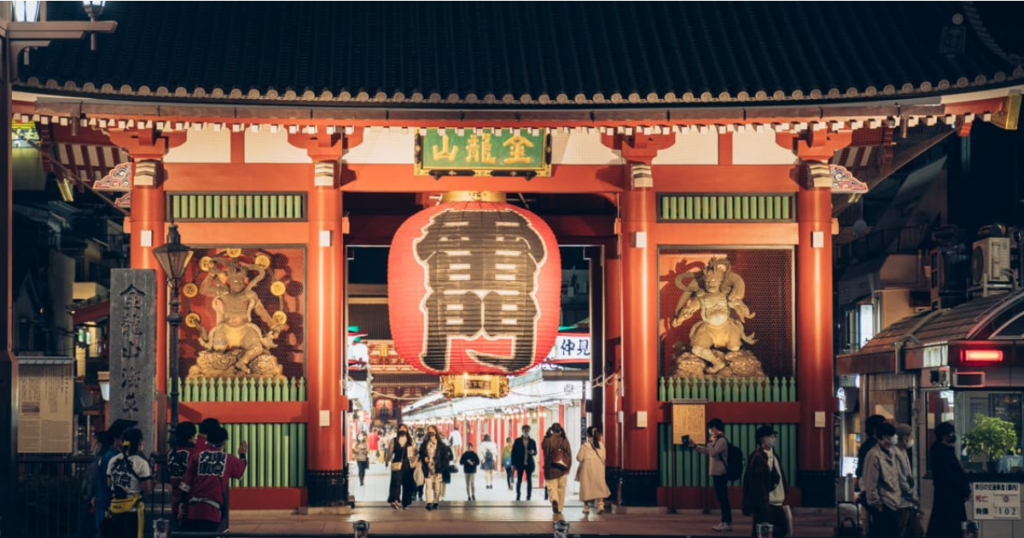
Kaminarimon Gate is one of the most recognizable landmarks in Tokyo.
The giant red lantern represents protection, while the statues of the Thunder God and Wind God guard the entrance.
Early morning is the best time to photograph Kaminarimon without large crowds.
Nakamise Street Shopping Guide
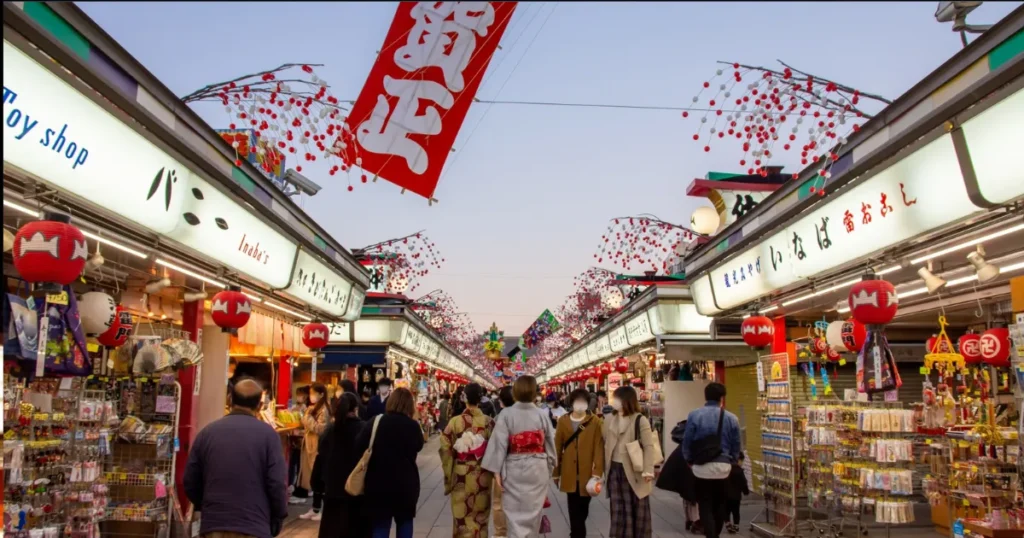
Nakamise Street stretches approximately 250 meters from Kaminarimon to the temple grounds.
The street is lined with traditional snack shops and souvenir stores.
Many of these businesses have been operated by the same families for generations.
Nakamise Street offers one of Tokyo’s best introductions to traditional street food and souvenirs.
Popular items include:
- Ningyo-yaki filled cakes
- Senbei rice crackers
- Folding fans and Japanese-style accessories
Senso-ji Main Hall & Grounds – What to See Inside the Temple
Beyond Nakamise Street, the atmosphere becomes noticeably calmer.
The scent of incense and the sound of prayer create a reflective space.
Understanding the layout helps visitors appreciate the temple’s spiritual function.
The Main Hall (Hondo) Explained
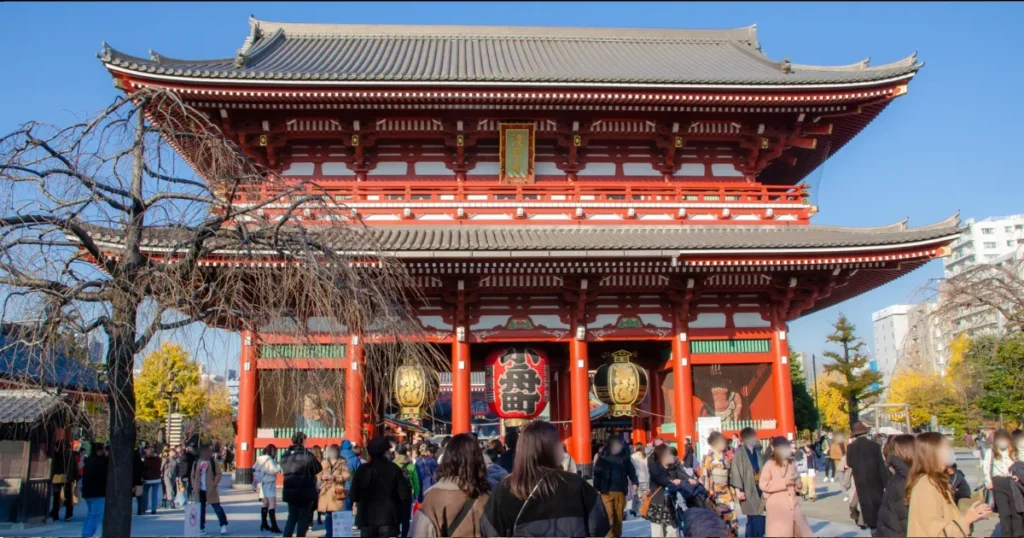
The Main Hall is the spiritual center of Senso-ji, where visitors pray to Kannon.
Before entering, many people gently wave incense smoke over themselves as a symbolic act of purification.
Although the temple grounds are open 24 hours, the Main Hall itself has limited daytime opening hours.
Photography inside the hall is generally restricted, so visitors should follow posted signs.
Five-Story Pagoda and Other Structures
The five-story pagoda represents Buddhist cosmology and balance.
While visitors cannot enter, it remains one of the most iconic visual elements of Senso-ji.
The temple complex combines Buddhist and Shinto elements within a single walkable area.
| Structure | Purpose | Highlight |
|---|---|---|
| Five-Story Pagoda | Symbolic | Architectural design |
| Hozomon Gate | Inner gate | Giant straw sandals |
| Asakusa Shrine | Shinto shrine | Quieter atmosphere |
Senso-ji Temple Etiquette
Many visitors worry about proper manners at Japanese temples.
Senso-ji is welcoming, but basic etiquette improves the experience.
This section explains what first-time visitors should know.
How to Pray at a Buddhist Temple
Prayer at Senso-ji is quiet and personal.
Unlike Shinto shrines, there is no clapping.
The process is simple and respectful.
At Buddhist temples, sincerity matters more than performing rituals perfectly.
Typical steps:
- Light bow
- Coin offering
- Silent prayer
- Final bow
Omikuji and Incense Etiquette
Omikuji fortunes are popular among visitors.
If you receive bad luck, you can tie the paper to designated racks to symbolically leave misfortune behind.
Incense smoke is believed to bring good health and purification.
Best Time to Visit Senso-ji
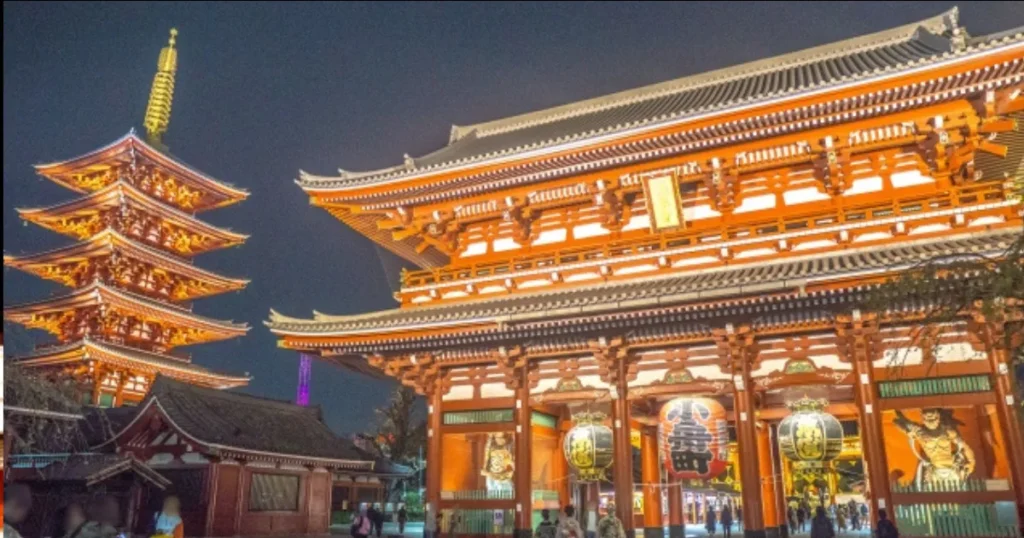
The atmosphere at Senso-ji changes depending on time and season.
Crowd levels, weather, and festivals all influence the experience.
Planning ahead allows for a more enjoyable visit.
Morning vs Evening Visits
Mornings are quiet and ideal for photography.
Evenings offer beautiful lighting and a more relaxed pace.
The busiest hours at Senso-ji are generally between 10:00 AM and 4:00 PM.
- Morning: Calm and uncrowded
- Evening: Atmospheric and cooler
Seasonal Highlights and Festivals
Different seasons bring different highlights to the Asakusa area.
Festivals in particular create a lively contrast to normal days.
Sanja Matsuri, held at nearby Asakusa Shrine, is one of Tokyo’s most famous festivals.
| Season | Experience |
|---|---|
| Spring | Cherry blossoms nearby |
| Summer | Sanja Matsuri |
| Autumn | Mild weather |
| New Year | Hatsumode (first shrine visit) |
Things to Do Around Senso-ji
Asakusa offers much more than just Senso-ji.
Exploring the surrounding neighborhood reveals local food, riverside scenery, and cultural experiences.
Staying longer rewards curious travelers.
Local Food and Traditional Restaurants
Asakusa is known for long-established tempura and soba restaurants.
These places focus on traditional techniques and simple ingredients.
Dining in Asakusa is one of the best ways to experience everyday Tokyo culture.
Nearby Attractions within Walking Distance
ONOIn Asakusa, you can wear a kimono and enjoy a matcha experience!
Several attractions are located just a short walk from the temple. These spots add variety to a Senso-ji visit.
Asakusa is ideal for travelers who enjoy exploring on foot.
- Sumida River riverside walks
- Asakusa Culture Tourist Information Center (free observation deck)
- Kimono rental and rickshaw experiences


FAQ about Senso-ji Temple
- Is Senso-ji free to enter?
-
Yes, entry to the temple grounds is completely free.
- How long should I plan for a visit?
-
Most visitors spend around 60 to 90 minutes at Senso-ji.
- Can you visit Senso-ji at night?
-
Yes, the grounds are open 24 hours, though the Main Hall closes in the evening.
- Is Senso-ji suitable for children?
-
Yes, Senso-ji is family-friendly and easy to walk with children.
Why Senso-ji Should Be on Your Tokyo Itinerary
Senso-ji offers a rare balance of history, spirituality, and everyday city life.
Its accessibility and cultural depth make it an ideal destination for first-time visitors.
Visiting Senso-ji is not just sightseeing, but an essential introduction to Japanese culture.
Japan Trails Newletter