Setsubun in Japan: Bean Throwing, Ehomaki and Where to See It

Quick answer
- Setsubun 2027 is on Wednesday 3 February, the day before the first day of spring in the old calendar.
- Families throw roasted soybeans shouting "Oni wa soto, fuku wa uchi" and eat an ehomaki roll facing north-northwest.
- Do not give whole roasted beans to children aged five and under.
What Is Setsubun, and When Is It in 2027?
Setsubun is the day before risshun, the first day of spring in the traditional Japanese calendar, and in 2027 it falls on Wednesday 3 February. The National Astronomical Observatory of Japan, which publishes the official calendar, lists risshun on 4 February 2027 and Setsubun on 3 February.
The word means "seasonal division". There are four of them in a year, but only the one before spring is still celebrated. In the old calendar, spring also marked the start of the new year, so Setsubun became the night to clear out the bad luck of the old year before the new one began.
It is not a public holiday. Schools, offices and shops run as normal, and most of the action happens in the evening at home or during the day at shrines and temples.
For a visiting family, that means you can carry on sightseeing and still join in. Buy a bag of beans and an ehomaki roll at a convenience store, or stand in the crowd at a temple bean throwing.
The date moves slightly with the sun. It was 2 February in 2025 and 3 February in 2026, so always check the year you travel.
How Mamemaki Bean Throwing Works
Mamemaki, "scattering beans", is the heart of Setsubun. Someone throws roasted soybeans at a demon, real or imagined, while everyone shouts "Oni wa soto! Fuku wa uchi!", "Demons out!
Good luck in!" The demons stand for illness, accidents and bad luck in the year ahead.

At home, it usually goes like this.
- Buy roasted soybeans (fukumame, "lucky beans"). Supermarkets and convenience stores sell them in late January, often with a paper oni mask in the bag.
- One person wears the mask. Often it is a parent, and the children chase the oni out of the house.
- Throw beans out of the door and windows shouting "Oni wa soto", then inside shouting "Fuku wa uchi", and close the doors so the luck stays in.
- Pick up the beans and eat them.
Roasted beans are used because raw beans scattered on the floor could sprout, which was thought to let the bad luck take root. There is also a pun, because mame (bean) can be read as "destroying the demon", and as a word for being healthy and hard-working.
Many families now throw individually wrapped packets of beans, or peanuts in their shells, so they are easy to pick up and still clean to eat. In some areas, peanuts are the normal choice.
Eating Beans for Your Age, and a Safety Note for Small Children
After the throwing, each person eats one bean for each year of their age, and in many families one extra for the year to come. It is a small wish for good health.
This is where families with young children need to be careful. Japan's Consumer Affairs Agency asks parents not to give hard beans or nuts to children aged 5 years and under.
Small children cannot yet grind them properly, and a bean that goes down the wrong way can block the airway or cause pneumonia. The agency suggests using wrapped packets for the throwing, clearing up every bean afterwards so toddlers do not pick them up from the floor, and watching that older brothers and sisters do not share theirs.
Young children can still take part fully. They can throw, chase the oni and wear the mask. For the eating part, give them something soft instead.
The Ehomaki Lucky Sushi Roll and the 2027 Direction
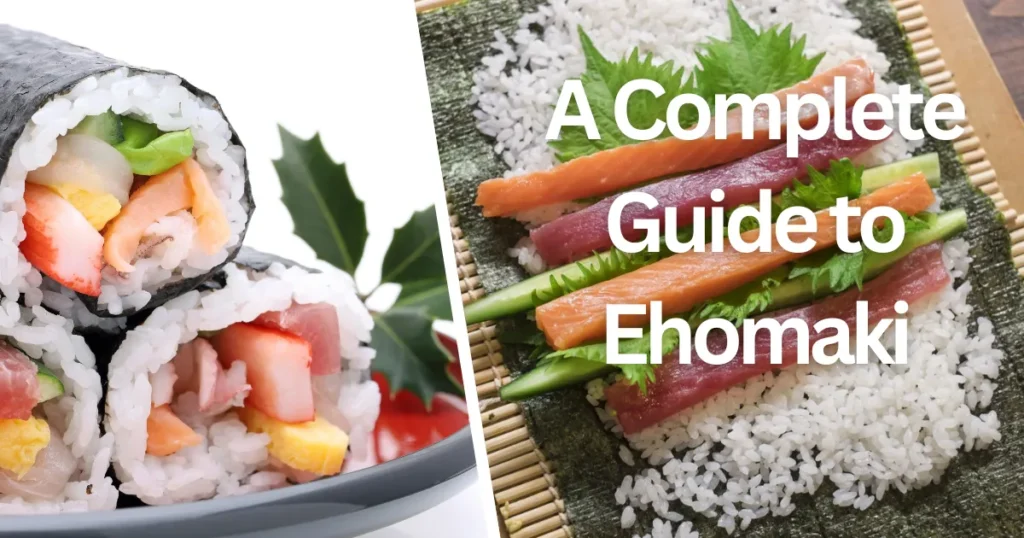
Ehomaki is a thick, uncut sushi roll eaten on the evening of Setsubun while facing the year's lucky direction, in silence, from one end to the other. In 2027 that direction is north-northwest.
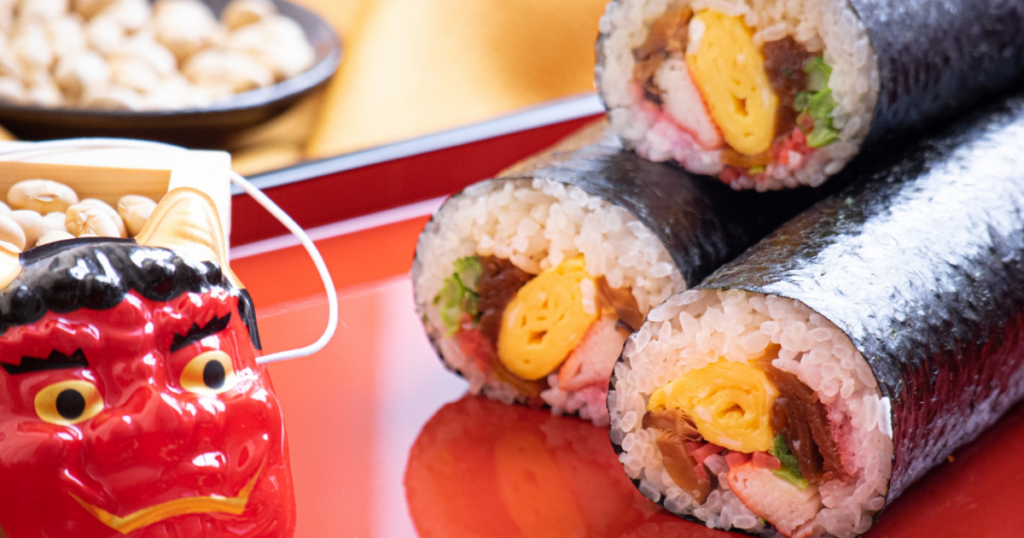
The custom began in the Osaka area and spread across Japan from the late 20th century, largely through convenience stores. Today it is one of the biggest food events of the year.
From mid-January, every convenience store, supermarket and department store food hall has posters for its rolls, many taking orders in advance.
What Makes It Different from Ordinary Sushi
An ehomaki looks like futomaki, the thick roll that is sliced and shared, but it is eaten whole. Cutting it is said to cut the good luck.
Traditionally it has seven fillings, linked to the Seven Lucky Gods, such as simmered gourd (kanpyo), shiitake mushroom, rolled omelette, cucumber, eel and sweet pink fish flakes. Modern rolls range from seafood and beef to vegetarian and even dessert versions.
The 2027 Lucky Direction Is North-Northwest
The lucky direction, eho, is where the god of good fortune for the year is said to live. It follows a fixed calendar cycle, so it repeats.
| Year | Lucky direction |
|---|---|
| 2025 | West-southwest |
| 2026 | South-southeast |
| 2027 | North-northwest (slightly north) |
| 2028 | South-southeast |
Use the compass on your phone. Most shops also print the direction on the packaging. If your app gives degrees, 2027's direction is about 345 degrees.
How to Eat It
- Face north-northwest.
- Make a wish.
- Eat the whole roll without talking, so the luck does not escape.
Nobody will scold a visitor who laughs halfway through. For children, many shops sell half-length or thin rolls, which are far more realistic than a full one, and you can cut a child's roll if you prefer.
The custom is a wish, not a rule.
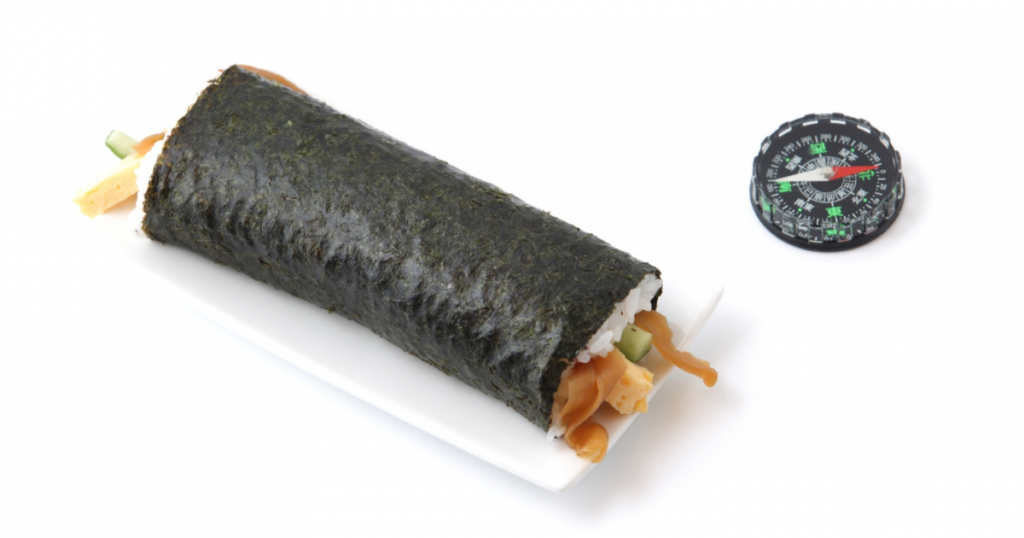
Where to Buy Ehomaki
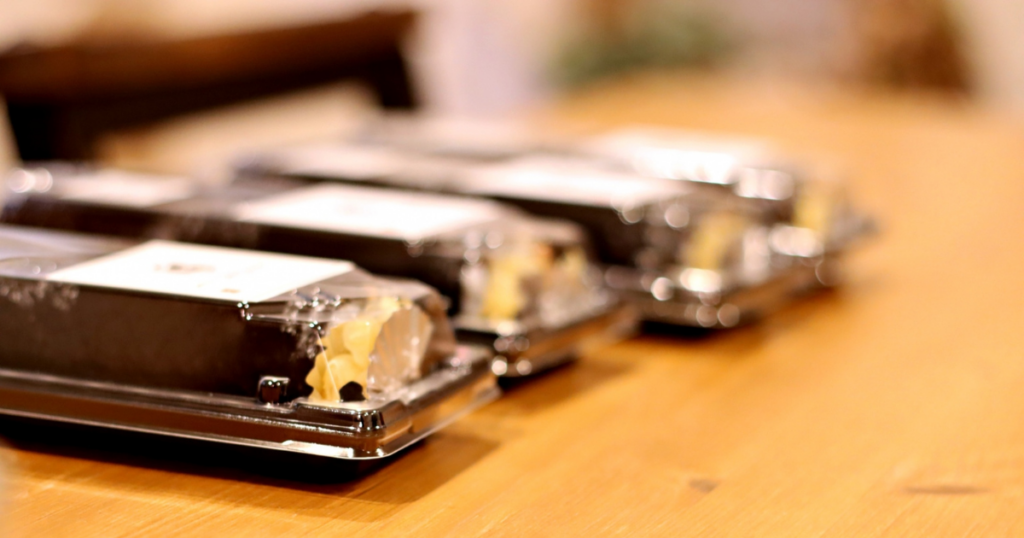
Convenience stores, supermarkets, department store food halls and local sushi shops all sell them on 2 and 3 February. Popular rolls sell out by the evening, so buy at lunchtime or order ahead at a convenience store.
Eating one in your hotel room, facing the right way, is one of the easiest Japanese customs a visiting family can try. For more on sushi itself, see our guide to sushi in Japan.
Other Setsubun Customs You May See
Beans and ehomaki are the two everyone knows, but a few quieter customs go with them.
- Hiiragi iwashi. This is a sprig of holly with a grilled sardine head, hung at the entrance. The sharp leaves and the smell are said to keep demons away. You will see it more in the countryside than in central Tokyo.
- Masu boxes. Beans are often offered in a square wooden masu measure, and some temples sell lucky masu with beans.
- Oni masks and otafuku. The masks show the red or blue demon and the smiling round-faced woman who brings good luck. Children's mask sets come free with many bean packets.
- Seasonal sweets. Bakeries and sweet shops sell oni-shaped cakes and fuku sweets in late January.
Setsubun also starts the season for yakuyoke, prayers at shrines and temples to ward off misfortune in an unlucky year. People in an unlucky age often visit a shrine or temple around this time.
Setsubun Events at Temples and Shrines in and around Tokyo
Large temples and shrines hold public bean throwings every year on Setsubun day, with priests, people born in the current zodiac year and sometimes sumo wrestlers or actors throwing beans to the crowd. As of October 2026, none of the big Tokyo temples has published its 2027 programme, so treat the details below as annual events to check in January.

Senso-ji, Asakusa
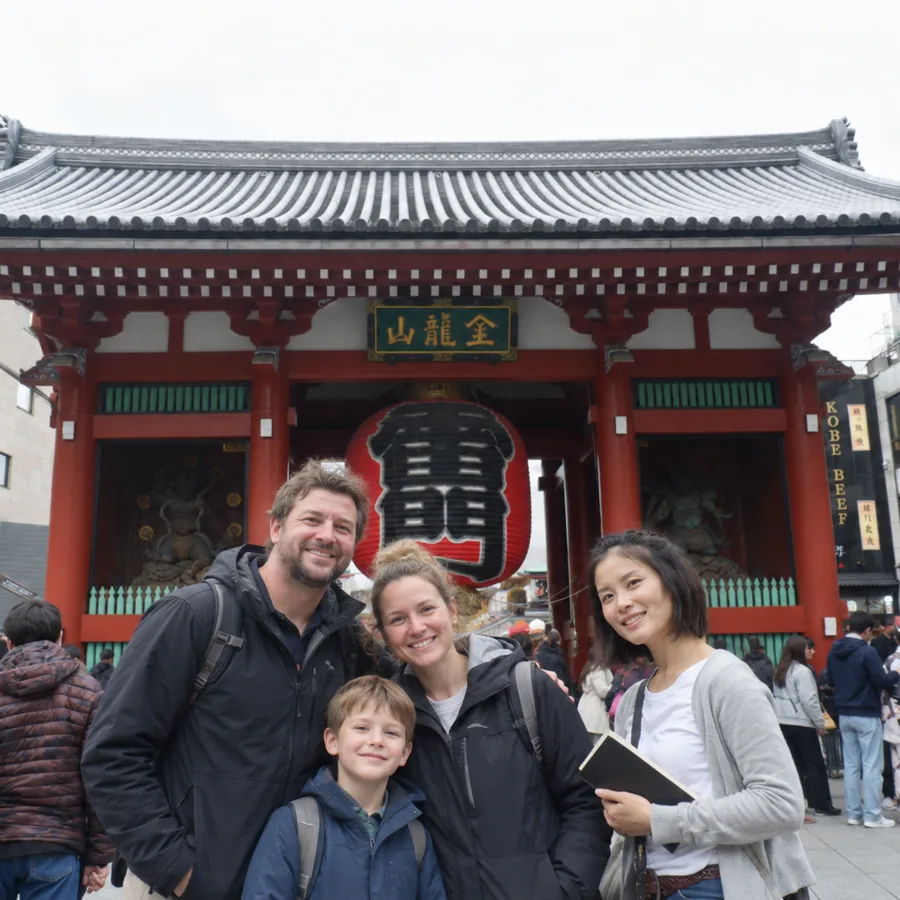
Senso-ji holds its Setsubun-e every year on Setsubun day at the Main Hall. Because no demon can appear before Kannon, the chant here is not "Oni wa soto" but "Senshu banzai, fuku wa uchi", "Long life, good luck in".
After the bean throwing, the temple performs its Fukuju-no-Mai dance of the Seven Lucky Gods. In 2026, GO TOKYO listed parades from about 11:30 and 13:30 and the main bean throwing from about 16:00.
The temple is about a 5-minute walk from Asakusa Station, and our Senso-ji guide covers the rest of it.
Zojoji, near Tokyo Tower
Zojoji holds a Setsubun Tsuina ceremony each year in front of the Sangedatsumon Gate. Men and women born in the zodiac year walk in procession in formal kamishimo, kindergarten children act out an exchange with the oni, and sumo wrestlers, athletes and entertainers throw the beans.
In 2026 it started from 12:20. The temple is about 3 minutes on foot from Onarimon Station on the Toei Mita Line, or 7 minutes from Daimon.
Naritasan Shinshoji, Narita
Naritasan's Setsubun-e is one of the best known in Japan. Sumo wrestlers and actors from the year's NHK historical drama throw beans from a stage in front of the Great Main Hall.
It is very crowded. The temple is near Narita Airport, so it suits a family landing or leaving around 3 February. See our Naritasan Shinshoji guide.
Check each temple's official site in January 2027 for the times. If you are in Tokyo for New Year as well, our guide to hatsumode, the New Year shrine visit, explains how to pray at shrines and temples.
How to Join Setsubun as a Visiting Family
The easiest way to join is at home. Buy beans and a roll, do the throwing in your room or on the street outside, and eat facing the lucky direction.
Temple events are bigger, but they draw crowds of thousands, so plan them like any big event.
 ONO
My family doesn't throw beans now, but it is part of Japanese culture. You eat as many beans as your age.
- Go early. The space in front of the stage fills well before each throwing. Older children can stand at the front. Small children are safer on a parent's shoulders or further back.
- Catching beans. People reach and push a little. Do not dive for beans on the ground, and keep bags closed so you can use both hands.
- Strollers. Fold them or leave them at the hotel. A baby carrier is far easier in the crowd.
- Respect the ceremony. The throwing follows a Buddhist service or Shinto ritual. Stay quiet during the prayers, follow the staff, and do not climb on anything for a photo.
- Cold. Early February in Tokyo is the coldest part of the year, with average lows around 2°C. Dress for standing still outside.
If you would like an Asakusa day built around Senso-ji at a child's pace, that is what our Tokyo private tour with kids is for. For what else is on in winter, see the best time to visit Tokyo.
Frequently Asked Questions
- When is Setsubun in 2027?
-
Setsubun 2027 is on Wednesday 3 February. It is the day before risshun, the first day of spring in the traditional calendar, which falls on 4 February 2027.
- What do people shout during Setsubun?
-
People shout "Oni wa soto! Fuku wa uchi!", meaning "Demons out! Good luck in!" At Senso-ji in Asakusa, the chant is "Senshu banzai, fuku wa uchi", because no demon can appear before Kannon.
- What is the ehomaki direction for 2027?
-
The direction is north-northwest, slightly towards north, about 345 degrees on a compass. Most shops print the direction on the packaging.
- Can tourists join Setsubun bean throwing?
-
Yes. Anyone can throw beans at home or in a hotel room, and temple bean throwings are open to the public. Arrive early, as the area near the stage fills quickly.
- Can toddlers eat Setsubun beans?
-
No. Japan's Consumer Affairs Agency advises against giving hard beans or nuts to children aged five and under because of the risk of choking. They can still throw them.
- Is Setsubun a public holiday in Japan?
-
No. Shops, schools and offices are open as usual. Setsubun is celebrated in the evening at home and during the day at shrines and temples.
Sources
https://eco.mtk.nao.ac.jp/koyomi/yoko/2027/rekiyou272.html
https://media.jreast.co.jp/articles/2681
https://www.caa.go.jp/policies/policy/consumer_safety/child/project_001/mail/20230124/
https://www.senso-ji.jp/annual_event/05.html
https://www.gotokyo.org/en/spot/ev133/index.html
https://www.gotokyo.org/en/spot/ev170/index.html
https://www.naritasan.or.jp/monthly/gyoji_year/
https://www.data.jma.go.jp/stats/etrn/view/nml_sfc_ym.php?prec_no=44&block_no=47662
Plan a Private Day with a Local

Every tour is private, for your group only, and planned with you before you arrive. From US$550 per group for a day on foot in Tokyo or Yokohama, or from US$890 for a day trip by train to Kamakura, Hakone or Mt. Fuji. Travelling with children? See our Tokyo private tour with kids.
Free Consultation
Japan Trails Newsletter
Free Newsletter Sign‑Up
Subscribe to our newsletter and receive a handpicked list of restaurants that Japanese locals go to.
-
 Naritasan Shinshoji Temple: A Visitor's Guide with the Omotesando
-
 Imperial Palace Tokyo: A Visitor Guide to the East Gardens, Nijubashi and the Palace Tour
You might also like
-
 Hay Fever in Japan: Pollen Season, Masks and Tips for Families
-
 Yushima Seido and Hijiri Bridge: A Walk Through Ochanomizu
-
 Hinamatsuri: A Visitor's Guide to Japan's Doll Festival
-
 Setsubun in Japan: Bean Throwing, Ehomaki and Where to See It
-
 Naritasan Shinshoji Temple: A Visitor's Guide with the Omotesando
-
 Gyusuki and Yakiniku Bento: Two Kinds of Beef in One Ekiben
-
 Yamayuri Beef Shigure-ni Bento: Kanagawa Beef on Rice at Tokyo Station