Gyusuki and Yakiniku Bento: Two Kinds of Beef in One Ekiben
Quick answer
- The Gyusuki and Yakiniku Bento is still sold in October 2026, at ¥1,450 including tax.
- It pairs sweet Kanto-style sukiyaki beef with grilled beef over rice, sold at Ekibenya Matsuri and Ekibenya Odori in Tokyo Station.
- Odori takes online pre-orders up to three days ahead.
Is the Gyusuki and Yakiniku Bento Still Sold?
Yes. In October 2026 the Gyusuki and Yakiniku Bento (beef sukiyaki and grilled beef bento) is on Ekibenya Matsuri's official menu at ¥1,450 including tax, up from ¥1,400 a year earlier.
JR East also lists it among the boxes at Ekibenya Odori, the quick-buy shop next door.
| Detail | Current information |
|---|---|
| Price | ¥1,450 including tax (October 2026) |
| Made by | JR East Cross Station, the company behind Ekibenya Matsuri and the Nihonbashi Daimasu brand |
| Where sold | Ekibenya Matsuri and Ekibenya Odori, inside the JR gates at Tokyo Station |
| Pre-order | Through Ekibenya Odori, up to three days ahead |
Prices can differ by branch and boxes can change without notice, so check the label in the shop.

What Is Inside the Box
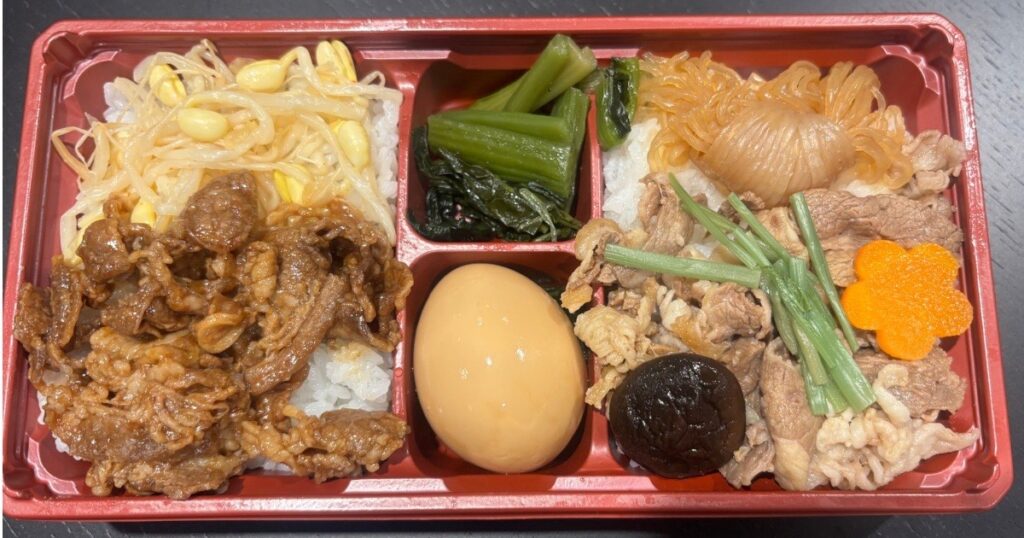
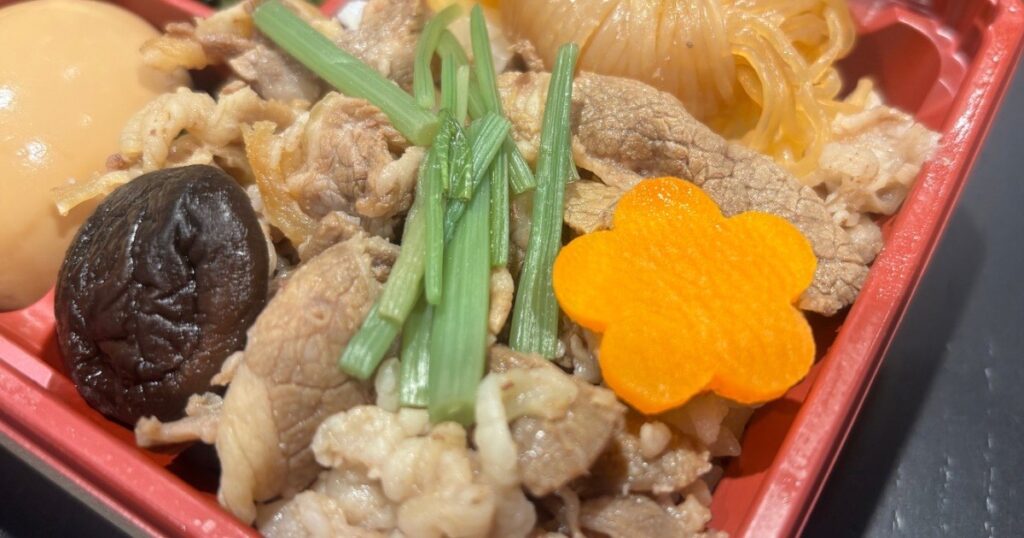
Two kinds of beef share one box, sweet Kanto-style sukiyaki beef simmered with shirataki noodles and grilled beef with a smoky, slightly charred edge. Both sit on white Japanese rice.
- Sukiyaki beef. Thin slices are simmered in soy sauce, sugar and mirin, Tokyo style.
- Grilled beef (yakiniku). Sliced beef is grilled with a sweet soy marinade.
- Seasoned egg. A boiled egg marinated in soy is cut in half.
- Vegetables. The box has bean sprouts and greens dressed like Korean namul, simmered shiitake, and a carrot cut into a flower.
- White rice sits under the meat.
The carrot flower is a small piece of kazari-giri, decorative cutting, which you see in many Japanese bento. It is there to make the box look festive.
What It Tastes Like and Who It Suits
Both beef dishes are seasoned on the sweet side, so the box tastes rich and comforting rather than spicy. The sukiyaki beef is soft and glossy.
The grilled beef is firmer, with more chew and a caramelised edge. The namul and greens cut through the sweetness between bites.
It suits anyone who likes beef and wants a filling lunch, including teenagers with big appetites. For younger children, the sweet beef and the egg are usually an easy sell, though the dressed vegetables are harder.
The portion is a full lunch for an adult. Two small children can share one box, especially if you add rice balls or bread from the GRANSTA shops around the Central Passage.
If your family is buying several ekiben, this one pairs well with a seafood or chicken box, so everyone can swap a few bites. It is also a sensible choice for a long ride north or west from Tokyo, because the sweet sauce and rice keep you full for hours.
Try the egg first, then alternate between the two beef dishes, and finish with a mouthful of rice and greens. A bottle of cold or hot green tea from the station shop goes well with it.
 ONO
I recommend both the gyusuki and the yakiniku side.
How Sukiyaki and Yakiniku Differ
Sukiyaki and yakiniku are two of the commonest ways to eat beef in Japan, and this box gives you a small taste of both. Sukiyaki is simmered. Yakiniku is grilled.
Sukiyaki is a hot-pot dish. Thin slices of beef are cooked at the table in a shallow iron pan with soy sauce, sugar and mirin, together with tofu, leeks, mushrooms and shirataki noodles.
In the Kanto (Tokyo) style, the sweet sauce, called warishita, is mixed first and poured into the pan. In the Kansai (Osaka) style, the beef is seared and the sugar and soy are added straight onto it.
Restaurants serve it with raw egg for dipping, which the bento leaves out.
Yakiniku means grilled meat. In a yakiniku restaurant you grill bite-sized beef yourself over charcoal or a gas grill at the table and dip it in a sweet soy sauce.
The style came to Japan through Korean cooking, which is why the box pairs it with namul-style vegetables.
If the box wins over your family, both are easy to try in Tokyo restaurants. Children often like yakiniku best, because they can watch the meat cook.
Where to Buy It at Tokyo Station
Buy it at Ekibenya Matsuri or Ekibenya Odori, side by side inside the JR ticket gates on the 1F Central Passage. Matsuri has the full range of over 150 boxes.
Odori has the best sellers and a faster queue.
| Shop | Hours | Good for |
|---|---|---|
| Ekibenya Matsuri | 5:30 to 22:00, daily | Choosing from 150-plus boxes |
| Ekibenya Odori | 6:00 to 21:00, daily | A quick buy, and pre-order pick-up |
From the Marunouchi Central Exit, walk straight along the Central Passage towards the Shinkansen gates. Matsuri is on the right, and Odori is just past it, facing the Tokaido Shinkansen Central Transfer Gate.
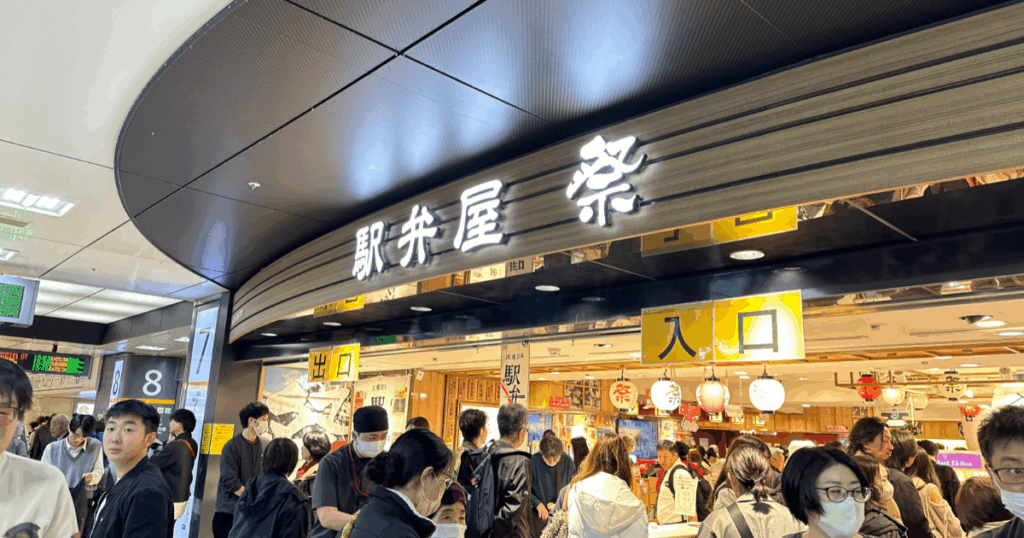
Matsuri gets very busy at lunchtime. Go in the morning for the widest choice, and leave yourself 15 minutes before your train. Both shops take cash, credit cards and IC cards such as Suica.
If you are not boarding a JR train, you need a platform ticket (nyujoken) from the ticket machines to get in.
Our Ekibenya Matsuri guide covers the shop in more detail.
How to Pre-Order It
Order through JRE MALL Order, JR East's online shop, by three days before your pick-up date, and collect at Ekibenya Odori. This is worth doing for a family group or on a holiday weekend, when the best sellers go early.
- Ekibenya Matsuri does not take reservations or hold boxes.
- Some boxes have a daily limit, so a date may be full even three days ahead.
- The order site is in Japanese. A browser translation tool helps.
- For larger orders, the shops' customer line is 03-3213-4353, 9:00 to 19:00.
Eating It on the Train
Eat it at your seat on the Shinkansen or a limited express train, once you have left the station. That is what ekiben are made for.
On the Yamanote Line, the subway and other commuter trains, wait until later.
- Ekiben are eaten cold. This one is sweet-seasoned, so it tastes good at room temperature.
- Open the box on the tray table, not on your lap. The sukiyaki sauce can run.
- Take your rubbish with you or use the bins on the train deck and platforms.
- Eat it the same day. The label shows the time limit.
Our Shinkansen guide covers seats, luggage and the rest of the ride.
Allergy Notes
The box contains beef and egg, and soy-based sauces usually mean wheat and soy as well. The dressed vegetables may contain sesame. The full allergen list is printed on the box in Japanese, and the shop's product page shows it in its second photo.
These words help when you read the label with a translation app.
- Tamago, egg
- Komugi, wheat
- Gyuniku, beef
- Goma, sesame
- Daizu, soybean
- Nyu, milk
If anyone in your family has a food allergy, read the label with a translation app before you pay, and keep a simpler back-up such as rice balls. On our own family days, I ask about allergies before the day and plan meals with that in mind, as part of our private Tokyo tour with kids.
Similar Ekiben at Tokyo Station
If it has sold out, these boxes from the same shops suit a beef lover.
| Ekiben | Price (Oct 2026) | Why pick it |
|---|---|---|
| Nihonbashi Daimasu Gyu Sukiyaki-ju | ¥1,400 | All sukiyaki beef |
| Gyuniku Domannaka | ¥1,620 | Beef on Yamagata rice, a classic |
| Charcoal-Grilled Style Beef Tongue Bento | ¥1,480 | Self-heating box |
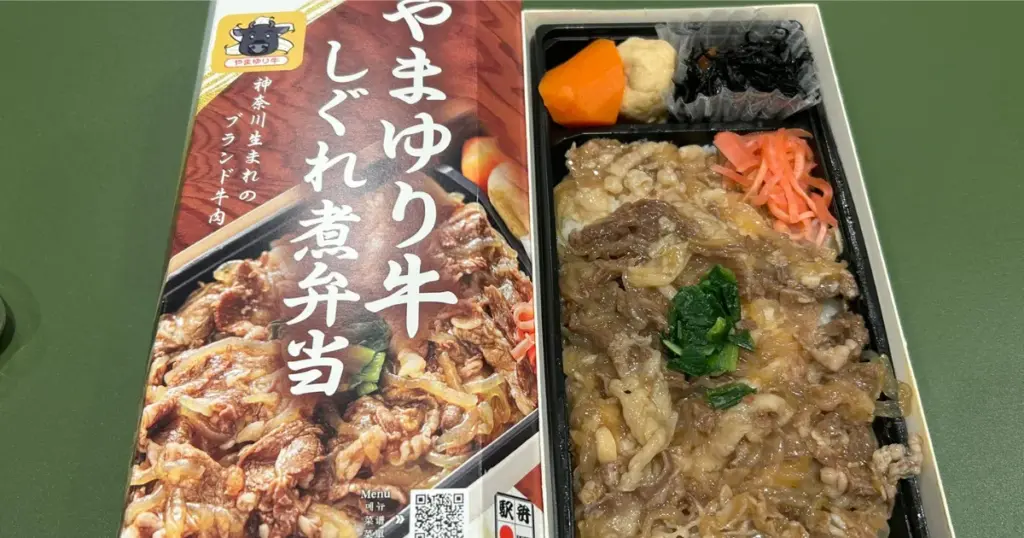
| Yamayuri Beef Shigureni Bento | ¥1,350 | Beef simmered with ginger |
See our Yamayuri Beef Shigureni Bento review, the Sangen Pork Tonkatsu Bento, and our pick of the best ekiben at Tokyo Station. For ekiben in general, read our guide to ekiben in Japan, and for the rest of the city's food, our Tokyo food guide.
Frequently Asked Questions
- How much is the Gyusuki and Yakiniku Bento?
-
It is ¥1,450 including tax on Ekibenya Matsuri's menu in October 2026. Prices can differ by branch, so check the label.
- Where can I buy the Gyusuki and Yakiniku Bento?
-
You can buy it at Ekibenya Matsuri or Ekibenya Odori, inside the JR ticket gates on the 1F Central Passage of Tokyo Station. Matsuri is open 5:30 to 22:00 and Odori 6:00 to 21:00.
- What is the difference between sukiyaki and yakiniku?
-
Sukiyaki beef is thinly sliced and simmered in a sweet soy broth. Yakiniku is grilled beef, here with a sweet soy marinade, so it has a firmer, smokier bite.
- Can I reserve the Gyusuki and Yakiniku Bento?
-
Yes. Order through JRE MALL Order by three days before pick-up and collect it at Ekibenya Odori. Ekibenya Matsuri does not take reservations.
- Is this ekiben good for kids?
-
Usually yes. The beef is sweet rather than spicy, and the seasoned egg is familiar. Check the label for allergens, especially wheat, soy, egg and sesame.
- Can I eat it on the Shinkansen?
-
Yes. Eating at your seat is normal on the Shinkansen and limited express trains. Avoid eating on commuter trains and take your rubbish with you.
Sources
https://foods.jr-cross.co.jp/matsuri/ekiben/detail/1319.html
https://foods.jr-cross.co.jp/matsuri/ekiben/tag/meet.html
https://media.jreast.co.jp/articles/402
https://www.gransta.jp/mall/gransta_tokyo/ekibenyaodori/
https://www.gransta.jp/mall/gransta_tokyo/ekibenyamatsuri/
https://foods.jr-cross.co.jp/matsuri/information/
Plan a Private Day with a Local

Every tour is private, for your group only, and planned with you before you arrive. From US$550 per group for a day on foot in Tokyo or Yokohama, or from US$890 for a day trip by train to Kamakura, Hakone or Mt. Fuji. Travelling with children? See our Tokyo private tour with kids.
Free Consultation
Japan Trails Newsletter
Free Newsletter Sign‑Up
Subscribe to our newsletter and receive a handpicked list of restaurants that Japanese locals go to.
-
 Yamayuri Beef Shigure-ni Bento: Kanagawa Beef on Rice at Tokyo Station
-
 Kaneiji Temple, Ueno: A Visitor's Guide
You might also like
-
 Setsubun in Japan: Bean Throwing, Ehomaki and Where to See It
-
 Naritasan Shinshoji Temple: A Visitor's Guide with the Omotesando
-
Yamayuri Beef Shigure-ni Bento: Kanagawa Beef on Rice at Tokyo Station
-
 Best Ekiben at Tokyo Station: Top Bento Boxes and Where to Buy Them
-
 Sangen Pork Tonkatsu Bento: A Pork Cutlet Ekiben at Tokyo Station
-
 Nihon Shokudo Mix Sandwich: A Light, Retro Ekiben at Tokyo Station