Hatsumode: A Guide to Your Japanese New Year Shrine Visit
Quick answer
- Hatsumode is the first shrine or temple visit of the year, made mostly from 1 to 3 January.
- In 2027, 1 January falls on a Friday, so the first three days run Friday to Sunday.
- Clap only at shrines, keep cash ready, and check each site's 2027 New Year hours before you go.
What Is Hatsumode?
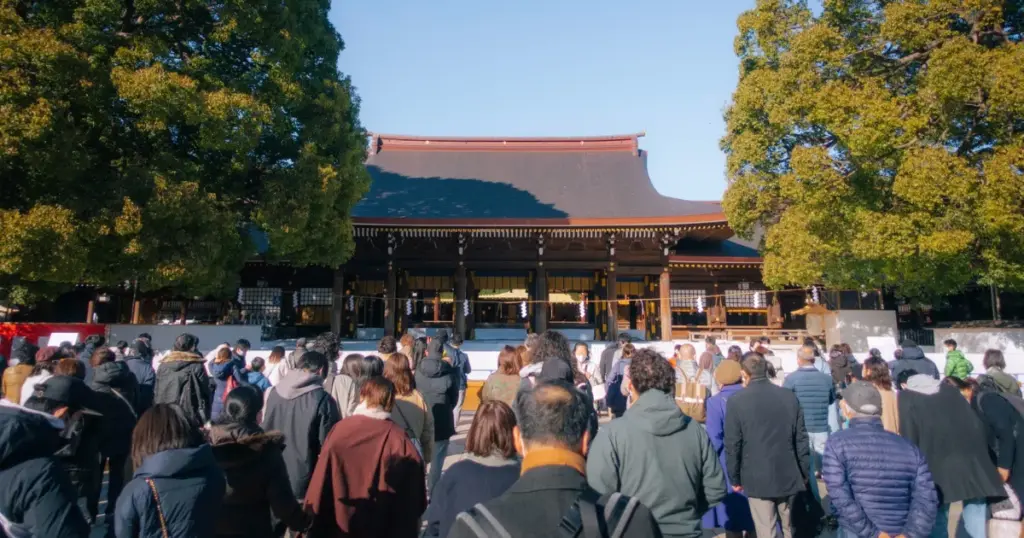
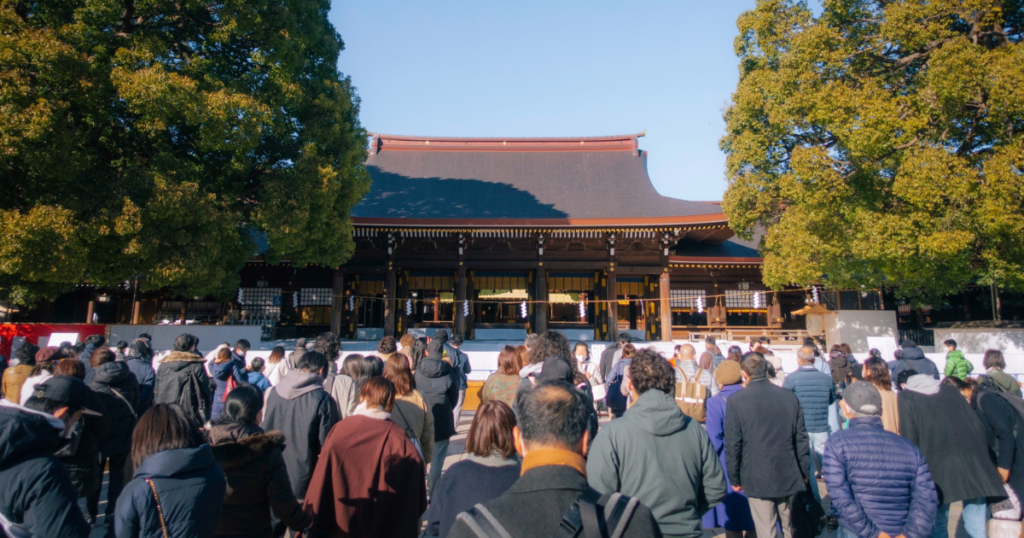
Hatsumode is the first visit of the year to a Shinto shrine or a Buddhist temple, when people thank the gods and the Buddha for the past year and pray for health, safety and good fortune in the new one. Most Japanese families go during the first three days of January, called sanganichi, and many keep going through the first week.
It is one of the biggest religious events in Japan. Meiji Jingu in Tokyo alone receives several million visitors between New Year's Eve and 3 January.
Some people go straight after midnight. Most go during the day on 1, 2 or 3 January, often in family groups and sometimes in kimono.
You do not need to be Buddhist or Shinto to join. Visitors from overseas are welcome at both shrines and temples. The main things are to follow the flow of the crowd, pray the right way for the place, and remember that the people around you have come to pray.
New Year 2027. 1 January 2027 is a Friday, so the first three days fall on Friday, Saturday and Sunday. Expect large crowds on all three, and quieter visits from Monday 4 January.
When to Go (Midnight, New Year's Day or Later)
Go after midnight for the atmosphere, on 1 January for the full festival feel, or from 2 or 3 January onwards if you have children or dislike crowds. The difference in waiting time can be hours.
- Midnight on 31 December. Temples ring their bells for joya no kane, the New Year's Eve bell, and the large shrines fill up as midnight approaches. Meiji Jingu normally stays open through the night of 31 December. It is cold, crowded and exciting, and best for adults and older children.
- 1 January, daytime. The busiest day. Queues to reach the main halls of the big sites can take hours.
- 2 and 3 January. Still festive, with food stalls and the New Year decorations up, but more manageable, especially early in the morning.
- From 4 January. Much quieter. Many Tokyo companies make their group visits on the first working days, so business-focused shrines can be busy then.
Opening hours change at New Year and are published by each shrine and temple, usually in December. As a guide to normal hours, Meiji Jingu opens from 6:40 to 16:20 in January, and Senso-ji's Main Hall from 6:30 to 17:00 from October to March.
Check the 2026 to 2027 New Year hours on each official site before you go.
Shrine or Temple? The Differences That Matter
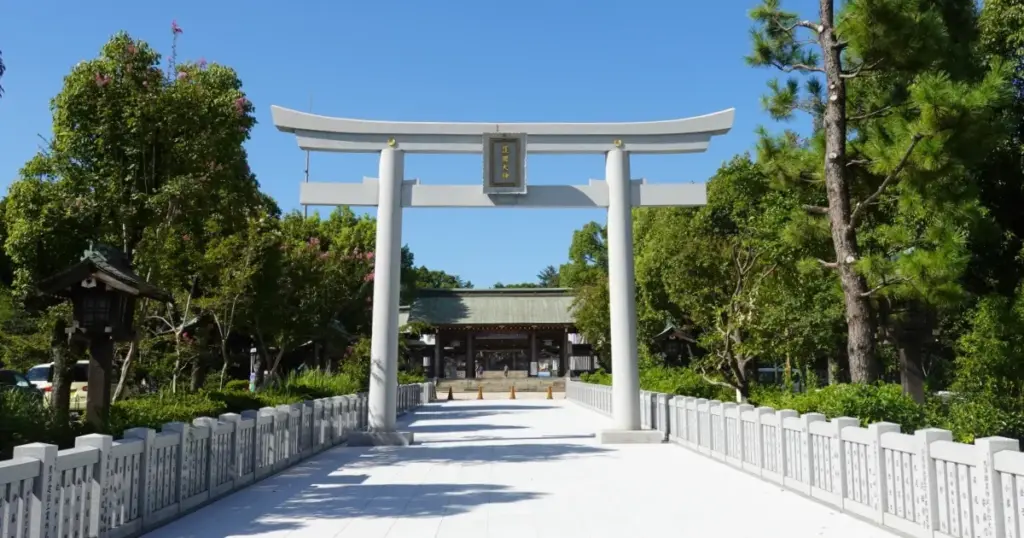
The one thing to get right is that you clap at a Shinto shrine but not at a Buddhist temple. Shrines are marked by a torii gate, and temples by a large wooden gate and usually an incense burner in front of the main hall.
| What you do | Shinto shrine (jinja) | Buddhist temple (tera) |
|---|---|---|
| Entrance | Bow once at the torii gate | Bow at the temple gate |
| Purify | Wash hands and mouth at the temizuya | Temizuya, and incense smoke at many temples |
| Pray | Two bows, two claps, one bow | Hands together, a quiet bow, no clapping |
| Photos | Not at the main sanctuary where people pray | Often not inside halls, follow the signs |
Shrines and temples often stand next to each other. At Asakusa, for example, Asakusa Shrine sits beside Senso-ji. Look at the gate in front of you, not the map.
How to Pray at a Shinto Shrine
Bow at the torii, wash at the temizuya, then at the main hall put in a coin, bow twice, clap twice, pray and bow once more. This is the sequence Meiji Jingu and the Association of Shinto Shrines teach visitors.
1. Bow at the Torii Gate
Make a small bow before you pass through the torii. Walk to the side of the path where you can. The centre is said to be the path of the gods.
Never stop under the gate for photos during New Year crowds. Walk through, then step aside.
2. Purify at the Temizuya
At the water basin, follow the steps Meiji Jingu teaches.
- Rinse your left hand.
- Rinse your right hand.
- Pour water into your left hand and rinse your mouth.
- Rinse your left hand again.
- Tip the dipper up so the remaining water runs down the handle.
Do not touch the dipper with your lips, and do not throw coins into the water. At busy times some shrines close or simplify the basin. Follow the signs.
3. Pray at the Main Hall
Put a coin in the offering box, ring the bell if there is one, then bow twice, clap twice, make your wish silently, and bow once more. Keep the prayer short when there is a queue behind you, then move to the side, not backwards, so the next person can step forward.
How to Pray at a Buddhist Temple
At a temple you put your hands together and bow quietly, without clapping. Many temples also have a large incense burner in front of the main hall.
- Bow at the gate as you enter.
- At the incense burner (jokoro), you may buy and light a bundle of incense and add it to the burner. People waft a little smoke towards themselves, often over the head or a sore spot, as a wish for health. Keep it brief and share the space. If you light incense, put out the flame by waving it, not by blowing.
- At the main hall, put a coin in the offering box, put your hands together (gassho), bow, pray silently and bow again.
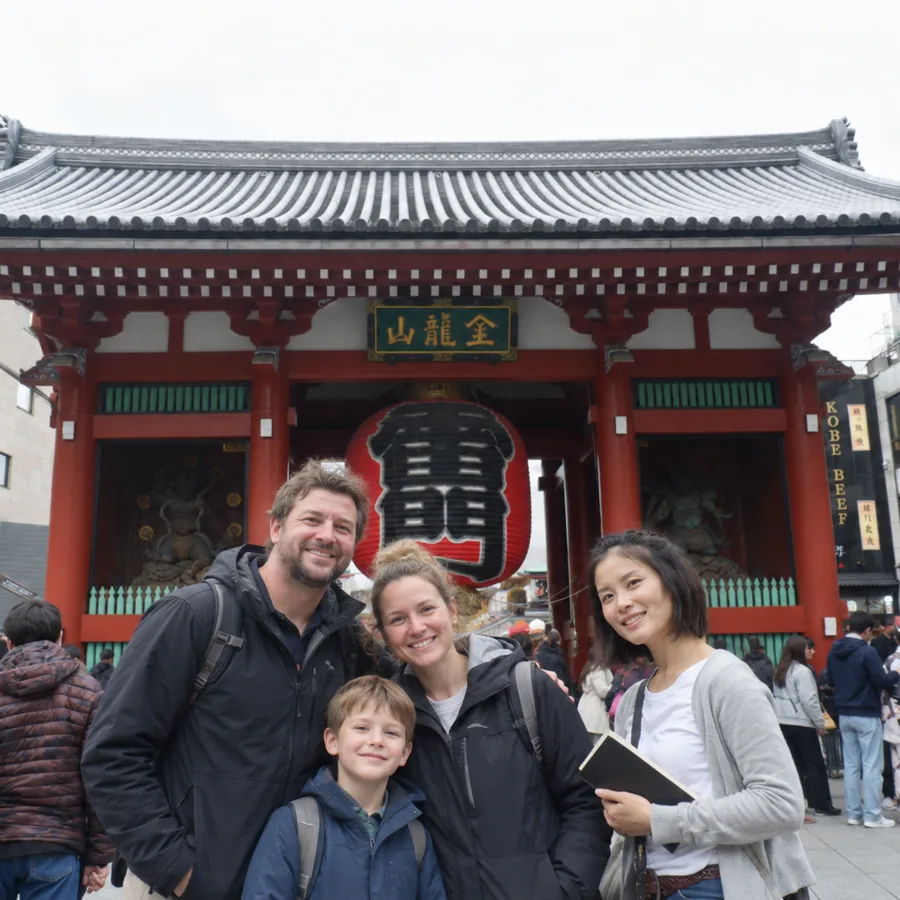
Inside temple halls, photography is often not allowed, especially near the main image. Look for signs and, if in doubt, keep the camera away. At Senso-ji in Asakusa, Tokyo's oldest temple, the Main Hall stands behind the Hozomon Gate, and the incense burner in front of it is one of the busiest spots at New Year.
Omikuji, Omamori, Ema and Old Charms
Most visitors finish their hatsumode by drawing a fortune, buying a charm for the year and returning last year's. Step away from the counter before you read or open anything, so the line keeps moving.
Omikuji (Fortune Slips)
You pay, shake a box or draw a slip, and read your fortune for the year, from daikichi (great blessing) down to kyo (bad luck). At Senso-ji an omikuji costs 100 yen.
If your fortune is bad, tie it to the racks or strings the shrine or temple provides, not to trees or buildings, and leave the bad luck there. A good fortune you can keep in your wallet.
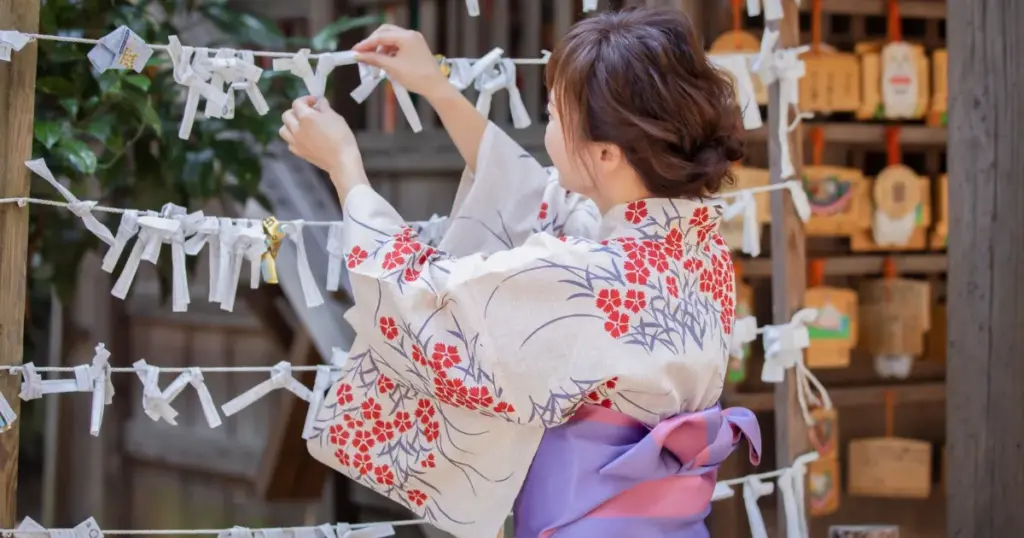
Omamori (Charms)
Omamori are small fabric charms, each for a purpose such as safe travel, health, study, family or safe childbirth. They are religious items, so do not open them or use them as props.
Many people buy a new one at New Year and keep it for a year.
Ema (Wish Plaques)
Ema are wooden plaques. You write a wish on one and hang it on the rack. New Year ema usually show the animal of the coming year. 2027 is the Year of the Sheep.
Returning Last Year's Charms
At New Year, most shrines and temples set up boxes or a counter for returning last year's charms and decorations, which are then burned. It is best to return a charm to the place you got it.
Photos, Cash and Crowd Manners
Three habits make a New Year visit smooth. Carry cash, keep photos away from people praying, and always clear the lane after you pray.
- Cash. Offering boxes, omikuji, charms and goshuin stamps are mostly paid in cash, and counters are busy. Bring coins for offerings and some notes. ¥5,000 to ¥10,000 for a family covers charms and fortunes comfortably.
- Photos. Meiji Jingu asks visitors not to take photos or videos at the main sanctuary where people pray, and not to film or photograph for promotion without permission. Many temples forbid photos inside halls. Do not photograph priests, shrine maidens or worshippers without asking.
- Flow. At peak times, staff set up one-way routes and ropes. Follow them, even if it means a longer walk, and do not cut in from the side.
- Drones. Not allowed at Meiji Jingu, and almost everywhere else in a crowd.
Best Places for Hatsumode in and around Tokyo
The biggest names in Tokyo are Meiji Jingu and Senso-ji. Kanda Myojin, Mt. Takao, Naritasan and Kawasaki Daishi each offer something different. For a quieter visit, a neighbourhood shrine gives the same experience with almost no queue.
Meiji Jingu (Harajuku)
Tokyo's most visited shrine at New Year, dedicated to Emperor Meiji and Empress Shoken, in a forest beside Harajuku Station on the JR Yamanote Line. Expect long, well-managed queues.
Our Meiji Jingu guide has the layout and the walk in.
Senso-ji (Asakusa)
Tokyo's oldest temple, reached through Kaminarimon and along Nakamise shopping street. At New Year the approach is lined with people and stalls, and the temple rings its bell on New Year's Eve.
See our guide to Kaminarimon Gate for the walk.
Kanda Myojin (Ochanomizu and Akihabara)
A shrine near Akihabara known for prayers for business and prosperity. Many companies visit as a group on the first working days of January, so go on 1 to 3 January if you want to avoid the suits.
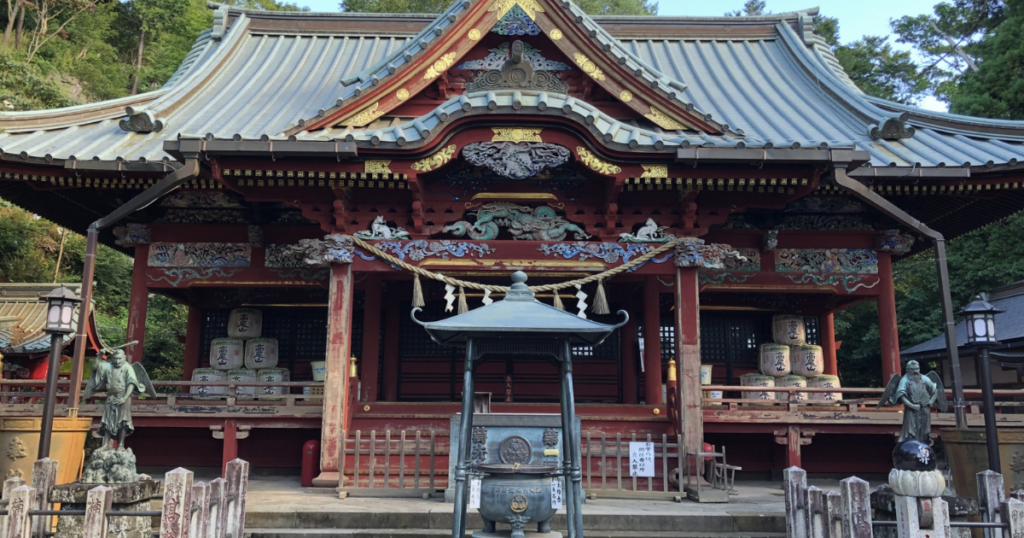
Mt. Takao (Yakuoin Temple)
A mountain temple about an hour west of Shinjuku on the Keio Line. Many people go up for the first sunrise of the year or walk up through the cedar forest.
Dress for mountain cold. Our Mt. Takao guide explains the trails and the cable car.
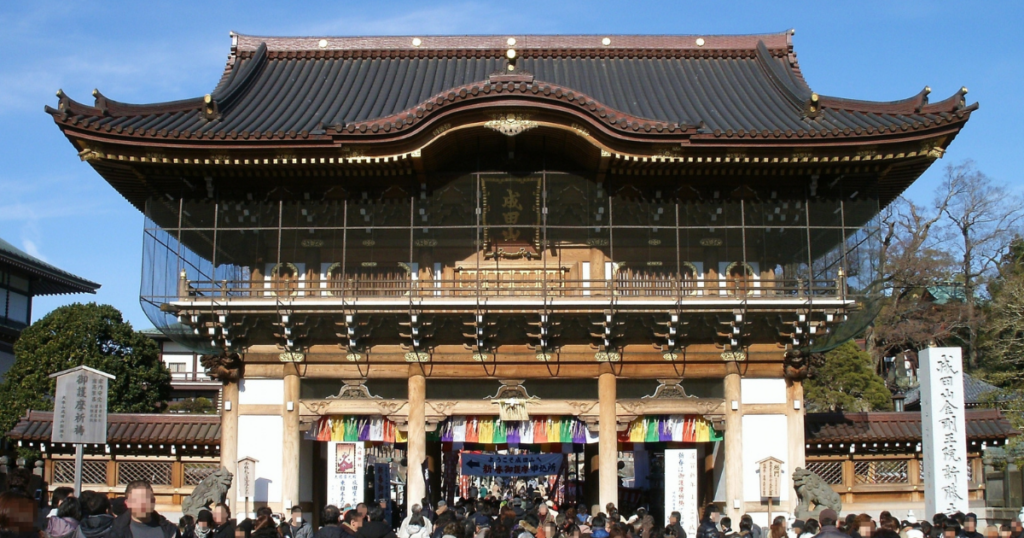
Naritasan Shinshoji (Narita)
One of the most visited temples in Japan at New Year, in the town of Narita in Chiba, near Narita Airport. Keep it in mind if you land or fly out around New Year.
Kawasaki Daishi (Kawasaki)
A large temple in Kawasaki, between Tokyo and Yokohama, known for prayers to ward off misfortune in an unlucky year. Easy to reach from Haneda Airport.
 ONO
For Hatsumode I suggest Meiji Jingu and Senso-ji, and also a small local shrine. A local shrine shows you more of the real Japan.
All-Night Trains on New Year's Eve
Some Tokyo railways run trains through the night of 31 December for hatsumode, but not all, and the details change each year. Plans for 31 December 2026 are usually announced from late November to December.
As a guide, this is what ran last New Year (31 December 2025 to 1 January 2026).
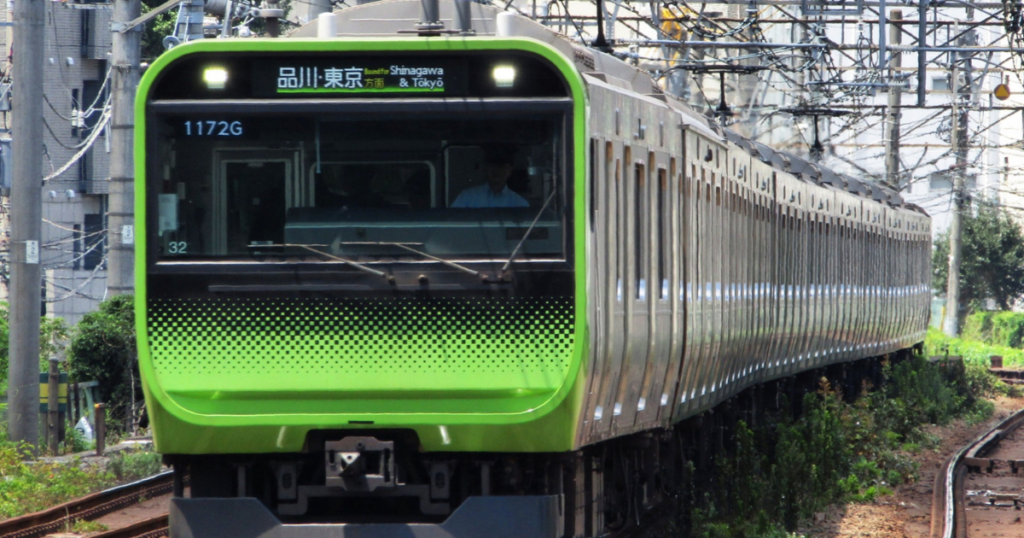
- JR East ran all-night trains on six lines in the Tokyo area, including the Yamanote Line, about every 10 to 25 minutes from around 1:00 to 5:00. That covers Harajuku for Meiji Jingu.
- Keio ran local trains between Shinjuku and Takaosanguchi about every 60 minutes, plus four reserved-seat Keio Liner Geishun trains, for Mt. Takao. The Takao cable car also ran through the night of New Year's Eve.
- Tokyo Metro and Toei Subway did not run all night.
Between New Year's Eve and 3 or 4 January, most lines run weekend and holiday timetables, so trains are less frequent than usual in the morning.
Hatsumode with Kids
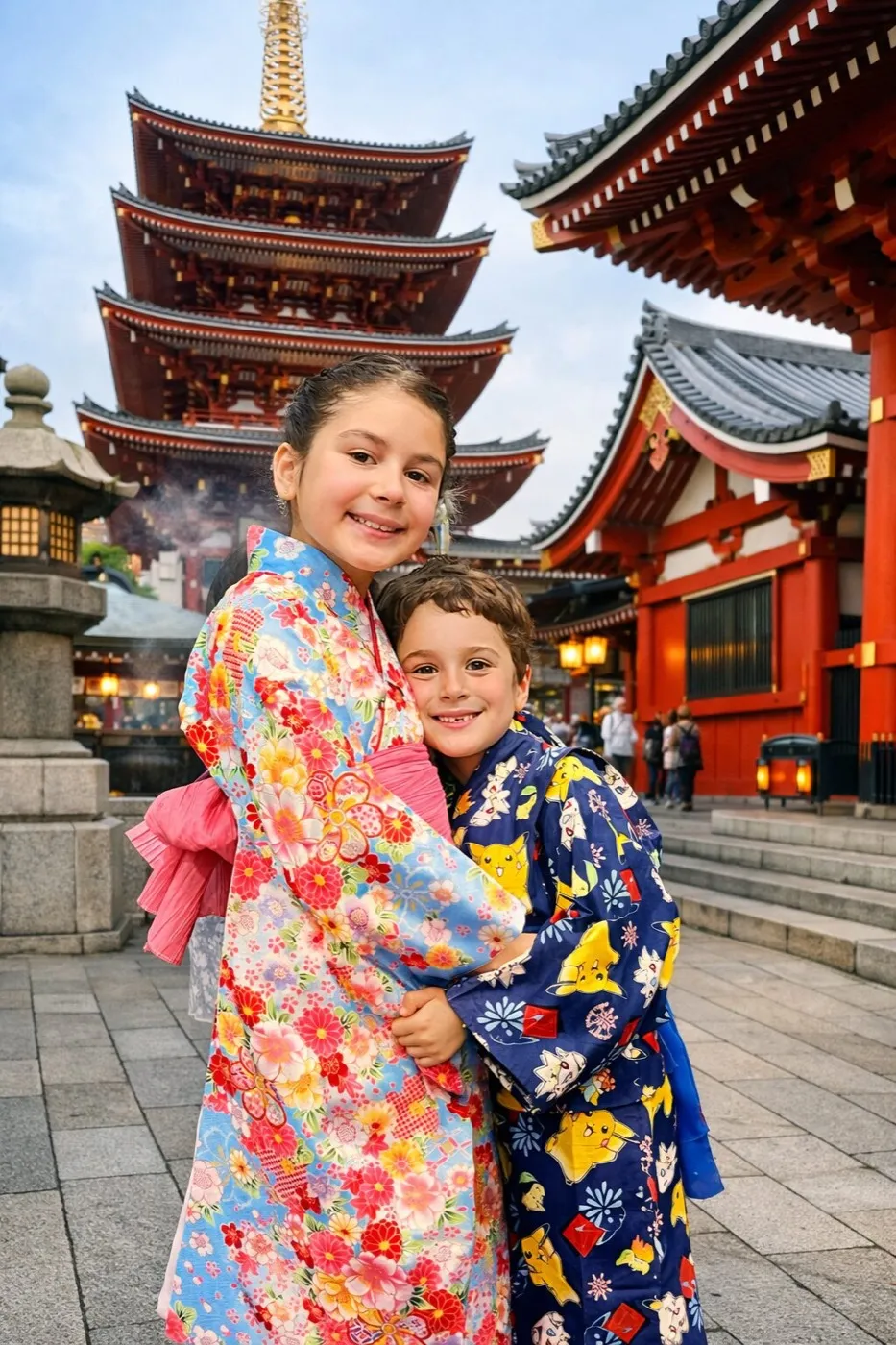
With children, go on the morning of 2 or 3 January, or to a smaller shrine, and plan for cold and queues rather than for a particular time.
- Strollers. Big shrines at New Year are packed and roped off. A baby carrier is much easier. Fold the stroller or leave it at the hotel.
- Cold. Tokyo in early January is cold, especially at night and on Mt. Takao. Bring hats and gloves, and buy a warm drink from a stall.
- Food stalls. The stalls along the approaches, selling grilled corn, sweet amazake and sweets, are a highlight for children.
- Things to do. Children enjoy drawing an omikuji, choosing a charm and writing an ema. Give them coins for the offering box and practise the bows and claps before you reach the front.
- Toilets. Queues are long at the big sites. Use a station or department store toilet before you join the line.
Many shops and restaurants close or shorten hours from about 31 December to 3 January, while department stores reopen with New Year sales. Our guide to the best time to visit Tokyo explains what is open over the holiday.
For a family day built around Asakusa and Senso-ji at any time of year, see our Tokyo private tour with kids.
Frequently Asked Questions
- When is hatsumode in 2027?
-
Most people go from 1 to 3 January, which in 2027 is Friday to Sunday. Many also visit later in the first week, and some go straight after midnight on New Year's Eve.
- Do you clap at a temple?
-
No. Clap only at Shinto shrines. Two bows, two claps, one bow. At Buddhist temples, put your hands together and bow quietly without clapping.
- Can tourists do hatsumode?
-
Yes. Visitors of any faith are welcome at shrines and temples. Follow the queue, pray in the way of the place, and avoid photographing people who are praying.
- How much money do you offer at a shrine?
-
Any amount is fine. Most people put in coins. Bring extra cash for omikuji, charms and stamps, as many counters do not take cards.
- What should you do with a bad omikuji?
-
Tie it to the rack or strings provided at the shrine or temple, so the bad luck stays there. Do not tie it to trees or buildings.
- Do trains run all night on New Year's Eve in Tokyo?
-
Some do. Last New Year, JR East and Keio ran all-night trains, while Tokyo Metro and Toei did not. Plans for 31 December 2026 are announced from late November.
Sources
https://www.meijijingu.or.jp/en/etiquette/
https://www.meijijingu.or.jp/en/opening/
https://www.gotokyo.org/en/spot/ev110/index.html
https://www.jinjahoncho.or.jp/en/faq/
https://www.senso-ji.jp/guide/
https://media.jreast.co.jp/articles/2527
https://www.keio.co.jp/news/update/news_release/news_release2025/pdf/nr20251210_syuuya.pdf
https://www.takaosan.or.jp/english/
https://www.naritasan.or.jp/
https://www.kandamyoujin.or.jp/
Plan a Private Day with a Local

Every tour is private, for your group only, and planned with you before you arrive. From US$550 per group for a day on foot in Tokyo or Yokohama, or from US$890 for a day trip by train to Kamakura, Hakone or Mt. Fuji. Travelling with children? See our Tokyo private tour with kids.
Free Consultation
Japan Trails Newsletter
Free Newsletter Sign‑Up
Subscribe to our newsletter and receive a handpicked list of restaurants that Japanese locals go to.
-
 Sangen Pork Tonkatsu Bento: A Pork Cutlet Ekiben at Tokyo Station
-
 Hatsumode: A Guide to Your Japanese New Year Shrine Visit
You might also like
-
 Hay Fever in Japan: Pollen Season, Masks and Tips for Families
-
 Yushima Seido and Hijiri Bridge: A Walk Through Ochanomizu
-
 Hinamatsuri: A Visitor's Guide to Japan's Doll Festival
-
 Setsubun in Japan: Bean Throwing, Ehomaki and Where to See It
-
 Naritasan Shinshoji Temple: A Visitor's Guide with the Omotesando
-
 Sumo Wrestling in Japan: Tournament Dates, Tickets and Watching with Kids
-
Hatsumode: A Guide to Your Japanese New Year Shrine Visit