Sumo Wrestling in Japan: Tournament Dates, Tickets and Watching with Kids
Quick answer
- Professional sumo holds six 15-day tournaments a year.
- The next Tokyo tournament is 10 to 24 January 2027.
- At the 2026 Tokyo tournaments, chair seats cost ¥3,500 to ¥9,500 per person and a four-person box ¥34,000 to ¥60,000.
What Is Sumo Wrestling?
Sumo is Japan's national sport. Two wrestlers face each other in a raised clay ring about 4.55 metres across, and the first to step out of the ring or touch the ground with anything other than the soles of his feet loses.
Most bouts last a few seconds. Ritual fills the time around them. The wrestlers stamp, throw salt to purify the ring, crouch and stare each other down, sometimes several times, before they finally charge.
For families, the bouts are short and easy to follow, and the ceremony in between gives you time to explain what is happening.

The ranks in one paragraph. Every wrestler belongs to a stable (heya) and is ranked on the banzuke, a ranking list that is redrawn after every tournament.
Only the top two divisions, makuuchi and juryo, are salaried. The top ranks within makuuchi are komusubi, sekiwake, ozeki and, at the very top, yokozuna.
A yokozuna cannot be demoted. He is expected to retire when he can no longer win. Hoshoryu was promoted to 74th yokozuna in January 2025 and Onosato to 75th in May 2025, and Aonishiki, born in Ukraine, was promoted to ozeki in November 2025.
Check the current banzuke on the Japan Sumo Association site before you go, because ranks change every two months.
Sumo Tournament Schedule 2026 and 2027
The six grand tournaments (honbasho) run for 15 days, starting and ending on a Sunday, in odd-numbered months. These are the dates published by the Japan Sumo Association.
The November 2026 tournament in Fukuoka is already sold out on every day, so the next one you can still plan for is January 2027 in Tokyo.
| Tournament | Venue | Dates | Tickets on sale |
|---|---|---|---|
| November 2026 | Fukuoka Kokusai Center | 8 to 22 Nov 2026 | Sold out |
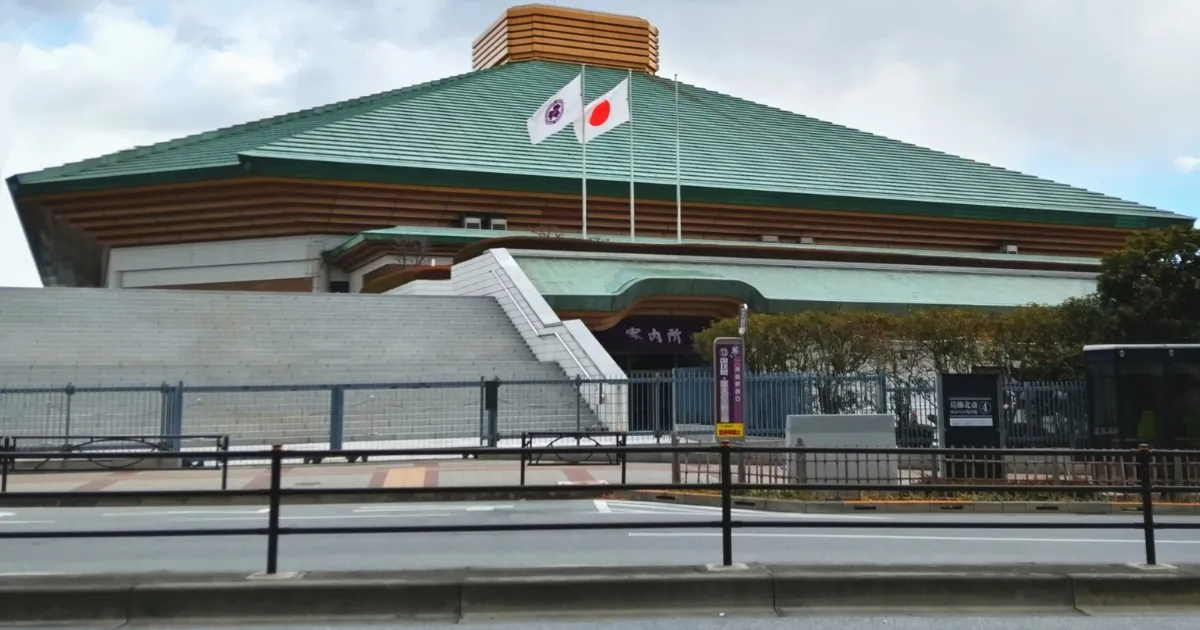
| January 2027 | Ryogoku Kokugikan, Tokyo | 10 to 24 Jan 2027 | 5 Dec 2026 |
| March 2027 | EDION Arena Osaka | 14 to 28 Mar 2027 | 6 Feb 2027 |
| May 2027 | Ryogoku Kokugikan, Tokyo | 9 to 23 May 2027 | 10 Apr 2027 |
| July 2027 | IG Arena, Nagoya | 11 to 25 Jul 2027 | 15 May 2027 |
| September 2027 | Ryogoku Kokugikan, Tokyo | 12 to 26 Sep 2027 | 7 Aug 2027 |
| November 2027 | Fukuoka Kokusai Center | 14 to 28 Nov 2027 | 18 Sep 2027 |
Sale dates are for the first general sale, from 10:00 Japan time. The association has also published the 2028 dates on its schedule page if you are planning further ahead.
If your trip falls between tournaments, the last sections of this guide cover what you can still see.
What Time to Go on a Tournament Day
You do not need to be there all day. One ticket covers the whole day, and the part worth seeing with children is the last three to four hours, when the top two divisions fight.
At the Tokyo tournaments the doors open at 8:45 (10:30 on days 13 and 14, and 10:00 on the final day), the lower divisions fight through the morning, the higher-ranked wrestlers start from about 14:00, and the day ends at around 18:00 with the yokozuna's bouts.
| Time | What happens | With kids |
|---|---|---|
| 8:45 to 12:00 | Lower divisions, a near-empty arena | Calm, but little atmosphere |
| 12:00 to 14:00 | Middle divisions, crowds arriving | Good time to buy lunch boxes and look around |
| From about 14:00 | Juryo, then the top-division ring-entering ceremony | The part to be in your seats for |
| Until about 18:00 | Top division, ozeki and yokozuna last | Loudest, best bouts, finishes on time |
At the Kokugikan you can come and go during the day, but re-entry is allowed only once, and you must be back by 17:00. For a family that means one outing, for example lunch in Ryogoku, and then staying in your seats for the afternoon.
The ring-entering ceremonies are the easiest part for children to enjoy. The top-division wrestlers walk in wearing embroidered aprons, and then the yokozuna performs his own ceremony with two attendants.
Sumo Tickets, Seat Types and Prices
The arena has three kinds of seats. There are ringside cushions next to the ring, Japanese-style box seats on the ground floor where you sit on cushions, and Western-style chair seats on the upper level.
For most families with children, chair seats are the practical choice. A box is better if you have exactly four people aged 4 and over and everyone is happy to sit on the floor.
These are the official prices for the 2026 Tokyo tournaments (tax included). Prices for 2027 are published on the official ticket site before each sale.
| Seat | Weekday | Weekend and holiday | Notes |
|---|---|---|---|
| Ringside (tamari) | ¥20,000 per person | ¥20,000 per person | Japanese site only, age 16 and over |
| Box S, for 4 | ¥56,000 | ¥60,000 | Japanese site only |
| Box A, for 4 | ¥48,000 | ¥52,000 | Sold per box |
| Box B, for 4 | ¥40,000 | ¥42,000 | Sold per box |
| Box C, for 4 | ¥34,000 | ¥38,000 | Furthest boxes from the ring |
| Chair S | ¥9,000 | ¥9,500 | Front of the upper level |
| Chair A | ¥8,000 | ¥8,500 | |
| Chair B | ¥5,000 | ¥5,500 | |
| Chair C | ¥3,500 | ¥4,000 | Back rows, still a full view |
Box seats. You take your shoes off and sit on four cushions inside a small square box. It is the traditional way to watch, but a "four-person" box is tight for four adults, and you sit on the floor for hours.
Boxes are sold only as whole boxes, and using one with more people than its capacity is not allowed.
Chair seats. These are ordinary stadium seats on the second floor. Even the C seats at the back give a clear view of the ring, and a child can sit on your lap without anyone's legs going numb. Binoculars help in the back rows.
How to Buy Sumo Tickets
Buy on the Japan Sumo Association's official ticket site, Ticket Oosumo, which has an English version. Tickets go on sale at 10:00 Japan time on the date in the schedule above, and weekend days and the opening and final days go first, often on the day of sale.
The English site set these terms for the 2026 tournaments.
- Payment. Credit card only.
- Fee. The English site adds a ¥2,000 service charge per ticket.
- Collecting your tickets. You print them at a 7-Eleven convenience store in Japan, using the details in your confirmation email. Screenshots or printouts of QR tickets are not accepted.
- Changes. Tickets cannot be changed or refunded for any reason, and a lost ticket means no entry.
- Same-day tickets. If a day is sold out in advance, nothing is sold at the arena on the day. Do not plan around turning up at the box office.
Avoid resale sites. The association publishes a warning that tickets bought from unofficial resale and auction sites may be refused at the door, and lists several of those sites by name.
It also prohibits reselling or transferring tickets except, not for profit, to family, friends or colleagues. Buy your own tickets on the official site.
Wheelchair users need a dedicated wheelchair seat (¥8,000 for the user and one companion), booked by phone in Japanese only, from a date announced for each tournament.
Sumo with Kids (Age Rules, Strollers and Box Seats)
Sumo works well with children aged about five and over who can sit through two or three hours of short bouts, and with babies who will sleep in a carrier. The rules that matter for families are set out in the association's spectator terms.
- Every child aged 4 and over needs their own ticket. There is no child price. A 4-year-old pays the adult fare. Children under 4 do not need a ticket.
- Ringside seats are for ages 16 and over. Wrestlers do fall off the ring into these seats, so children cannot sit there at all.
- Strollers cannot be used in the seating areas. The arena keeps them for you at the general information desk. Bring a baby carrier.
- No bottles, cans or cool boxes. Bring drinks in your own water bottle or buy them inside. Folding floor chairs and anything else that changes the seat are not allowed either.
- No flash photography aimed at the ring, and no standing up or moving about during bouts in the box and ringside areas. Wait for the gap between bouts to go to the toilet.
- Check for "kids seats". The spectator terms allow the organiser to sell special kids seats, which must include at least one child aged 4 to 15 with an adult, at some tournaments only. If they appear on the ticket site for your dates, they are worth a look.
One plan that works with children is to arrive around 13:30, collect a bento or snacks inside, find your seats before the juryo ring-entering ceremony, and leave at 18:00 straight into an early dinner in Ryogoku. Children who are tired by 16:30 can see the yokozuna on the big screen on the way out, but you cannot come back in after 17:00.
Can You Watch Sumo Morning Practice?
Sometimes, but it is much harder than older guides suggest, and it is usually not possible with young children. Sumo stables are homes and training halls, not attractions.
Only a few accept visitors, most expect a Japanese speaker who knows the customs to come with you, and each stable decides for itself. In 2026, Japanese media also reported that the Japan Sumo Association had asked stables to stop running practice-viewing tours with travel agencies, so tours that ran in the past may no longer be available.
If you do get to watch practice, these are the rules the Sumida Tourism Association set for its guided practice visits, and they are typical.
- Practice starts early, around 7:00 or earlier, and visits last two to three hours.
- Sit on the floor, cross-legged or kneeling, without stretching your legs out. There are no chairs.
- Stay silent, put phones on silent, and do not talk to the wrestlers.
- Do not wear perfume. Once you leave, you cannot go back in.
- Children under 12 were asked not to join.
For most families it is better to skip practice and see a tournament afternoon instead, or, outside tournament season, walk around Ryogoku and visit the Sumo Museum.
Ryogoku, the Sumo Museum and Sumo Town
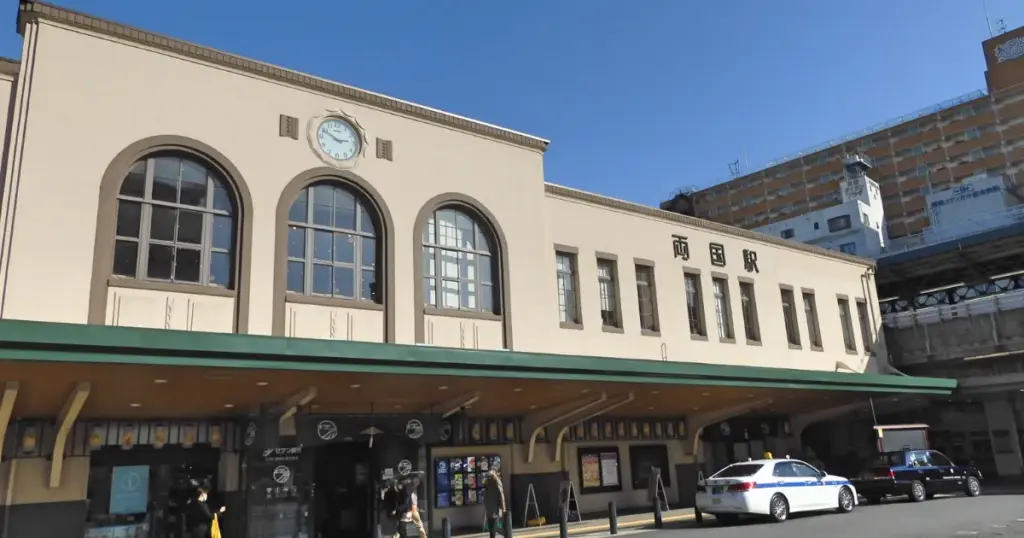
Ryogoku, on the east bank of the Sumida River, has been the centre of the sumo world for about two centuries. The Kokugikan is a one-minute walk from the west exit of JR Ryogoku Station on the Sobu Line, or five minutes from exit A4 of Ryogoku Station on the Toei Oedo Line.
Sumo Museum. The museum is a single exhibition room on the ground floor of the Kokugikan, showing woodblock prints, banzuke ranking sheets and ceremonial aprons, with displays that change through the year.
Admission is free. It is open on weekdays from 10:00 to 16:30 (last entry 16:00) and closed on Saturdays, Sundays, national holidays and over the New Year.
During a Tokyo tournament it opens from 12:30 to 16:00 and you need a tournament ticket to reach it. Check the museum calendar before you go, because it also closes between exhibitions.
Around the station. The streets around the Kokugikan have handprints and statues of great champions, and the area is full of restaurants serving chanko-nabe, the hot pot that wrestlers eat to build weight.
A chanko lunch is an easy, filling meal for children. During tournaments, fans gather near the arena entrance in the afternoon to see the wrestlers arrive in their cotton robes and topknots.
Children can enjoy this as much as the bouts.
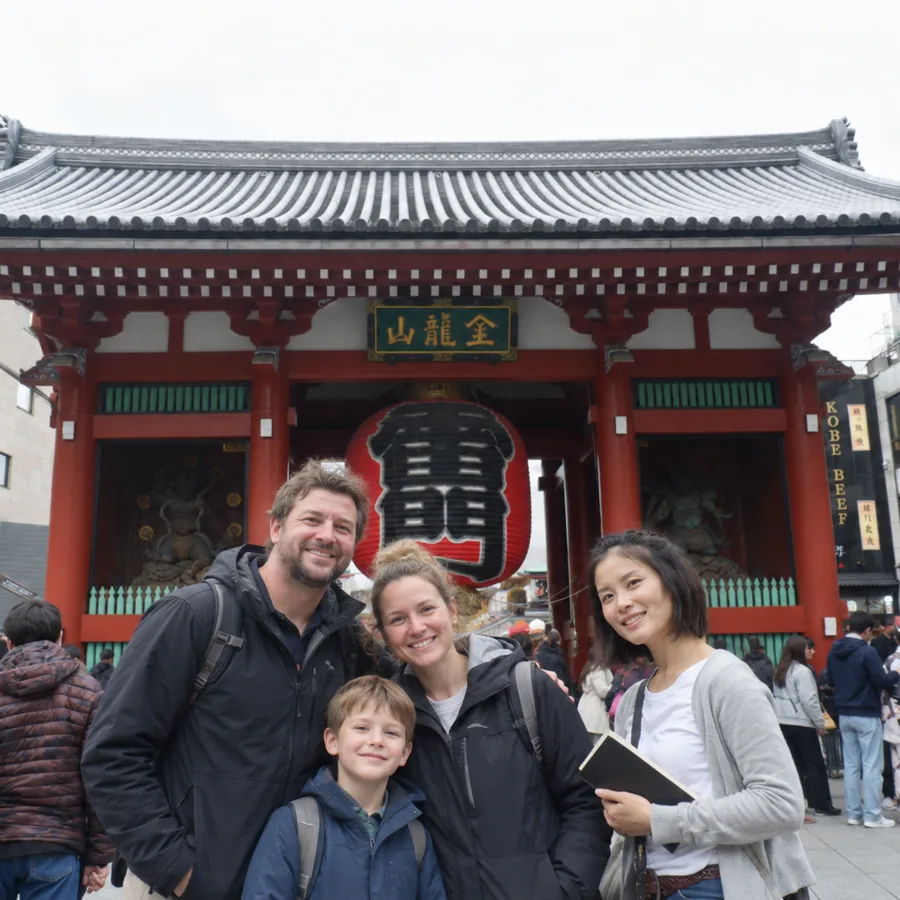
Ryogoku is a short ride from Asakusa, so a sumo afternoon fits after a morning at Senso-ji Temple.
Seeing Sumo When There Is No Tournament
Between tournaments there are still a few ways to see sumo, though none of them is the same as a grand tournament. The wrestlers spend part of the year on regional tours (jungyo) around Japan, and the association publishes the spring, autumn and winter tour schedules on its website.
You can also try these.
- The Sumo Museum and Ryogoku walk, described above, on a weekday.
- Sumo-themed restaurant shows and hands-on experiences run by private companies in Tokyo, where retired wrestlers demonstrate the basics. Check each company's age rules.
- SUMO PRIME TIME, the association's official English YouTube channel, which posts highlights with English commentary during tournaments. Watching a few bouts before the trip helps children know what to look for.
Planning a Sumo Day with Children
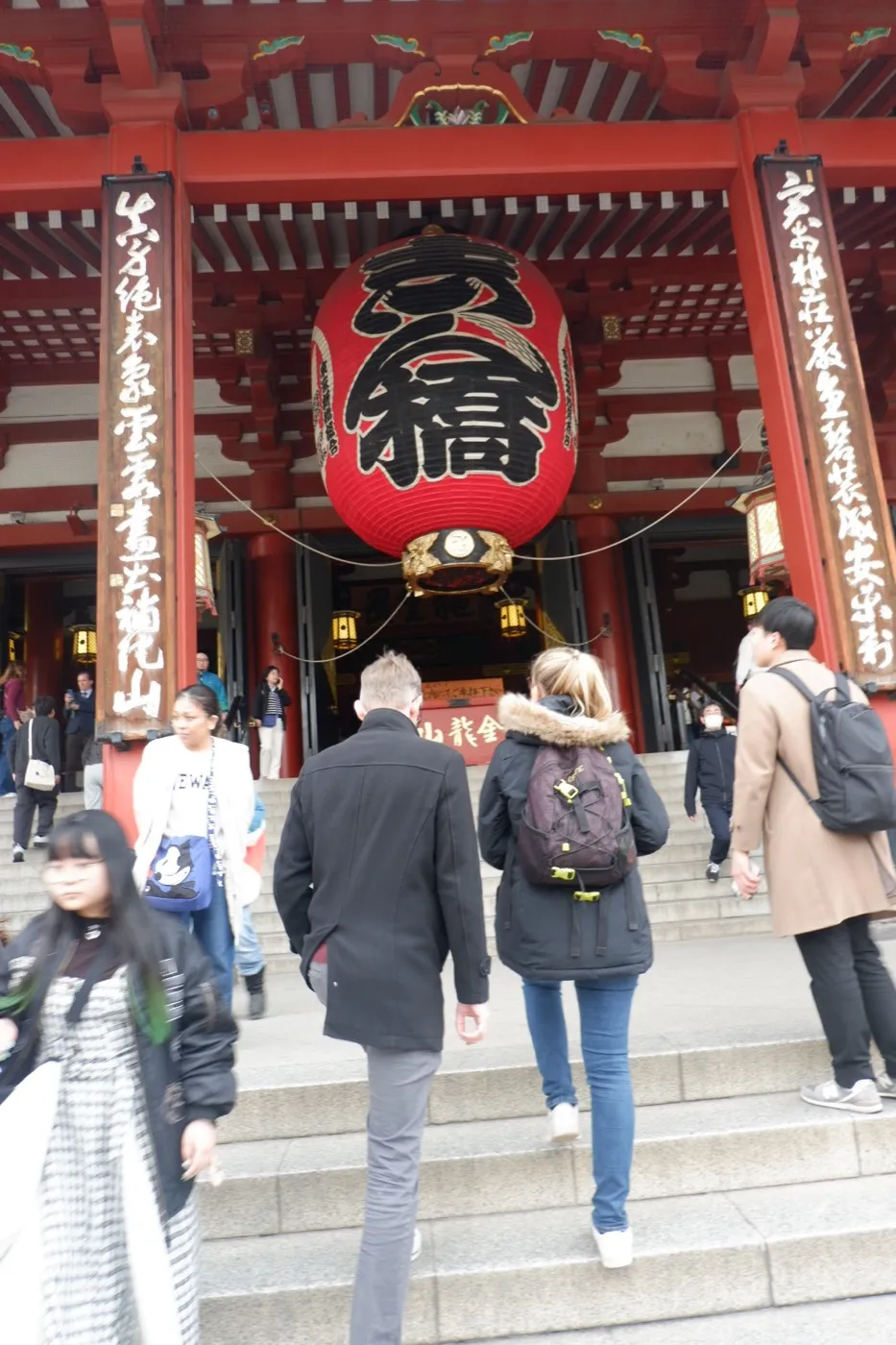
A tournament afternoon is half a day, so plan the morning around the ticket you have. Spend it in Asakusa and Senso-ji, or by the river in Ryogoku, then go to the Kokugikan from about 13:30.
If you would like someone to plan the morning, the train connections and the timing around naps, our private Tokyo tour with kids is a walking day built around your children's ages. We can shape it to end in Ryogoku on a tournament day.
For a day that combines Tokyo with somewhere further out, see our custom private tours. You will still need to buy the sumo tickets yourself on the official site.
For more ideas by age, see things to do in Tokyo with kids and our list of tours in Tokyo. Practical basics such as cash, IC cards and convenience stores are in our Japan travel tips.
Frequently Asked Questions
- When can you see sumo in Tokyo?
-
Sumo comes to Tokyo in January, May and September, when the grand tournaments are held at Ryogoku Kokugikan for 15 days each. In 2027 the Tokyo dates are 10 to 24 January, 9 to 23 May and 12 to 26 September.
- How much are sumo tickets?
-
At the 2026 Tokyo tournaments, chair seats cost ¥3,500 to ¥9,500 per person and four-person boxes ¥34,000 to ¥60,000, with weekends a little more. The English ticket site adds a ¥2,000 fee per ticket.
- Do children need a ticket for sumo?
-
Yes, everyone aged 4 and over needs a ticket, and there is no child discount. Children under 4 do not need a ticket. Ringside seats are only for people aged 16 and over.
- Can I bring a stroller to the sumo?
-
You can bring it to the arena, but strollers cannot be used in the seating areas. Staff keep them at the general information desk, so bring a baby carrier for inside.
- How long should you stay at a sumo tournament?
-
Three to four hours is enough for most families. Arrive around 13:30 to 14:00 and stay until the end at about 18:00, when the yokozuna fight. Re-entry is allowed only once, before 17:00.
- Can you watch sumo practice with kids?
-
Usually not. Few stables accept visitors, they expect a Japanese-speaking escort, and guided visits have typically not accepted children under 12. A tournament afternoon is the better choice with children.
Sources
https://www.sumo.or.jp/EnTicket/year_schedule/
https://www.sumo.or.jp/EnTicket/
https://sumo.pia.jp/en/
https://sumo.pia.jp/en/sumo09.jsp
https://www.sumo.or.jp/IrohaOther/chuui
https://www.sumo.or.jp/IrohaOther/kansenji
https://www.sumo.or.jp/EnKyokai/information?id=234
https://www.sumo.or.jp/EnSumoMuseum/index/
https://visit-sumida.jp/?p=9291
Plan a Private Day with a Local

Every tour is private, for your group only, and planned with you before you arrive. From US$550 per group for a day on foot in Tokyo or Yokohama, or from US$890 for a day trip by train to Kamakura, Hakone or Mt. Fuji. Travelling with children? See our Tokyo private tour with kids.
Free Consultation
Japan Trails Newsletter
Free Newsletter Sign‑Up
Subscribe to our newsletter and receive a handpicked list of restaurants that Japanese locals go to.
-
 Little Museum of Glass Art Books: Glass Engraving Between Asakusa and Skytree
-
 Best Ekiben at Tokyo Station: Top Bento Boxes and Where to Buy Them
You might also like
-
 Hay Fever in Japan: Pollen Season, Masks and Tips for Families
-
 Yushima Seido and Hijiri Bridge: A Walk Through Ochanomizu
-
 Hinamatsuri: A Visitor's Guide to Japan's Doll Festival
-
 Setsubun in Japan: Bean Throwing, Ehomaki and Where to See It
-
 Naritasan Shinshoji Temple: A Visitor's Guide with the Omotesando
-
 Hatsumode: A Guide to Your Japanese New Year Shrine Visit