National Museum of Nature and Science, Ueno (Tokyo): Visitor Guide with Kids
Quick answer
- The National Museum of Nature and Science in Ueno Park is open 9:00 to 17:00 (last entry 16:30) and closed on Mondays, or Tuesday when Monday is a holiday.
- Adults pay 630 yen, while everyone under 18 and visitors aged 65 and over get in free with proof of age.
- In 2026 Global Gallery B3F is closed for renovation from 8 September and part of 2F is closed, but the dinosaurs, Hachiko and Theater 36 are open.
What Is the National Museum of Nature and Science in Ueno?
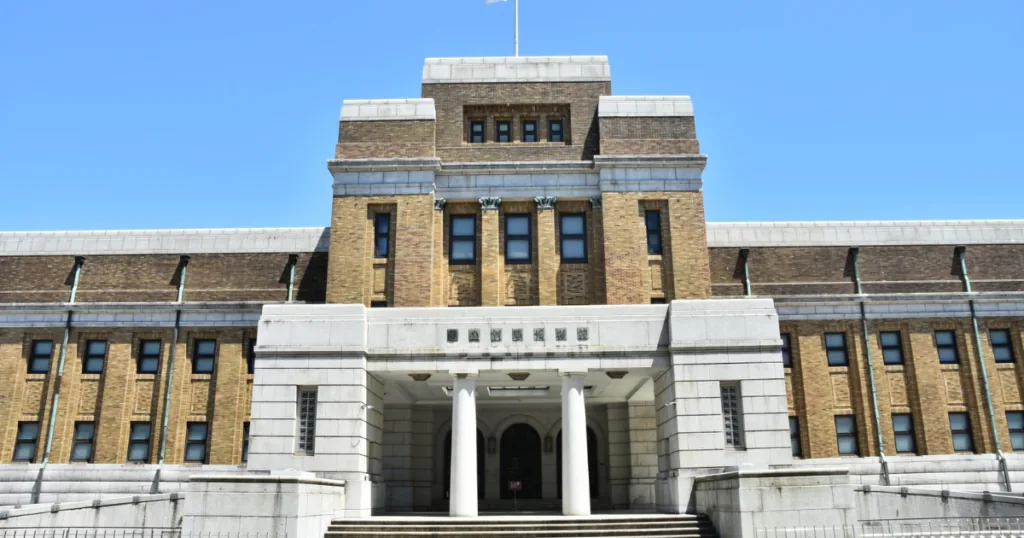
The National Museum of Nature and Science is Japan's national museum of natural history and science, in Ueno Park, Tokyo, 5 minutes on foot from JR Ueno Station. Locals call it Kahaku, and many visitors search for it as the "Ueno science museum".
It was founded in 1877, which makes it one of the oldest museums in Japan.
It has two buildings. The Japan Gallery is a 1931 building, an Important Cultural Property, that tells the story of nature and people in the Japanese islands.
The modern Global Gallery covers the history of life on Earth, dinosaurs, animals of the world and the progress of science.
For children it has full dinosaur skeletons, a hall of animals, a spherical cinema and a play room for small children, and everyone under 18 gets in free. It works on a rainy or very hot day, and it is a few minutes' walk from Ueno Zoo.
 ONO
I have been twice, once with a friend and once guiding a family. It is indoors, so I recommend it as a backup plan for a rainy day. The daughter in that family was studying chemistry at university, and she was very interested in the exhibits.
Hours, Admission and Closed Days
The museum is open from 9:00 to 17:00, with last entry at 16:30. It closes every Monday (on Tuesday instead when Monday or Sunday is a national holiday) and from 28 December to 1 January.
In August it opens every day, and in 2026 it stayed open until 18:00 from 9 to 15 August.
| Visitor | Permanent exhibitions |
|---|---|
| Adults and university students | 630 yen |
| Under 18 (high school and younger) | Free, with proof of age |
| Aged 65 and over | Free, with proof of age |
| Visitors with a disability, plus one carer | Free, with a certificate |
| Everyone on 18 May and 3 November | Free |
Bring a passport or other ID for anyone who gets in free by age. The next free day for all visitors is 3 November 2026 (Culture Day, a Tuesday).
The ticket counter takes credit cards, IC cards such as Suica and PASMO, and PayPay or Alipay, and you can also buy an e-ticket in advance, though you do not need one.
ONOWeekend afternoons are very crowded. You can get in without buying a ticket in advance, but if you want to take your time, I recommend a weekday.
Special exhibitions are ticketed separately. From 31 October 2026 to 21 February 2027 the special exhibition is on sex and reproduction in living things. Tickets on the day are 2,300 yen for adults and 600 yen for school-age children, and preschool children are free.
The exhibition lists its own closed days. It opens on Monday 2 November and Monday 23 November, and closes on Wednesday 4 November and Tuesday 24 November. Check the museum calendar for those weeks.
Theater 36 costs nothing extra. It is included in permanent exhibition admission.
Large suitcases are not allowed in. Leave them at your hotel or in a coin locker at Ueno Station.
What Is Closed in 2026
Two areas of the Global Gallery are closed, and many older guides still recommend them.
- Global Gallery B3F, the floor on the structure of nature (physics, matter and the universe), is closed for renovation from 8 September 2026. No reopening date has been announced.
- Part of Global Gallery 2F, "Progress in Science and Technology", has been closed since 3 March 2026 (the opening section and the Edo-period science section). The Mannen Jimeisho, the "Ten-Thousand-Year Clock", has moved to the Japan Gallery 1F.
The rest of the museum is open as usual, including the dinosaurs, Theater 36 and the Japan Gallery. ComPaSS, the room for young children, reopened after its own renovation on 2 March 2026.
Floor Guide to the Japan Gallery and Global Gallery
The two buildings are joined, and you can see both on one ticket. Start in the Global Gallery if you came for dinosaurs, and finish in the Japan Gallery, where Theater 36 and the shop are on B1F.
| Floor | What is there |
|---|---|
| Japan Gallery 3F | History of the Japanese islands, fossils, Futabasaurus, meteorites |
| Japan Gallery 2F | Animals and plants of Japan, Japanese people from the Stone Age on |
| Japan Gallery 1F | Central hall with stained glass, early science in Japan, the Ten-Thousand-Year Clock |
| Japan Gallery B1F | Theater 36, museum shop, Lounge, nursing room |
| Global Gallery RF | Sky Deck and Herb Garden |
| Global Gallery 3F | Animals of the Earth, ComPaSS |
| Global Gallery 2F | Science and technology (part closed in 2026), nursing room |
| Global Gallery M2F | Great figures of Japanese science, restaurant |
| Global Gallery 1F | Diversity of life on Earth |
| Global Gallery B1F | Dinosaurs, special exhibition hall |
| Global Gallery B2F | Evolution of life over 4.6 billion years, early humans |
| Global Gallery B3F | Structure of nature (closed from 8 September 2026) |
Among the official highlights of the permanent galleries are the re-entry capsule of the asteroid probe Hayabusa (Global Gallery 2F) and the Narashino Meteorite (Japan Gallery 3F).
Best Exhibits for Kids
If you only have two hours, see the dinosaurs, the animal hall and Hachiko. Children ask for these six most.
1. Dinosaurs (Global Gallery B1F)
The dinosaur hall is the reason most children want to come. Full skeletons, including Tyrannosaurus and Triceratops, are set up in poses, and the exhibit explains how dinosaurs evolved.
One floor down, B2F, "Evolution of Life", follows life from the first sea creatures to mammals, marine reptiles and early humans.
ONOMy favourite is the dinosaur hall in the Global Gallery.
2. Animals of the Earth (Global Gallery 3F)
This large hall holds mounted animals from savanna, forest and ocean, arranged as if they were in the wild. It feels like a zoo where everything stands still, and small children can get very close.
3. Hachiko and the Antarctic dogs (Japan Gallery)
The Japan Gallery keeps Hachiko, the Akita dog who waited for his owner at Shibuya Station for years, and Jiro, one of the Sakhalin husky dogs that survived a year alone in Antarctica. Read children the story first, and the visit will mean much more to them. Our Hachiko guide tells it in full.
4. Futabasaurus and the Japan Gallery fossils (Japan Gallery 3F)
The skeleton of Futabasaurus, a plesiosaur discovered in Fukushima by a high school student, hangs on the 3rd floor of the Japan Gallery, along with fossils and meteorites. The building itself, with its stained glass and vaulted central hall, is worth a look.
5. Theater 36 (Japan Gallery B1F)
The theatre is a dome 12.8 metres across, one millionth the size of the Earth, where you stand on a bridge and the film plays all around you, above and below. Each show is about 6 minutes, from 9:30 to the last show at 16:30, for 40 people at a time, first come, first served, standing only.
The film changes monthly. In October 2026 it is about how Homo sapiens spread across the world, and in November it is about the deep sea.
The museum warns that the floating feeling can make some people unwell, small children included, and preschool children cannot enter without an adult. Photos and videos are not allowed inside.
6. The blue whale and the steam locomotive (outside)
Outside the entrance are a life-size model of a blue whale and a D51 steam locomotive. Both are free to see from the street, and children like to pose in front of them.

Inside the galleries you can take photos for personal use, but no flash, tripods or selfie sticks.

ComPaSS, the Play Room for Young Children
ComPaSS, on the 3rd floor of the Global Gallery, is a hands-on room for children from babies to primary-school age, designed mainly for ages 4 to 6. Children handle real specimens and try nature-themed play corners at their own pace, with a parent beside them.
| Item | Detail |
|---|---|
| Ages | 0 to primary school, with a guardian aged 18+ |
| Sessions | 45 minutes, starting at 10:00, 11:00, 13:00, 14:00, 15:00, up to 60 people each |
| Booking | Date and time booking and advance payment online for every child and adult |
| Price | 300 yen per person aged 2 and over, under 2 free but must be booked, museum admission extra |
| Group size | Up to 6 people per booking, and up to 3 children per guardian |
| When to book | Bookings open at noon on the 1st of the month before (November 2026 opened on 1 October) |
Children cannot enter alone, and adults cannot enter without a child. The booking must be made by someone who will visit that day, and if a session has space you can still book it online until 10 minutes after it starts (card only).
Arrive 5 minutes early for the safety briefing. Workshops on Wednesdays and weekends are in Japanese, but the room itself needs no language.
If ComPaSS is booked out, young children can still enjoy the Animals of the Earth hall and the dinosaurs, which need no reading.
Food, Shop, Strollers and English Guides
Eating. You can eat your own food in the Lounge on Japan Gallery B1F (9:30 to 17:00, about 100 seats, busy on rainy days) and on the rooftop Sky Deck and Herb Garden.
The restaurant is on Global Gallery M2F (140 seats, 10:30 to 17:00), and a café in the Lounge keeps the same hours. Food and drink are not allowed in the exhibition halls.
Shop. The museum shop on Japan Gallery B1F (9:30 to 17:00) sells figures of the collection, science kits and books.
Strollers. The museum lends two strollers at the Central Information Desk, first come, first served. They cannot be reserved. Bring your own if you can.
ONOThe museum is bigger than you expect, and it is tiring. There are not many benches to rest on.
Baby rooms. The nursing room is on Japan Gallery B1F, behind the Lounge, and there is another on Global Gallery 2F. Baby-changing beds are in the women's and accessible toilets on every floor of the Global Gallery.
English. Main panels have English, and the audio guide to the permanent exhibits is available in English, Mandarin and Korean.
How to Get There and How Long to Stay
The museum is about 5 minutes on foot from JR Ueno Station (Park Exit) and about 10 minutes from the Tokyo Metro (Ginza and Hibiya lines) and Keisei Ueno stations. The address is 7-20 Ueno Park, Taito-ku.
It stands on the east side of the park, next to the Tokyo National Museum.
How long? Two hours covers the dinosaurs, the animal hall and Hachiko at a child's pace. Half a day covers both buildings, Theater 36 and lunch. Add 45 minutes for ComPaSS.
ONOFor a quick look, allow a little over an hour. To take your time, allow about two and a half hours. I start from the basement and work up.
On a rainy day. The museum is one of the main indoor choices in Ueno, so it fills up when the weather turns. Arrive close to opening if you can, see the dinosaurs first while the halls are still quiet, and leave the museum shop until the end so it does not cut the visit short.
A Ueno day with kids. Visit Ueno Zoo while the animals are active in the morning, have lunch, then go to the museum in the afternoon when children need to be indoors and cool.
Fitting in nap times, a ComPaSS slot and the walk between them is the hard part of the day.
Japan Trails runs private walking days in Tokyo planned around your children's ages, US$550 for up to four guests for six hours. See our private Tokyo tour with kids.
For more ideas, see things to do in Tokyo with kids.
Other Museums in Ueno Park
Ueno Park holds several museums within a 10-minute walk, so you can pair the science museum with one more.
ONOAfter the museum, I suggest Ameyoko or the Tokyo National Museum.
- Tokyo National Museum. Japanese art and history, samurai armour and swords. It is a different museum from this one, though the names are often confused.
- National Museum of Western Art. European painting and sculpture in a building by Le Corbusier.
- Ueno Zoo. Animals across the East and West Gardens, a few minutes north.
For everything else around the park, see our guide to Ueno Park and our guide to Ueno.
Frequently Asked Questions
- Is the National Museum of Nature and Science free for kids?
-
Yes. Everyone under 18, which covers high school students and younger, gets into the permanent exhibitions free, and so do visitors aged 65 and over. Adults and university students pay 630 yen. Special exhibitions are charged separately.
- What day is the National Museum of Nature and Science closed?
-
It closes on Mondays, or the Tuesday when Monday is a national holiday, and from 28 December to 1 January. It opens every day in August. Closing days can change during special exhibitions.
- Is the National Museum of Nature and Science the same as the Tokyo National Museum?
-
No. Both are in Ueno Park, but the Tokyo National Museum shows Japanese art and history, and the National Museum of Nature and Science shows dinosaurs, animals and science. They charge separate admission.
- Where are the dinosaurs?
-
They are on Global Gallery B1F, in the exhibit on the evolution of dinosaurs. The Japanese plesiosaur Futabasaurus is on Japan Gallery 3F.
- Does Theater 36 cost extra?
-
No. It is included in museum admission. Shows run about 6 minutes, from 9:30 to 16:30, for 40 people at a time, first come, first served.
- Do you need to book ComPaSS?
-
Yes. Every child and adult needs a timed booking and advance payment (300 yen each from age 2, on top of museum admission). Bookings for each month open at noon on the 1st of the previous month.
- How long do you need at the National Museum of Nature and Science?
-
About two hours for the highlights, or half a day for both buildings, Theater 36 and lunch. Add 45 minutes for ComPaSS.
- Is Hachiko at the National Museum of Nature and Science?
-
Yes. Hachiko, the loyal Akita dog from Shibuya, is kept in the Japan Gallery, along with Jiro, one of the dogs that survived in Antarctica.
National Museum of Nature and Science Tokyo
Address
7-20 Uenokoen, Taito City, Tokyo
Nearest station
Ueno Station (Shinkansen / Keihin-Tohoku / Yamanote / Utsunomiya / Ueno-Tokyo / Takasaki / Jyoban / Ginza)
Sources
https://www.kahaku.go.jp/english/riyou/nyukan-annai/index.html
https://www.kahaku.go.jp/riyou/nyukan-annai/index.html
https://www.kahaku.go.jp/english/riyou/kannai-guide/floormap.html
https://www.kahaku.go.jp/english/tenji/
https://www.kahaku.go.jp/tenji/theater360/
https://www.kahaku.go.jp/english/learning/compass/
https://www.kahaku.go.jp/english/learning/compass/ticket.php
https://www.kahaku.go.jp/english/riyou/kannai-guide/accessibility.html
https://www.kahaku.go.jp/english/riyou/kannai-guide/restaurant.html
https://www.kahaku.go.jp/english/riyou/kannai-guide/shop.html
https://www.kahaku.go.jp/english/riyou/access.html
https://www.kahaku.go.jp/news/nid00005273.html
https://www.kahaku.go.jp/news/nid00003906.html
https://www.ikimono-sei.jp/outline.html
https://www.ikimono-sei.jp/ticket.html
Plan a Private Day with a Local

Every tour is private, for your group only, and planned with you before you arrive. From US$550 per group for a day on foot in Tokyo or Yokohama, or from US$890 for a day trip by train to Kamakura, Hakone or Mt. Fuji. Travelling with children? See our Tokyo private tour with kids.
Free Consultation

Japan Trails Newsletter
Free Newsletter Sign‑Up
Subscribe to our newsletter and receive a handpicked list of restaurants that Japanese locals go to.
-
 National Museum of Western Art, Tokyo: A Visitor's Guide
-
 Best Ekiben at Tokyo Station: Top Bento Boxes and Where to Buy Them
You might also like
-
 Hay Fever in Japan: Pollen Season, Masks and Tips for Families
-
 Yushima Seido and Hijiri Bridge: A Walk Through Ochanomizu
-
 Kawasaki Daishi: A Guide to the Temple near Haneda Airport
-
 Senso-ji Temple: A Local Guide to Tokyo's Oldest Temple
-
 Hinamatsuri: A Visitor's Guide to Japan's Doll Festival
-
 Setsubun in Japan: Bean Throwing, Ehomaki and Where to See It
-
 Naritasan Shinshoji Temple: A Visitor's Guide with the Omotesando