Tokyo Station Marunouchi Building: Red-Brick History, Domes and Photo Spots

Quick answer
- The Marunouchi Building is Tokyo Station's red-brick west side, opened in 1914 and restored to its original look in 2012.
- Walk through the Marunouchi North or South Exit and look up at the domes, where eight eagles and eight zodiac animals are free to see.
- The best photos are from the station plaza, Gyoko-dori Avenue and the free KITTE Garden rooftop across the road.
What Is the Tokyo Station Marunouchi Building?
The Tokyo Station Marunouchi Building (Marunouchi Ekisha) is the red-brick station building on the west side of Tokyo Station, the side facing the Imperial Palace. It opened in December 1914, was badly damaged in 1945, and was restored to its original 1914 design in 2012.
It is still a working station, and it is free to walk through and look at.
Do not confuse it with the Marunouchi Building (Marubiru), the glass office and shopping tower across the plaza. This guide is about the station, though Marubiru's 5F deck is one of the best places to photograph it (see the photo spots below).
| Item | Details |
|---|---|
| Architect | Kingo Tatsuno |
| Opened | December 1914 |
| Status | Important Cultural Property of Japan (designated 2003) |
| Restoration | 2007 to 2012, reopened October 2012 |
| Inside | Ticket gates and domes, the Tokyo Station Hotel, Tokyo Station Gallery |
| Admission | Free to walk through the dome halls and look at the outside |
| Lit up | From sunset until 21:00 |
The building is long and low, with a dome at each end over the Marunouchi North and South Exits and a central entrance between them. For everything else in the station, from Character Street to coin lockers, see our Tokyo Station guide.
Tokyo Station Building History, From 1914 to the 2012 Restoration
The red-brick building opened in 1914, lost its domes and third floor in 1945, and got both back in 2012. The station took about six years to build and opened in 1914, when it was renamed from its working name, "Central Station", to Tokyo Station.
Air raids in 1945 burned out the roof and the domes. After the war it was patched up quickly as a two-storey building with simple octagonal roofs where the domes had been, and it stayed like that for over 60 years.

The plan to restore it came together around the turn of the century, and the building was designated an Important Cultural Property in 2003. Work ran from 2007 to 2012.
JR East kept the original brick walls of the first and second floors, rebuilt the lost third floor, and recreated the two domes. Face bricks were made to look like the originals, and the roof was laid with natural slate, one tile at a time.
To protect the old walls from earthquakes, the building now stands on seismic isolation devices in a new basement.
The restored building reopened in October 2012. What you see today is close to what passengers saw in 1914.
Inside the Tokyo Station Domes, Eagles and Zodiac Animals
Under each dome you will find eight eagles and eight zodiac animals. Walk into the Marunouchi North Exit or South Exit hall and look up.
The dome halls are outside the ticket gates, so you do not need a ticket.

The official description of the restoration lists these details.
- Eight eagles. Eight sea eagles sit in the eight corners under each dome, all facing left.
- Eight zodiac animals. Eight of the twelve animals of the Chinese zodiac are set into the walls, each placed in the direction it traditionally stands for.
- Four missing animals. The Rat, Rabbit, Horse and Rooster, the animals of north, east, south and west, are not there.
- Original plaster. In the South Dome, a few dark sections of the arch reliefs are original 1914 plaster, found under a postwar ceiling and refitted.
Where Are the Four Missing Zodiac Animals?
They are in Saga Prefecture in Kyushu, Kingo Tatsuno's home region. Tatsuno also designed the Romon Gate of Takeo Onsen, completed in 1915, a year after the station.
In 2013, during repair work on that gate, carvings of the four missing animals were found in its ceiling, so the two buildings together hold all twelve.
Children can hunt for the animal of their birth year, so look up their zodiac sign before you go. If their animal is one of the missing four, tell them before they start looking.
 ONO
I have looked up at the domes with my guests, and I recommend it.
The Tokyo Station Hotel and Tokyo Station Gallery
Visitors who are not catching a train can still use two parts of the building, the Tokyo Station Hotel for a meal or a drink and the Tokyo Station Gallery, an art museum.
The Tokyo Station Hotel
The hotel opened in 1915, a year after the station, inside the station building itself. It was restored with the station and reopened in 2012.
Non-guests can eat in its restaurants and bars or have afternoon tea. Book ahead for a table, especially at weekends.
Tokyo Station Gallery
The gallery is at the Marunouchi North Exit, inside the station building, with changing exhibitions through the year. It is open 10:00 to 18:00, until 20:00 on Fridays, and closed on Mondays (Tuesday if Monday is a holiday), over the New Year and between exhibitions.
The exhibition running until 8 November 2026 costs ¥1,600 for adults, ¥1,100 for high school and university students, and is free for junior high students and younger. It suits older children better than toddlers.
Best Photo Spots for Tokyo Station's Red-Brick Building
The best spots are the station plaza, Gyoko-dori Avenue and three raised terraces across the road (KITTE Garden, Marubiru 5F and Shin-Marunouchi 7F). The station is long and low, so you need distance to get the whole building in one picture.
The six spots below run from ground level upwards.
- Marunouchi Station Plaza. The open plaza directly in front of the central entrance gives the classic straight-on view. Step back to the far side to fit both domes in.
- Gyoko-dori Avenue. The wide avenue that runs from the station towards the Imperial Palace lines the building up symmetrically, with the central entrance at the end.
- KITTE Garden. The free rooftop on 6F of KITTE, across the road from the South Exit, looks down on the building and the tracks. It is open from 11:00 until 23:00 on weekdays and 22:00 at weekends, and closes in bad weather.
- Marunouchi Building 5F. The observation deck on the 5th floor of Marubiru, across the plaza, faces the central entrance. The Marunouchi official site lists it as a photo spot from 11:00 to 20:00.
- Shin-Marunouchi Building 7F. The terrace of the (marunouchi) HOUSE restaurant floor looks straight across at the station. The floor is open from 11:00 to 23:00.
- Inside the domes. For the ceiling, stand in the middle of the North or South Exit hall. A wide-angle lens or your phone's 0.5x setting fits the whole dome in.

The building is lit up from sunset until 21:00, so the hour around sunset gives you both the brick colour and the lights. Weekday mornings are the quietest time in the plaza.
Our KITTE Marunouchi guide covers the rooftop and the free museum inside the same building.
Marunouchi Naka-dori, The Tree-Lined Street Next Door
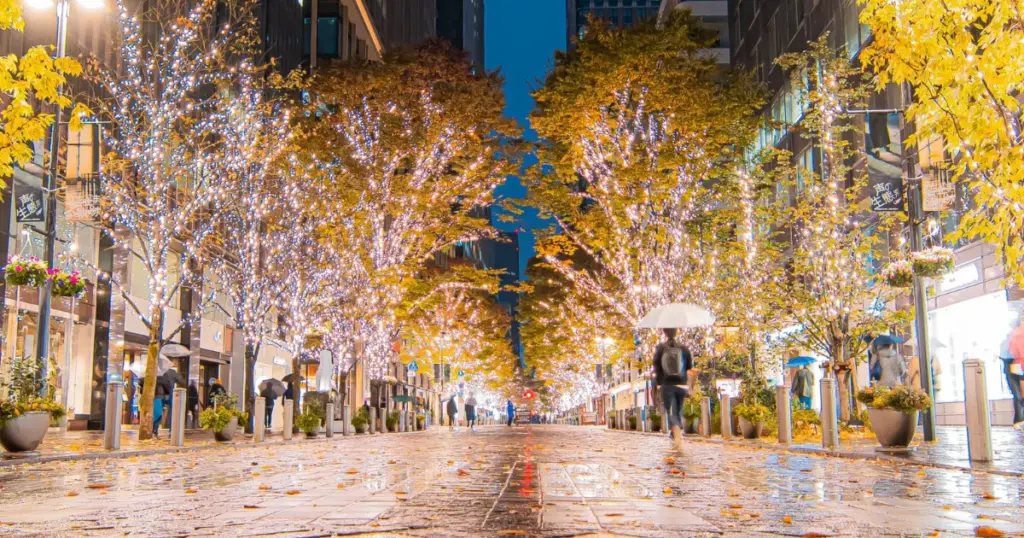
Marunouchi Naka-dori is the tree-lined street one block west of the station, running about 1.2 km from Otemachi to Yurakucho through the Marunouchi office district. It is paved in stone, lined with shops and cafés, and it is an easy, flat walk with a stroller between the station and the Imperial Palace side.

Car-Free Hours and the Urban Terrace
Around the middle of the day, part of Naka-dori is closed to cars and turned into an open-air terrace with tables and chairs, sometimes with food trucks. You can sit down there with a coffee or a picnic lunch from the station.
Times are set by the area's management and can change, so look for the signs at each end of the street.
Street Gallery
Sculptures by Japanese and international artists stand along the pavement as the Marunouchi Street Gallery, run by Mitsubishi Estate with the Hakone Open-Air Museum's foundation. Children can look out for them as they walk.

Marunouchi Illumination in Winter
In winter the trees along Naka-dori are lit in champagne gold for the Marunouchi Illumination. The 2025 to 26 season ran from 13 November to 15 February, from 16:00 to 23:00 and until midnight in December, and it was free.
The organisers announce the 2026 to 27 dates in the autumn on the Marunouchi official site.
Baby Rooms, Stroller Rental and the Free Bus
The Marunouchi buildings along the street are well set up for families. These details are from the official Marunouchi site.
- Baby rooms. Marunouchi Building 3F, Shin-Marunouchi Building 4F and 5F, Marunouchi Oazo 4F and Marunouchi Brick Square 3F.
- Stroller rental. From the 1F information counters of the Marunouchi Building and Shin-Marunouchi Building, 11:00 to 20:00 (19:00 on Sundays and holidays). For ages 3 months to 3 years, up to 15 kg. No reservations.
- Free shuttle bus. The Marunouchi Shuttle loops round Otemachi, Marunouchi and Yurakucho about every 15 minutes. A full loop takes 35 to 40 minutes.
Just off the street, the red-brick Mitsubishi Ichigokan Museum shows 19th-century European art. Our Mitsubishi Ichigokan guide has its current exhibition.
How to Get There and How Long to Spend
The building is the west side of JR Tokyo Station, so arriving by train is enough. Follow the signs for the Marunouchi exits. Which exit depends on what you want to see.
- Marunouchi North Exit. This exit takes you under the North Dome, next to Tokyo Station Gallery.
- Marunouchi South Exit. This exit takes you under the South Dome, with KITTE across the road.
- Marunouchi Central Exit. It leads straight out to the plaza and Gyoko-dori.
- Tokyo Metro Marunouchi Line. Get off at Tokyo Station and take the underground passage to the Marunouchi side.
- From Narita Airport. The Narita Express runs direct to Tokyo Station. See our Narita Express guide.
If you come from the Yaesu side (east), walk through the North Passage, which crosses the station without going through a ticket gate. The station is long, so allow about 10 minutes.
A photo stop at the plaza and the domes takes about 30 minutes. With the gallery, KITTE Garden and a walk along Naka-dori, plan 2 to 3 hours.
Visiting with Kids
The Marunouchi Building is a short, free stop that works best as part of a bigger day. Children can hunt for zodiac animals in the domes and watch the trains from KITTE Garden while the adults take their photos, and then you can move on before anyone gets bored.
The free Imperial Palace East Gardens are about 10 to 15 minutes on foot from the Marunouchi exits, with lawns where children can run. They close on Mondays and Fridays.
See our Imperial Palace guide. On the other side of the station, Tokyo Character Street is the stop most children ask for.
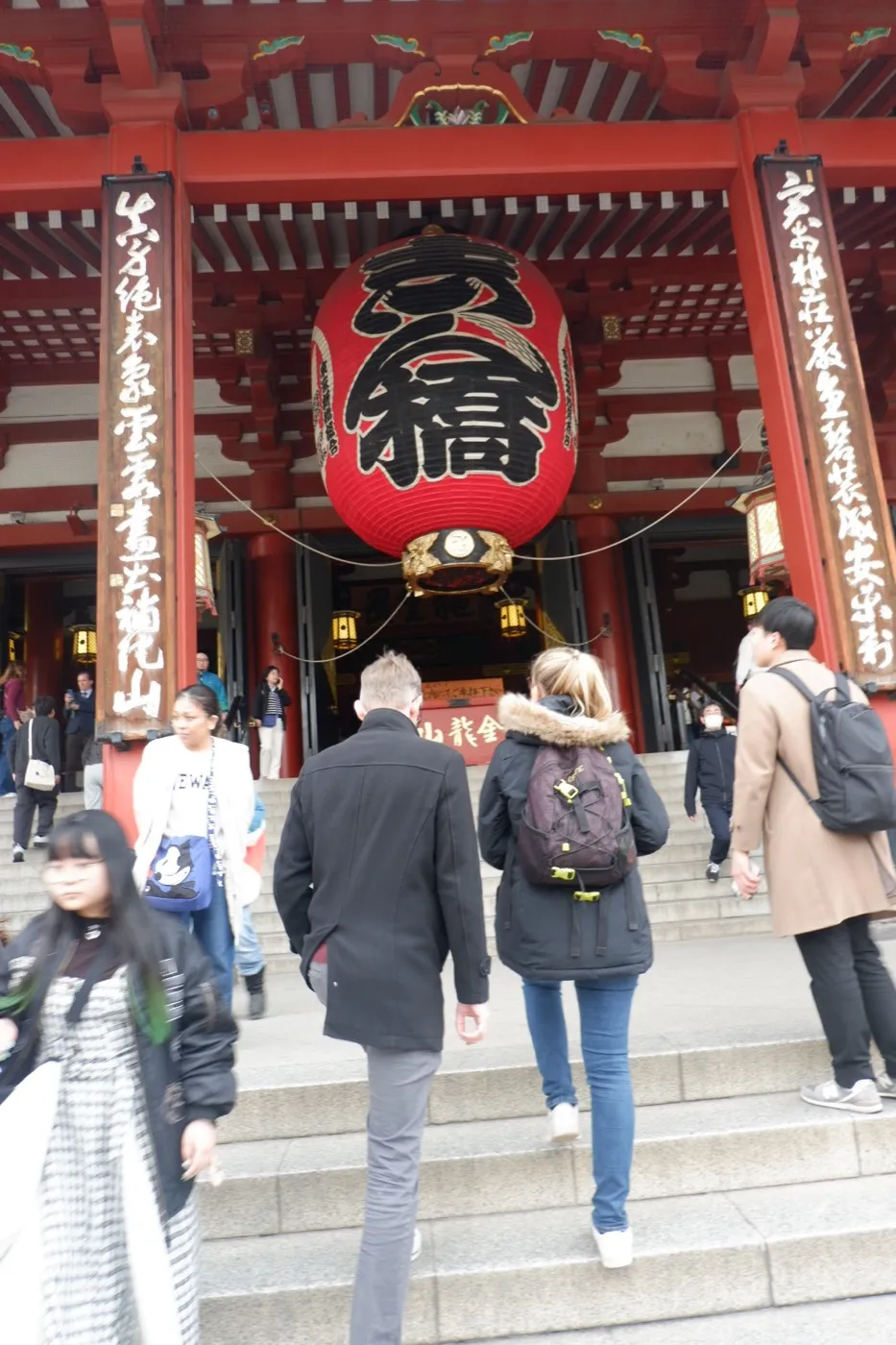
On our private Tokyo tour with kids, Tokyo Station and the palace are part of the classic first day, after the morning in Asakusa. Our guide to things to do in Tokyo with kids shows how they fit together, and our tours in Tokyo list the private days we run.
Marunouchi is also Tokyo's main office district. If you are in town for meetings, we can show you the palace and Asakusa in a few spare hours, or plan a day out for a small team.
See our page for companies and travel agencies.
Frequently Asked Questions
- Can you go inside the Tokyo Station Marunouchi Building?
-
Yes. The North and South dome halls are outside the ticket gates and free to enter. The Tokyo Station Gallery and the hotel's restaurants are open to visitors. The hotel's guest floors are for staying guests.
- Who designed Tokyo Station?
-
Kingo Tatsuno, one of Japan's first Western-trained architects, designed it. The red-brick building opened in December 1914 and was restored to his design in 2012.
- What is inside the Tokyo Station domes?
-
Eight eagles and eight of the twelve zodiac animals are set around the ceiling. The Rat, Rabbit, Horse and Rooster are missing. Look up from the Marunouchi North or South Exit hall.
- Why are four zodiac animals missing from the Tokyo Station domes?
-
The Rat, Rabbit, Horse and Rooster stand for north, east, south and west, and they are not in the domes. In 2013 carvings of these four were found in the ceiling of Takeo Onsen's Romon Gate in Saga, which Kingo Tatsuno designed at the same time.
- Where is the best place to photograph Tokyo Station?
-
The Marunouchi Station Plaza for the straight-on view, Gyoko-dori Avenue for symmetry, and the free KITTE Garden rooftop, Marubiru 5F or Shin-Marunouchi 7F terraces for the view from above. Go around sunset for the lights.
- Is Tokyo Station lit up at night?
-
Yes. The red-brick Marunouchi Building is lit from sunset until 21:00. In winter the trees on Marunouchi Naka-dori next to it are lit in gold for the Marunouchi Illumination.
- How old is Tokyo Station?
-
The Marunouchi building opened in December 1914, so it is over 110 years old. It lost its domes in 1945 and was restored to its original look in 2012.
- Is Marunouchi Naka-dori worth a walk?
-
Yes, if you are already at Tokyo Station. It is a flat, tree-lined street with sculptures, cafés and a car-free terrace at midday, and in winter its trees are lit in gold.

Tokyo Station Marunouchi Building
Address
1 Chome-9-1 Marunouchi, Chiyoda City, Tokyo 100-0005
Nearest station
Tokyo Station (Shinkansen / Tokaido / Yokosuka / Sobu / Keihin-Tohoku / Yamanote / Chuo / Keiyo / Ueno-Tokyo / Tokyo Metro Marunouchi)
Sources
https://www.tokyostationcity.com/en/learning/station_building/
https://www.tokyostationcity.com/en/information/
https://www.ejrcf.or.jp/gallery/english/
https://marunouchi.jp-kitte.jp/guide/facilities.jsp
https://www.marunouchi.com/en/information/baby/
https://www.marunouchi.com/en/information/freebus/
https://www.marunouchi.com/en/lp/tokyo-afterdark/
https://www.nippon.com/en/features/jg00110/eto.html
https://www.visit-kyushu.com/en/see-and-do/spots/takeo-onsen/
Plan a Private Day with a Local

Every tour is private, for your group only, and planned with you before you arrive. From US$550 per group for a day on foot in Tokyo or Yokohama, or from US$890 for a day trip by train to Kamakura, Hakone or Mt. Fuji. Travelling with children? See our Tokyo private tour with kids.
Free Consultation

Japan Trails Newsletter
Free Newsletter Sign‑Up
Subscribe to our newsletter and receive a handpicked list of restaurants that Japanese locals go to.
You might also like
-
 Imperial Palace Tokyo: A Visitor Guide to the East Gardens, Nijubashi and the Palace Tour
-
 Hatsumode: A Guide to Your Japanese New Year Shrine Visit
-
 Mitsubishi Ichigokan Museum, Tokyo: A Visitor's Guide
-
 Ekibenya Matsuri and Odori at Tokyo Station: Where They Are and How to Buy
-
 KITTE Marunouchi: Rooftop Garden, Free Museum and Floor Guide
-
 GRANSTA Tokyo Station Guide: Shop Directory, Food and Hours