Tokyo Station Guide: What to Do In and Around the Station

Quick answer
- Tokyo Station has two sides, with the red-brick 1914 building, the Imperial Palace and KITTE on the Marunouchi (west) side and Tokyo Character Street, Ramen Street and the highway buses on the Yaesu (east) side.
- The best things to do are Tokyo Character Street (10:00 to 20:30), Tokyo Ramen Street, ekiben at GRANSTA, the domes of the Marunouchi building, and the free Imperial Palace East Gardens, closed on Mondays and Fridays.
- Allow 2 to 4 hours for the station and the Marunouchi side, and visit the shops on a weekday morning when they are quietest.
What Is There to Do at Tokyo Station?
Besides the Shinkansen platforms, Tokyo Station holds a restored 1914 station building, a corridor of over 30 character shops, a street of ramen counters, hundreds of food and bento shops, and an art gallery. A five-minute walk takes you to the Imperial Palace gardens, KITTE’s rooftop and the shops of Marunouchi.
Each place below has its own detailed guide, linked as we go. With children, the simplest plan is Character Street for the shops, ekiben for lunch, and the East Gardens for running around afterwards.
Tokyo Station also sits in the middle of the classic first day in Tokyo. If you are still putting your days together, start with our guide to things to do in Tokyo with kids.
Marunouchi or Yaesu, Which Side and Which Exit?
Pick your side before you leave the platform. Tokyo Station is long, and coming out on the wrong side can cost 15 minutes with a stroller.
| Side | Exits | What is there | Best for |
|---|---|---|---|
| Marunouchi (west) | North, Central, South | Red-brick building, domes, Tokyo Station Gallery, KITTE, Imperial Palace | Sightseeing and photos |
| Yaesu (east) | North, Central, South | First Avenue (Character Street, Ramen Street, Okashi Land), Daimaru, highway buses | Shopping, food, buses |
| Nihonbashi | Nihonbashi Exit | Tokaido Shinkansen gate, Nihonbashi area | Shinkansen to Kyoto and Osaka |
If you are already outside the ticket gates and need to cross, use the North Passage, which connects the Yaesu and Marunouchi sides without going through a gate. The Yokosuka and Sobu Line platforms for Narita Airport are deep underground on the Marunouchi side.
 ONO
If you are meeting someone at Tokyo Station, decide in advance whether it is the Yaesu side or the Marunouchi side. They are a long way apart.
Things to Do Inside Tokyo Station
Inside the station, the highlights for families are Character Street, the ekiben shops and the food halls. You can spend two hours here without going outside.
Tokyo Character Street
Most children want to come here first. Over 30 official character shops line one underground corridor on the Yaesu side, including the Pokémon Store, the JUMP SHOP, Tomica and Plarail, Chiikawa Land and Sanrio.
It is open from 10:00 to 20:30, outside the ticket gates. Our full Tokyo Character Street guide has the shop list and the best time to go.

Tokyo Ramen Street and Tokyo Okashi Land
Next to Character Street in the same basement, Tokyo Ramen Street gathers well-known ramen shops in one row. It is open from 10:30 to 23:00, and you order from a ticket machine.
Queues at the best-known shops are long at lunchtime, so eat early or late. Tokyo Okashi Land (9:00 to 21:00) sells sweets and snacks from the big Japanese makers, with some shop-only flavours.
See our Tokyo Ramen Street guide for the shops.
GRANSTA and Ekiben
GRANSTA Tokyo is the shopping area inside and around the station, mostly on B1 and 1F, with bento, sweets, gifts and cafés. It is generally open 8:00 to 22:00 (21:00 on Sundays and holidays).
Some of it is inside the ticket gates and some outside, so check before you go in.

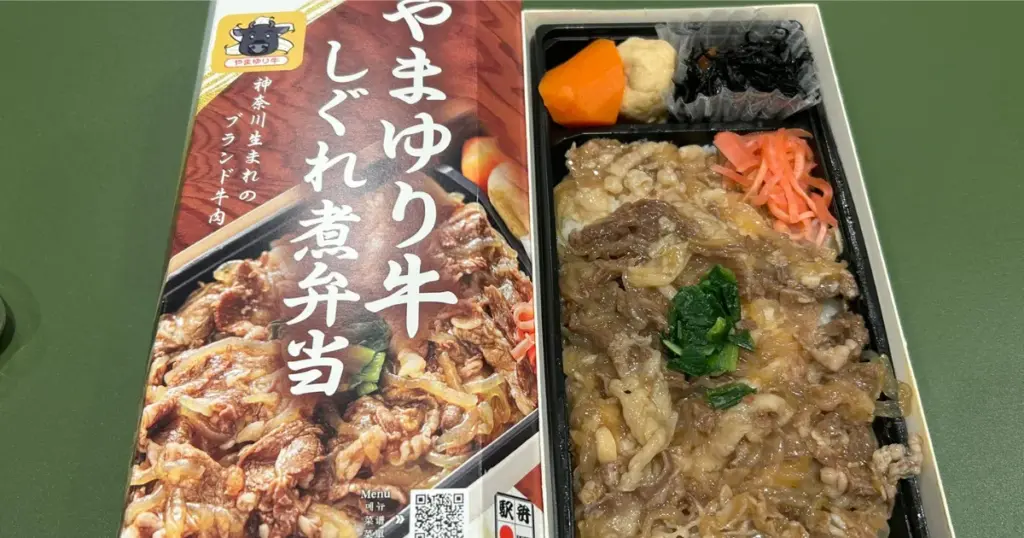
An ekiben is a boxed meal made to eat on the train, and Tokyo Station sells hundreds of kinds. Ekibenya Matsuri, inside the ticket gates on the 1F Central Passage, stocks bento from all over Japan.
Buy before you board, as there is little to choose from on the train. Our guides to GRANSTA Tokyo, the best ekiben at Tokyo Station and Ekibenya Matsuri go into more detail.
The Marunouchi Building and Its Domes
The red-brick station building on the Marunouchi side opened in 1914 and was restored to its original look in 2012. Step inside the North or South Exit and look up.
The domed ceilings carry reliefs, including animals of the zodiac, and children can look for the animal of their birth year. The Tokyo Station Hotel is in the same building.

For the best photo of the whole building, cross to the plaza in front, or go up to the KITTE rooftop (below). More history is in our Marunouchi building guide.
Tokyo Station Gallery
This art museum sits inside the station building at the Marunouchi North Exit, and its exhibitions change through the year. It is open 10:00 to 18:00 (20:00 on Fridays) and closed on Mondays.
Prices depend on the exhibition. For the show running until 8 November 2026, adults pay ¥1,600 and junior high students and younger are free. It suits older children better than toddlers.
Things to Do Around Tokyo Station (Marunouchi Side)
On the Marunouchi side, the Imperial Palace East Gardens and the KITTE rooftop are the two places worth walking to with children.
Imperial Palace East Gardens
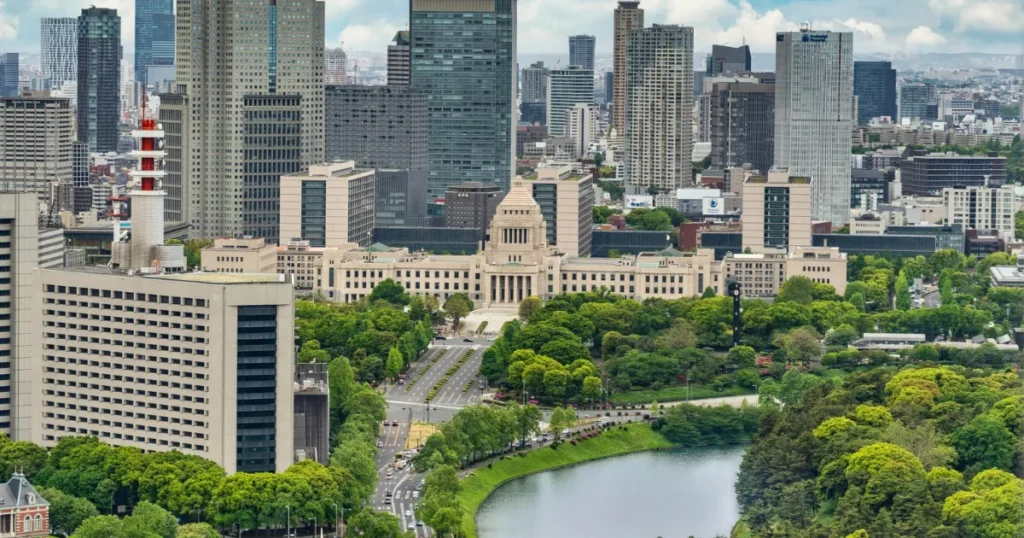
The East Gardens are the largest open space near the station, and they are free. They are the former grounds of Edo Castle, with lawns, the old castle walls and the stone base of the keep, which children can climb.
They are about 10 to 15 minutes on foot from the Marunouchi exits, through the Ote-mon Gate.
They are closed on Mondays and Fridays (open on national holidays, except 23 February), and from 28 December to 3 January. In October they are open from 9:00 to 16:30, and from November to February until 16:00.
Bags are checked at the gate, so leave big luggage in a station locker. Our Imperial Palace guide covers the gardens, the outer gardens and the palace tours.
KITTE and the KITTE Garden Rooftop
KITTE is the shopping building in the old Tokyo Central Post Office, directly opposite the Marunouchi South Exit. Its open-air rooftop garden on the 6th floor looks straight down on the station building and is free.
No other free spot gives a better view of the station, and dusk is a good time to go up. Inside KITTE, the Intermediatheque is a free museum of University of Tokyo collections, with skeletons, stuffed animals and minerals in old wooden cases.
It is open from 11:00, closed on Mondays.

See our guides to KITTE Marunouchi and KITTE Garden.
Marunouchi Building, Naka-dori and Mitsubishi Ichigokan
The Marunouchi Building (Marubiru), across the square from the station, has restaurants on its upper floors with views over the station. Marunouchi Naka-dori, one block west, is a tree-lined street of shops that is lit up in winter. Our Marunouchi Naka-dori guide has the details.
Mitsubishi Ichigokan Museum is a rebuilt red-brick office building from 1894 that now shows 19th-century European art, with a small garden in front. It is closed between exhibitions and reopens on 17 October 2026 with an exhibition on the painter Fontanesi, until 24 January 2027.
Hours are 10:00 to 18:00, closed on most Mondays. See our Mitsubishi Ichigokan guide.
Hato Bus Open-Top Tours
Sightseeing buses leave from the Marunouchi South side. The open-top double-decker loops let children who are tired of walking see the city from their seats. Our Hato Bus guide covers the routes.
Luggage Storage and Coin Lockers at Tokyo Station
There are coin lockers at almost every gate, but on busy days the big ones fill by mid-morning. These are the official options.
- Coin lockers inside the gates. Marunouchi South and Central Gates, Yaesu Central and South Gates, the 1F Central Passage, and B1 in GRANSTA.
- Coin lockers outside the gates. Yaesu North Gate, and the Marunouchi Underground North and South Gates.
- Staffed baggage storage. The Shinkansen Parcel Service and Baggage Storage counter outside the Yaesu South Gate (5:30 to 23:00), a counter at the JR EAST Travel Service Center by the Marunouchi North Gate, and cloak services in GRANSTA on B1.
- Free locker check. The Suica lockers show live availability in the official TOKYO STATION NAVI app.
If you are moving hotels by Shinkansen, JR East’s Hakobyun service can send a suitcase to another city on its Shinkansen lines without booking ahead.
Tokyo Station with Kids, Baby Rooms, Lifts and Strollers
Tokyo Station is one of the easier big stations with a stroller, because almost every platform has a lift and the main concourses are flat. Three things help.
- Baby rooms. First Avenue has a baby break room on B1 at North Street, near Character Street, for nursing and nappy changes. Other baby rooms are marked on the official Tokyo Station map, which you can open on your phone.
- Lifts. The official accessible route map shows step-free routes on 1F and B1. Check it before the day for the exit you want, rather than looking for lifts on a crowded platform.
- Timing. The station is busiest on weekday rush hours (around 7:30 to 9:30 and 17:30 to 19:30) and on Friday evenings before holidays. Shop at Character Street on a weekday morning.
The Japan Trails private Tokyo tour with kids plans these details for you, such as which exit has the lift, where to change a nappy, and where to eat when someone has an allergy.
How Long to Spend at Tokyo Station, A Half-Day Plan
Two to four hours is enough. A simple half day for a family looks like this.
ONOThere is a lot to see here (Character Street, Ramen Street, the Marunouchi station building, KITTE, Intermediatheque). Give yourself more time than you think.
| Time | Where | Why |
|---|---|---|
| 10:00 | Tokyo Character Street | Shops open, quieter before lunch |
| 11:30 | Ramen Street or GRANSTA | Early lunch, or buy ekiben for a picnic |
| 12:30 | Marunouchi domes and station plaza | Photos of the red-brick building |
| 13:00 | Imperial Palace East Gardens | Free, open lawns (not Mon or Fri) |
| 15:00 | KITTE Garden rooftop | View of the station, toilets and a café below |
On a Monday or Friday, swap the East Gardens for a walk to the outer gardens and Nijubashi, or the Intermediatheque in KITTE (closed on Mondays).
If you would like the whole first day in Tokyo planned around your children, from Asakusa in the morning to the palace and Tokyo Tower in the afternoon, see our tours in Tokyo.
Many business hotels sit around Marunouchi and Nihonbashi, a few minutes from this station. If you are here for work, we can plan a half day between meetings or a day out for a small team.
See our page for companies and travel agencies.
Frequently Asked Questions
- Is Tokyo Station worth visiting if I am not catching a train?
-
Yes, for a half day. Character Street and Ramen Street are among the easiest places in Tokyo to please children, the restored Marunouchi building is one of the city’s classic photos, and the free Imperial Palace East Gardens are a short walk away.
- Which side of Tokyo Station is best for sightseeing?
-
The Marunouchi side, to the west, has the red-brick building, the domes, KITTE and the walk to the Imperial Palace. The Yaesu side is better for shopping, food and highway buses.
- Where is Tokyo Character Street in Tokyo Station?
-
It is on the Yaesu side, in the First Avenue Tokyo Station basement, outside the ticket gates. Leave by any Yaesu gate and follow the signs to B1. It is open from 10:00 to 20:30.
- Can I store luggage at Tokyo Station?
-
Yes. There are coin lockers inside and outside the gates, and a staffed baggage counter outside the Yaesu South Gate, open from 5:30 to 23:00. Large lockers fill early on busy days.
- Is Tokyo Station open 24 hours?
-
No. The station closes overnight, between the last trains after midnight and the first trains in the early morning. Shops keep shorter hours. GRANSTA, for example, generally opens from 8:00 to 22:00.
- Does Tokyo Station have baby rooms?
-
Yes. There is a baby break room on B1 of First Avenue, at North Street, near Character Street, and more are marked on the official station map. Most platforms have lifts.
Tokyo Station
Address
1 Chome-9-1 Marunouchi, Chiyoda City, Tokyo 100-0005
Nearest station
Tokyo Station (Shinkansen / Tokaido / Yokosuka / Sobu / Keihin-Tohoku / Yamanote / Chuo / Keiyo / Ueno-Tokyo / Tokyo Metro Marunouchi)
Sources
https://www.tokyostationcity.com/en/information/
https://www.tokyostationcity.com/en/barrierfree/
https://www.tokyoeki-1bangai.co.jp/en/
https://www.gransta.jp/en/
https://www.kunaicho.go.jp/e-event/higashigyoen02.html
https://www.ejrcf.or.jp/gallery/english/
https://www.intermediatheque.jp/en/info/guide
https://mimt.jp/guide/
Plan a Private Day with a Local

Every tour is private, for your group only, and planned with you before you arrive. From US$550 per group for a day on foot in Tokyo or Yokohama, or from US$890 for a day trip by train to Kamakura, Hakone or Mt. Fuji. Travelling with children? See our Tokyo private tour with kids.
Free Consultation
Japan Trails Newsletter
Free Newsletter Sign‑Up
Subscribe to our newsletter and receive a handpicked list of restaurants that Japanese locals go to.


You might also like
-
 Imperial Palace Tokyo: A Visitor Guide to the East Gardens, Nijubashi and the Palace Tour
-
 Hatsumode: A Guide to Your Japanese New Year Shrine Visit
-
 Mitsubishi Ichigokan Museum, Tokyo: A Visitor's Guide
-
 Ekibenya Matsuri and Odori at Tokyo Station: Where They Are and How to Buy
-
 KITTE Marunouchi: Rooftop Garden, Free Museum and Floor Guide
-
 Tokyo Station Marunouchi Building: Red-Brick History, Domes and Photo Spots