Daruma Dolls: A Local Guide to Japan's Wish-Making Doll

Quick answer
- A daruma is a round, weighted good-luck doll modelled on Bodhidharma, the monk linked to Zen Buddhism.
- You paint one eye when you set a goal and the other when you reach it.
- Takasaki in Gunma makes most of them.
What Is a Daruma Doll?
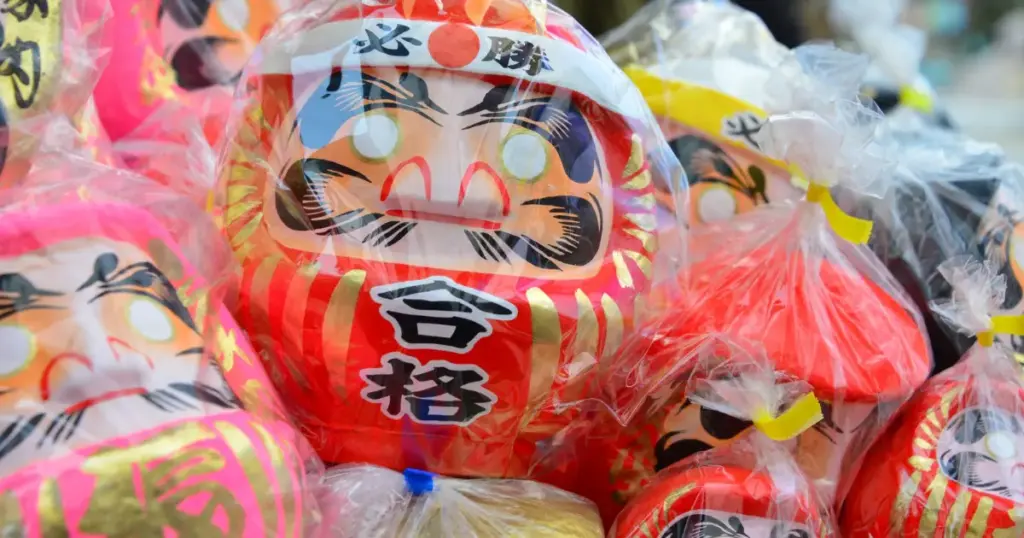
A daruma is a hollow, round papier-mache doll, usually red, with a stern face and two blank white eyes. It is a charm for a goal rather than for luck in general.
You paint in one eye when you make a wish or set a target, and the second eye when it comes true.
The doll is modelled on Bodhidharma (Daruma in Japanese), the monk remembered as the founder of Zen Buddhism. It has no arms or legs, and its bottom is weighted, so when you push it over it rolls back upright.
That is the whole point of the doll, and Japanese people sum it up in a phrase every child knows, nanakorobi yaoki, "fall down seven times, get up eight".
You will see daruma in shop windows, on office desks during exam season, at election headquarters and on the shelves of family homes. Most are bought around New Year, when people set their goals for the year, but they are sold all year round.
Where the Daruma Came From
The daruma as a lucky doll grew up at temples in the Edo period, and the town most connected with it today is Takasaki in Gunma Prefecture, north-west of Tokyo.
Shorinzan Daruma-ji, a Zen temple in Takasaki founded in 1697, calls itself the birthplace of the good-luck daruma. Its story begins in the 1680s, when a flood on the Usui River left a large piece of fragrant wood on a hill in the village, and a travelling ascetic carved a seated statue of Daruma from it.
The papier-mache good-luck daruma sold at the temple's New Year fair grew out of this story, and the fair has been held for centuries.
Takasaki is still Japan's best-known daruma-making town, and Takasaki daruma have a recognisable face (more on that below). Other regions have their own styles, and some temples in Tokyo and Kyoto keep their own daruma traditions, but if someone says "a daruma", this is usually the doll they mean.
What the Shape, Face and Colours Mean
Every part of a daruma carries a meaning. The round, weighted body stands for getting back up, the face for long life and determination, and the colour for the kind of wish.
The Shape
The round body with a heavy base is the "fall seven times, get up eight" idea made into an object. It is also why a daruma is a common gift for someone starting something hard, such as a new business, an exam year or recovery from an illness.
The Face
On a Takasaki daruma, the eyebrows are painted as a crane and the moustache and beard as a turtle, both old symbols of long life in Japan. The rest of the face is serious, almost fierce, because the doll is meant to look determined.
On the belly you often see characters for luck, success or passing an exam.
The Colours
Red is the traditional colour, linked with protection from illness and bad luck. Other colours are newer, and their meanings are not fixed. Makers and shops each have their own list.
If the colour matters to you, ask in the shop. The table shows the meanings you will most often see on labels.
| Colour | Often sold for | Good gift for |
|---|---|---|
| Red | Protection, general good fortune | Anyone, the classic choice |
| Gold | Money and business success | A new business |
| White | A fresh start, exams | Students, a new job |
| Black | Keeping bad luck away, business | Someone after a hard year |
| Pink | Love and relationships | Couples |
How to Use a Daruma by Painting the Eyes
Make your wish, paint in one eye, keep the doll where you will see it every day, and paint the second eye only when the wish comes true. This eye painting is called me-ire or kaigan, "opening the eyes".
- Decide on one clear goal. A daruma works best for something specific, such as passing an exam, finishing a project or getting through a difficult year.
- Paint the first eye. Most people fill in the doll's left eye first, which is the one on your right as you face it. Customs vary by region and temple, so do not worry if you see it done the other way. A black marker or brush pen is fine.
- Put it somewhere visible. Choose a desk, a shelf by the front door or the living room, where it reminds you of the goal.
- Paint the second eye when it comes true. Then the daruma has "seen" the wish through.
At Jindaiji Temple in Chofu, on the western side of Tokyo, a priest will write a Sanskrit character on your daruma at the March daruma fair instead of you painting an eye, with one character for a new doll and another for an old one whose work is done.
What to Do with a Daruma When Your Wish Comes True
When the wish comes true, or at the end of the year, Japanese people take the daruma back to a temple to be thanked and burned in a ceremonial fire. Nobody throws a daruma in the rubbish.
Shorinzan Daruma-ji takes back old daruma every day from 9:00 to 17:00 at the reception between the Main Hall and the Daruma Hall. There is no fixed fee.
You may leave a donation as thanks. The temple's biggest ceremony for them is on 15 January, when the old daruma are burned in an otakiage fire.
If you want to send one by post, the temple asks you to contact it first.
If you are taking your daruma home with you, the same idea applies. Keep it until the goal is done, then thank it. Many families overseas keep their finished daruma, with both eyes painted, as a record of what they achieved.
Where to Buy a Daruma in Japan
You can buy a small daruma in souvenir shops all over Japan, but the best places are temple fairs and Takasaki, where they are made and sold by the people who paint them.
In Tokyo
The shops along Nakamise and the streets around Senso-ji in Asakusa sell small daruma alongside other good-luck charms. They are an easy buy on a first day in Tokyo, and you can compare sizes and colours in a few minutes.
The biggest daruma event in Tokyo is the Jindaiji Daruma Fair in Chofu, held every year on 3 and 4 March as part of the temple's largest festival. Around 300 stalls sell daruma in every size, and prayers are offered through the day.
Check Jindaiji's site for the year's times before you go.
In Takasaki
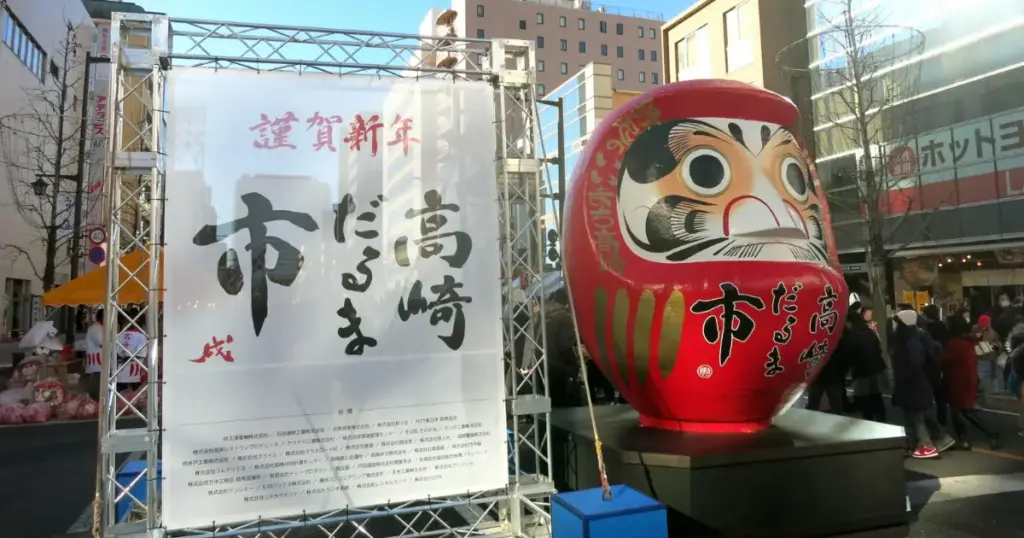
Two New Year markets fill Takasaki with daruma. The Takasaki Daruma Market is held on 1 and 2 January on the main street outside the west exit of Takasaki Station, with makers selling directly from tents.
The Shorinzan Nanakusa Taisai Daruma Market follows on 6 and 7 January at Shorinzan Daruma-ji, with stalls in front of the Main Hall and food trucks behind it. Exact times for New Year 2027 are announced by the organisers nearer the date, so check before you go.
At Airports and Gift Shops
Airport and station gift shops sell small, travel-sized daruma. They are fine as a light present, but the choice is narrower and you miss picking one from a maker's stall.
Painting Your Own Daruma at Shorinzan Daruma-ji
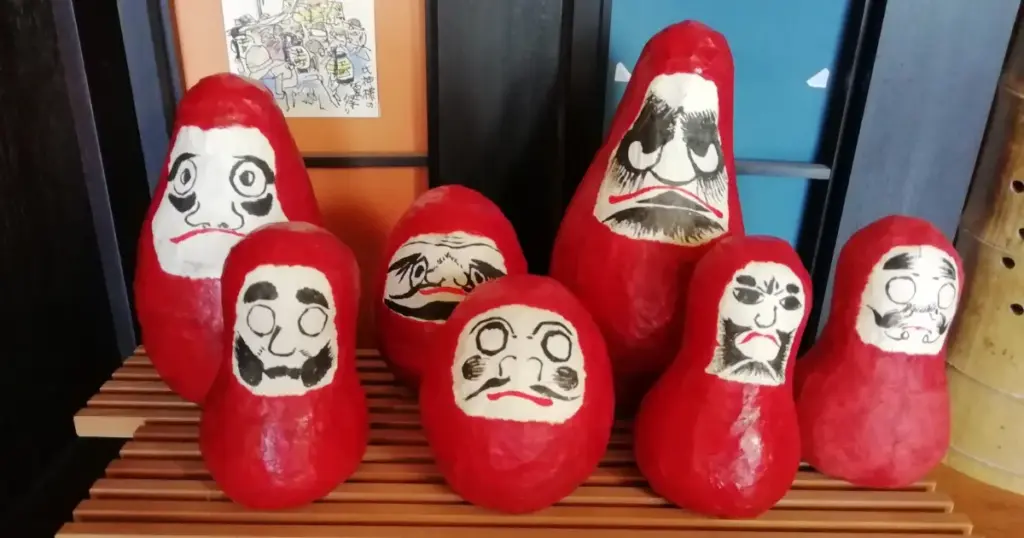
Shorinzan Daruma-ji runs a daruma painting session every day of the year, and it is one of the best hands-on souvenirs in the Tokyo area. You paint the face and colours yourself and take the doll home the same day.
| Item | Detail |
|---|---|
| Price | ¥1,500 for a 12 cm daruma, ¥2,000 for 15 cm (tax included) |
| Time needed | About 30 minutes, with no strict limit |
| Booking | Not needed for individuals, groups of 10 or more should book |
| Reception | 10:00 to 15:30, closes at 16:00 |
The temple may close the session for heavy snow or typhoons, and on busy days you may be asked to give up your seat when you finish. Visiting the temple itself is free.
Getting there. The nearest station is Gunma-Hachiman on the JR Shin'etsu Line, about 20 minutes on foot. From the west exit of Takasaki Station, the Gururin bus (Shorinzan Line) goes to Shorinzan-iriguchi in about 30 minutes, or a taxi takes about 20.
Takasaki Station is on the Joetsu and Hokuriku Shinkansen from Tokyo, so it can be a day trip. Our day trips from Tokyo guide has other ideas within reach.
 ONO
I recommend shopping for daruma to families.
Choosing, Sizing and Packing a Daruma with Kids
Children enjoy daruma because they get to do something with it. They choose a colour, make a wish and paint an eye. Let each child pick a small one and set a goal for the trip or the school year.
- Size. A doll of about 10 to 15 cm fits in a carry-on bag and stands on a desk. Larger ones look grand but are hard to carry home.
- Painting at home. Buy the doll blank-eyed and paint the first eye on your first evening back, so the wish starts at home.
- Packing. Papier-mache dents easily. Wrap it in clothes, stand it upright in the middle of your bag, and keep it away from heavy items. Many sellers will give you a box if you ask.
- Pair it with other charms. Daruma sit well next to a maneki-neko lucky cat, the beckoning cat that invites customers and good fortune. For more ideas, see our guide to the best Japanese souvenirs.
New Year is the busiest time for daruma, and it is also when Japanese families make their first shrine and temple visit of the year. If you are visiting then, our guide to the best time to visit Tokyo explains what is open and what is closed.
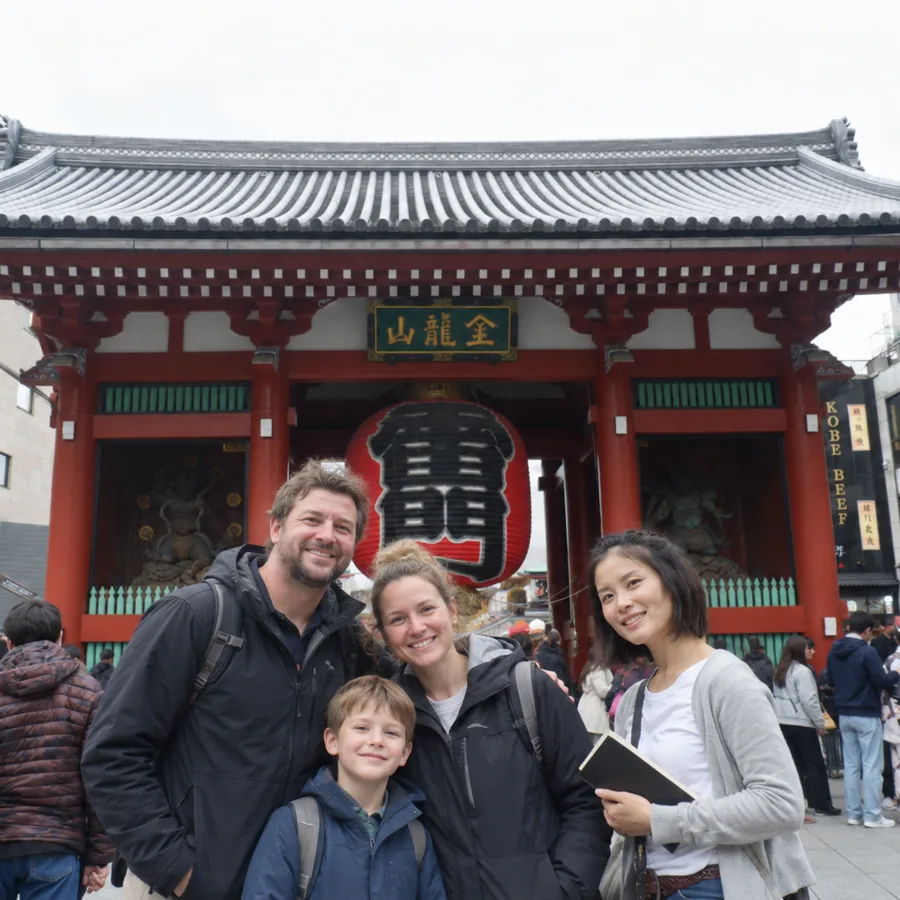
If you would like to fit a daruma stop into a family day in Asakusa, our Tokyo private tour with kids starts at Kaminarimon and walks Nakamise, where small daruma are on sale.
Frequently Asked Questions
- What does a daruma doll mean?
-
A daruma stands for perseverance and reaching a goal. Its weighted body always rolls back upright, which matches the Japanese saying "fall down seven times, get up eight". You paint one eye when you set the goal and the other when you achieve it.
- Which eye do you paint first on a daruma?
-
Most people paint the doll's left eye first, which is on your right as you face it, and the other eye when the wish comes true. Customs vary by region and temple, so either way is accepted.
- Where can I buy a daruma in Tokyo?
-
Souvenir shops around Senso-ji and Nakamise in Asakusa sell small daruma all year. The largest daruma fair in Tokyo is at Jindaiji Temple in Chofu on 3 and 4 March.
- What do you do with a daruma after your wish comes true?
-
In Japan, people take it back to a temple, where old daruma are burned in a ceremonial fire. Shorinzan Daruma-ji accepts them every day from 9:00 to 17:00 for a donation.
- Can you paint your own daruma?
-
Yes. Shorinzan Daruma-ji in Takasaki runs a painting session every day. It costs ¥1,500 for a 12 cm doll or ¥2,000 for 15 cm and takes about 30 minutes, with no booking needed for individuals.
- Is it rude to buy a daruma as a souvenir?
-
No. Daruma are sold to visitors everywhere and make a thoughtful gift. Treat it as a charm rather than a toy, and when it has done its job, thank it rather than throw it away.
Sources
https://www.daruma.or.jp/
https://www.daruma.or.jp/%E3%81%A0%E3%82%8B%E3%81%BE%E7%B5%B5%E4%BB%98%E3%81%91%E4%BD%93%E9%A8%93/
https://www.daruma.or.jp/%E3%81%A0%E3%82%8B%E3%81%BE%E4%BE%9B%E9%A4%8A/
https://www.daruma.or.jp/660-2/
https://www.jindaiji.or.jp/event/darumaichi.php
https://www.gotokyo.org/en/spot/ev162/index.html
https://www.visit-gunma.jp/en/plan-your-trip/access-guide/how-to-get-to-shorinzan-darumaji-temple/
Plan a Private Day with a Local

Every tour is private, for your group only, and planned with you before you arrive. From US$550 per group for a day on foot in Tokyo or Yokohama, or from US$890 for a day trip by train to Kamakura, Hakone or Mt. Fuji. Travelling with children? See our Tokyo private tour with kids.
Free Consultation

Japan Trails Newsletter
Free Newsletter Sign‑Up
Subscribe to our newsletter and receive a handpicked list of restaurants that Japanese locals go to.

You might also like
-
 Hay Fever in Japan: Pollen Season, Masks and Tips for Families
-
 Yushima Seido and Hijiri Bridge: A Walk Through Ochanomizu
-
 Hinamatsuri: A Visitor's Guide to Japan's Doll Festival
-
 Setsubun in Japan: Bean Throwing, Ehomaki and Where to See It
-
 Naritasan Shinshoji Temple: A Visitor's Guide with the Omotesando
-
 Sumo Wrestling in Japan: Tournament Dates, Tickets and Watching with Kids
-
 Hatsumode: A Guide to Your Japanese New Year Shrine Visit