Anago Bento at Tokyo Station: Soft Conger Eel on Tea Rice
Quick answer
- The anago bento is still sold at Tokyo Station in October 2026, at ¥1,650 including tax.
- It is soft-simmered conger eel on tea-flavoured rice, in a box branded Nihonbashi Daimasu.
- Buy it at Ekibenya Matsuri inside the JR gates, open 5:30 to 22:00, ideally in the morning.
Is the Anago Bento Still Sold at Tokyo Station?
Yes. In October 2026 the Anago Bento is on Ekibenya Matsuri's official menu at ¥1,650 including tax, up from about ¥1,600 when we first wrote about it.
It sits in the shop's seafood and sushi section.
| Detail | Current information |
|---|---|
| Price | ¥1,650 including tax (October 2026) |
| Brand on the box | Nihonbashi Daimasu |
| Made by | JR East Cross Station, which runs Ekibenya Matsuri and the Daimasu brand |
| Where sold | Ekibenya Matsuri, inside the JR gates at Tokyo Station |
Prices can differ by branch, not every branch carries every box, and the shop notes that boxes can change or end without notice. Check the label before you pay.
What Is Anago?
Anago is conger eel, a long saltwater fish caught in Tokyo Bay and around Japan. It is not the same as unagi, the freshwater eel most visitors know from grilled eel rice bowls.
| Anago (conger eel) | Unagi (freshwater eel) | |
|---|---|---|
| Lives in | The sea | Rivers, and farms |
| Taste | Light, soft, a little sweet | Rich and oily |
| Usual cooking | Simmered, or grilled lightly | Grilled with a thick sweet glaze |
| Typical price | Lower | Higher |
Simmered anago brushed with a sweet sauce is a classic of Edo-style (old Tokyo) sushi, and you will see it on sushi counters all over the city. The ekiben uses the same idea.
The eel is simmered until it is soft enough to cut with chopsticks.
Anago has been part of Tokyo cooking since the Edo period, when Tokyo Bay supplied the city's fish markets. Edomae, "in front of Edo", still describes the style of sushi built on fish from the bay, and simmered anago with a thick sweet sauce, called tsume, is one of its signature pieces.
The same fish is also fried as tempura, and a whole anago tempura laid across a bowl of rice is a common lunch in the old neighbourhoods.
If your family likes the bento, these are easy ways to try anago again in Tokyo.
- At a sushi restaurant, order anago nigiri, a slice of simmered eel on rice brushed with sauce. Conveyor belt chains usually have it too.
- At a tempura restaurant, look for anago tempura or anago tendon (tempura on rice).
- At a department store food hall, look for boxed anago-zushi, pressed or rolled.
The other well-known anago ekiben is Anagomeshi from Miyajimaguchi in Hiroshima, where the eel is grilled rather than simmered. It is in our guide to ekiben in Japan.
What Is Inside the Box
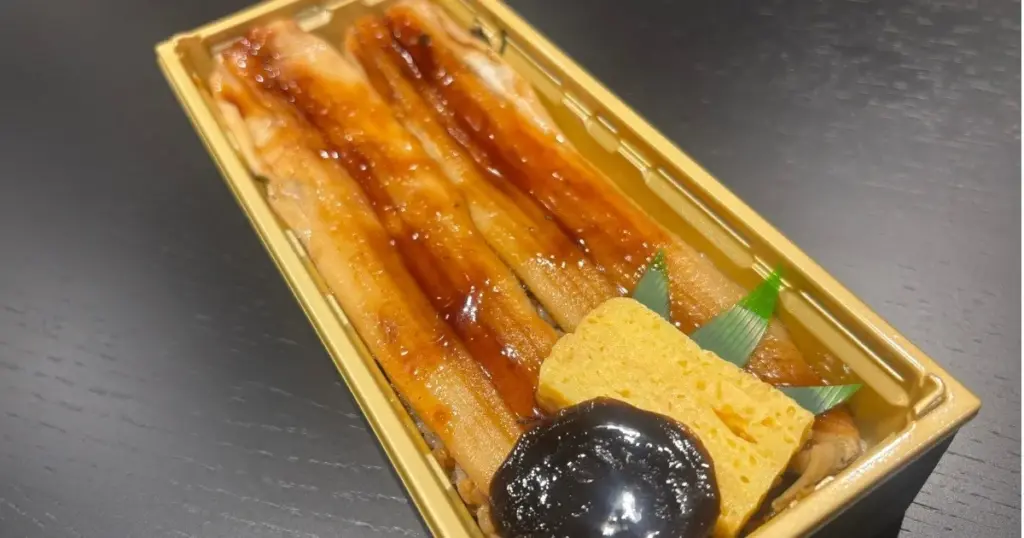
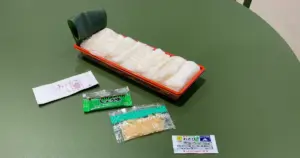
The box is a long, narrow tray of soft-simmered anago laid over tea-flavoured rice (chameshi). Under the eel is a layer of chopped vegetables pickled in soy sauce, with shredded nori seaweed for flavour.
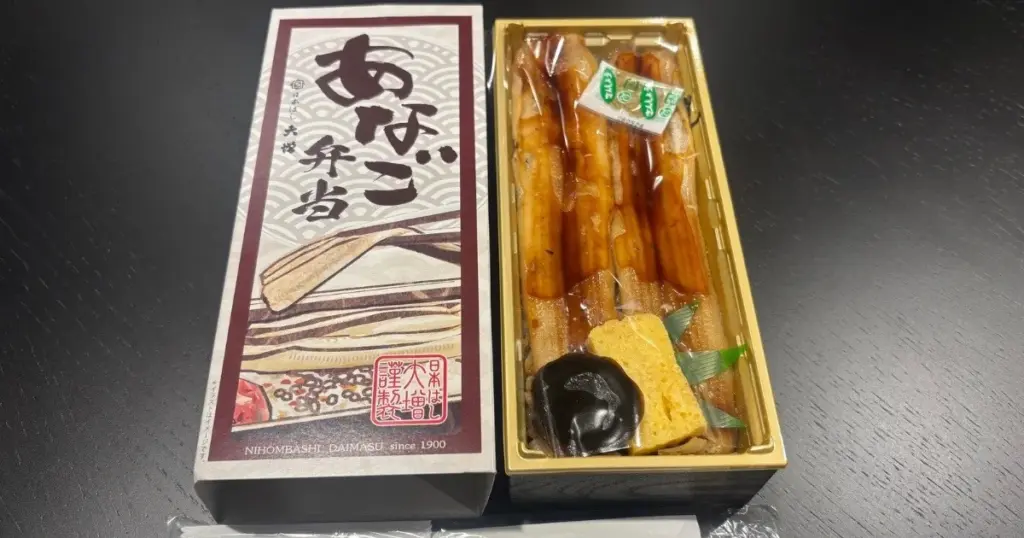
- Simmered anago. Several whole strips are brushed with a sweet soy glaze.
- Tea rice (chameshi). In Tokyo this means rice cooked with soy sauce and sake, which turns it a light tea colour.
- Pickled vegetables and nori. These sit under the eel and add crunch and salt.
- Small sides. The box we photographed had a slice of rolled omelette and a simmered shiitake.
- Sansho pepper. A small packet of Japanese pepper comes with it for sprinkling on the eel.
The box is long and slim, so it fits easily on a Shinkansen tray table.
What It Tastes Like and Who It Suits
It tastes gentle, with sweet, soft eel and a fragrant rice that is not heavy. The sansho adds a citrus smell and a slight tingle, so leave it off for children.
The pickled vegetables under the eel stop it from feeling one-note.
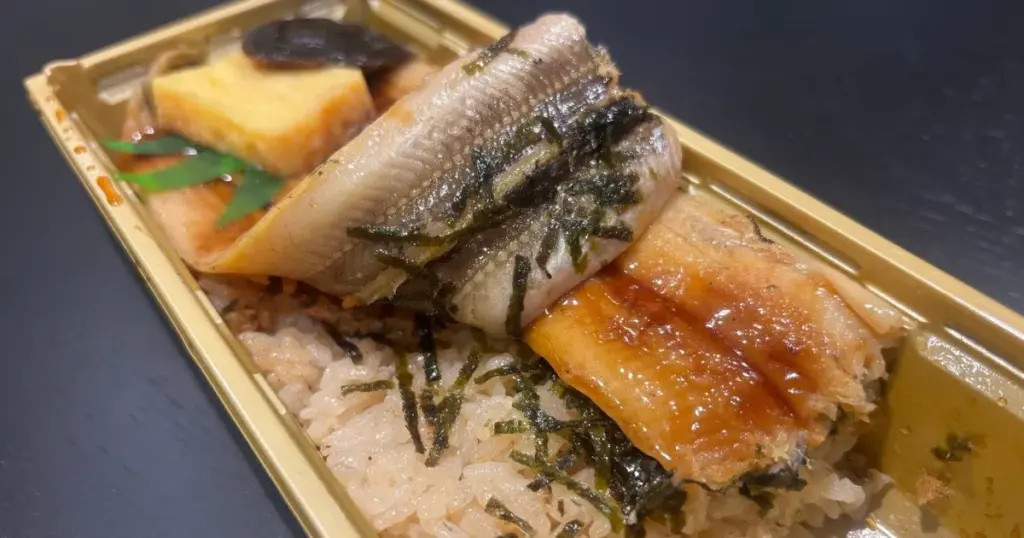
It suits adults who like Japanese flavours and want something lighter than a beef box. It also works for children who like sweet sauces, because the eel is soft, mild and has no noticeable bones.
For a child who is wary of fish, a beef or chicken box is the safer bet.
 ONO
I recommend the anago bento. It is delicious.
Who Is Nihonbashi Daimasu?
Nihonbashi Daimasu is an old Tokyo caterer, founded in 1900 with restaurants in Asakusa and Nihonbashi. Its speciality is Edo-style simmered dishes, seasoned firmly sweet and salty so they still taste good cold on a train.
Today the brand belongs to JR East Cross Station, the company that runs Ekibenya Matsuri, and Daimasu's name appears on several boxes at Tokyo Station. You also taste its cooking in the Tokyo Bento, where Daimasu supplies the simmered vegetables.
If you enjoy this box, the Daimasu Gyu Sukiyaki-ju (¥1,400) is the beef version of the same idea.
Where to Buy It at Tokyo Station
Buy it at Ekibenya Matsuri, inside the JR ticket gates on the 1F Central Passage. The shop is open 5:30 to 22:00 every day and carries over 150 kinds of ekiben.
- Getting there. From the Marunouchi Central Exit, walk straight along the Central Passage towards the Shinkansen gates. Matsuri is on the right.
- Finding the box. Look in the seafood section, or show staff the word "anago bento".
- Payment. The shop takes cash, credit cards, IC cards such as Suica, and other e-money.
- No ticket? You need a platform ticket (nyujoken) from the ticket machines, because the shop is inside the gates.
Earlier versions of this page said the box was mainly sold at Ekibenya Odori next door. Odori carries Matsuri's top sellers, and we could not confirm that the anago bento is one of them in 2026, so head for Matsuri.
Our Ekibenya Matsuri guide has a map and more about the shop, and the Tokyo Station guide covers exits, lockers and baby rooms.
Best Time to Buy and Reservations
Go in the morning. The shop is fullest early and busiest around lunchtime, when office workers and Shinkansen passengers arrive together. On weekends and holidays, buy before noon.
Ekibenya Matsuri does not take reservations or hold boxes. For a larger order, call the shops' customer line on 03-3213-4353 (9:00 to 19:00) to ask which shops in Tokyo Station accept reservations and for which boxes.
Eating It on the Train
Eating at your seat on the Shinkansen or a limited express train is normal and expected. On the Yamanote Line, the subway and other commuter trains, wait until you get off.
- Open the box flat on the tray table. The glaze is sticky.
- Taste a piece of eel before you add sansho, then add a little to the next piece.
- Dig down to get eel, rice, nori and pickles in the same bite.
- Close the box and take the rubbish with you, or use the bins on the train deck and platform.
Ekiben are eaten cold and made to be eaten within the day. The label shows the time limit. The allergen list is printed on the box in Japanese, and the shop's product page shows it in its second photo.
Soy-based seasoning runs through the whole box, so check the label if anyone has a soy or wheat allergy.
For the rest of the trip, see our Shinkansen guide.
Similar Seafood Ekiben at Tokyo Station
If the anago bento has sold out, Ekibenya Matsuri lists several other seafood boxes.
| Ekiben | Price (Oct 2026) | What it is |
|---|---|---|
| Fukagawa Meshi | ¥1,280 | Clams simmered with rice, an old Tokyo dish |
| Maguro Ikura Bento | ¥1,650 | Marinated tuna and salmon roe on sushi rice |
| Sake to Ikura Bento | ¥1,750 | Salmon and salmon roe |
| Engawa and Shrimp Oshizushi | ¥1,400 | Pressed flounder-fin and shrimp sushi |
For more choices, see our pick of the best ekiben at Tokyo Station, our sushi in Japan guide, and the Tokyo food guide. If you would like a family day in Tokyo with meals planned around your children, see our private Tokyo tour with kids.
Frequently Asked Questions
- How much is the anago bento at Tokyo Station?
-
It is ¥1,650 including tax on Ekibenya Matsuri's menu in October 2026. Prices can differ by branch, so check the label.
- Where can I buy the anago bento in Tokyo Station?
-
At Ekibenya Matsuri, inside the JR ticket gates on the 1F Central Passage. It is open 5:30 to 22:00 every day.
- What is the difference between anago and unagi?
-
Anago is conger eel from the sea, and it is lighter, softer and less oily. Unagi is freshwater eel. It is richer, usually grilled with a thick sweet glaze, and more expensive.
- Is the anago bento spicy?
-
No. It is mild and sweet. The only heat is the small packet of sansho pepper, which you add yourself or leave out.
- Does the anago bento have bones?
-
The anago is simmered until very soft, so bones are not noticeable. Children should still eat it slowly, as with any fish.
- Can I reserve the anago bento?
-
Not at Ekibenya Matsuri, which does not take reservations. Call the shops' customer line on 03-3213-4353 to ask which Tokyo Station shops can reserve it.
Sources
https://foods.jr-cross.co.jp/matsuri/ekiben/detail/2302.html
https://foods.jr-cross.co.jp/matsuri/ekiben/tag/sushi.html
https://www.gransta.jp/mall/gransta_tokyo/ekibenyamatsuri/
https://foods.jr-cross.co.jp/matsuri/information/
https://nihonbashidaimasu.co.jp/
https://foods.jr-cross.co.jp/
Plan a Private Day with a Local

Every tour is private, for your group only, and planned with you before you arrive. From US$550 per group for a day on foot in Tokyo or Yokohama, or from US$890 for a day trip by train to Kamakura, Hakone or Mt. Fuji. Travelling with children? See our Tokyo private tour with kids.
Free Consultation
Japan Trails Newsletter
Free Newsletter Sign‑Up
Subscribe to our newsletter and receive a handpicked list of restaurants that Japanese locals go to.
-
 Maneki-Neko: The Meaning of Japan's Lucky Cat
-
 Sushi in Japan: A Family Guide to Eating It Like a Local
You might also like
-
 Setsubun in Japan: Bean Throwing, Ehomaki and Where to See It
-
 Naritasan Shinshoji Temple: A Visitor's Guide with the Omotesando
-
 Gyusuki and Yakiniku Bento: Two Kinds of Beef in One Ekiben
-
 Yamayuri Beef Shigure-ni Bento: Kanagawa Beef on Rice at Tokyo Station
-
 Best Ekiben at Tokyo Station: Top Bento Boxes and Where to Buy Them
-
 Sangen Pork Tonkatsu Bento: A Pork Cutlet Ekiben at Tokyo Station
-
 Nihon Shokudo Mix Sandwich: A Light, Retro Ekiben at Tokyo Station