Shinjuku Gyoen National Garden: A Guide for Families

Quick answer
- Shinjuku Gyoen is a 58-hectare national garden a 10-minute walk from Shinjuku Station, with a Japanese garden, a French formal garden, an English landscape lawn and a large greenhouse.
- Admission is ¥500 for adults, ¥250 for seniors (65+) and students (16+), and free for children 15 and under.
- Open 9:00 to 16:30 from October 1 to March 14, until 18:00 in spring and late summer, and until 19:00 from June 11 to July 31.
Is Shinjuku Gyoen Worth Visiting?
Yes, especially as a break in a busy Tokyo day. Shinjuku Gyoen is one of the largest gardens in central Tokyo, 58.3 hectares of lawns, ponds and around 10,000 trees, a 10-minute walk from the world's busiest station.
Run by Japan's Ministry of the Environment, it costs ¥500 for adults and nothing for children 15 and under.
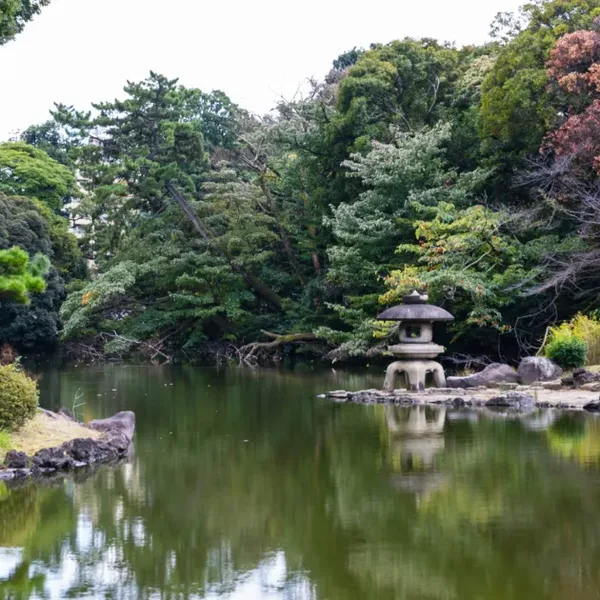
It is three gardens in one, with a Japanese Traditional Garden with ponds and tea houses, a Formal Garden in the French style with avenues of plane trees and rose beds, and a Landscape Garden in the English style with a huge open lawn. A tropical greenhouse sits near the Okido Gate.
For families, the lawn is the main draw, with room to run, space for a picnic and quiet after the crowds of Shinjuku or Harajuku. For photographers, it is one of Tokyo's best places for cherry blossoms and autumn colour.
The garden began as the Tokyo estate of a feudal lord in the Edo period, became an imperial garden, was largely destroyed in the air raids of 1945, and opened to the public as a national garden in 1949.
Shinjuku Gyoen Opening Hours, Closing Days and Tickets
The garden opens at 9:00 every day it is open, and closing time changes with the season. These are the hours for 2026, from the Ministry of the Environment.
| Period | Hours | Last entry |
|---|---|---|
| October 1 to March 14 | 9:00 to 16:30 | 16:00 |
| March 15 to June 10 | 9:00 to 18:00 | 17:30 |
| June 11 to July 31 | 9:00 to 19:00 | 18:30 |
| August 1 to September 30 | 9:00 to 18:00 | 17:30 |
Closed days. The garden closes every Monday (if Monday is a public holiday, it closes on the next weekday instead) and from December 29 to January 3.
Open every day, Mondays included. The garden opens daily during cherry blossom season, March 25 to April 24, and during the Chrysanthemum Exhibition, November 1 to 15.
The greenhouse keeps shorter hours, opening at 9:30 and closing 30 minutes before the garden (16:00 in autumn and winter, with last entry at 15:30).
Tickets. Adults pay ¥500. Children 15 and under are free, so a family of four with two young children pays ¥1,000.
| Visitor | Admission |
|---|---|
| Adults | ¥500 (¥400 each in groups of 30 or more) |
| Seniors (65 and over) | ¥250 |
| Students (16 and over) | ¥250 |
| Children (15 and under) | Free |
- Paying. Buy at the ticket machines and counters at each gate, or tap a transport IC card such as Suica or PASMO at the entry gate.
- E-tickets. You can buy online in advance through the garden's official ticket partner and scan the QR code at the gate. They are valid for six months.
- Cherry blossom season. On weekends, holidays and other busy days between March 25 and April 24, the garden may require an advance reservation. Check the official site in March before you plan a spring visit.
- Visitors with disabilities. Entry is free for the visitor and one carer with a Japan-issued disability certificate.
Gates and Stations for Shinjuku Gyoen
Use the Shinjuku Gate if you come from Shinjuku Station, the Okido Gate for the greenhouse, and the Sendagaya Gate from JR Sendagaya Station. There are three gates, on three different sides of the garden.
| Gate | Nearest station | Walk |
|---|---|---|
| Shinjuku Gate | JR Shinjuku Station, South Exit | 10 min |
| Shinjuku Gate | Shinjuku-gyoemmae (Marunouchi Line), Exit 1 | 5 min |
| Shinjuku Gate | Shinjuku-sanchome (Fukutoshin Line E5, Toei Shinjuku Line C1/C5) | 5 min |
| Okido Gate | Shinjuku-gyoemmae (Marunouchi Line), Exit 2 | 5 min |
| Sendagaya Gate | JR Sendagaya Station (Chuo-Sobu Line) | 5 min |
| Sendagaya Gate | Kokuritsu-Kyogijo (Toei Oedo Line), Exit A5 | 5 min |
The garden's perimeter is 3.5 km, so choosing the gate nearest the part you want saves little legs. With a stroller, the official site has step-free routes from Shinjuku Station (Southeast Exit), Shinjuku-gyoemmae and Shinjuku-sanchome to the Shinjuku Gate.

What to See in Shinjuku Gyoen
In two hours you can see the Japanese garden, the big lawn and the greenhouse, the three most people come for.
Japanese Traditional Garden
This garden has ponds, islands, stone lanterns and bridges. Look for the Kyu-Goryo-Tei, a pavilion in Taiwanese style built in 1927, with a view across the pond.
The Shouten-Tei tea house overlooks this garden and serves matcha with Japanese sweets.
Formal Garden
This French-style garden has long avenues of plane trees, among the first planted in Japan, and rose beds of about 500 plants in some 100 varieties. The roses are at their best in late spring and early summer.
Landscape Garden and the Lawn
The English-style lawn is the heart of the garden for families, a wide open space ringed by tall tulip trees, Himalayan cedars and cherries. It is where people sit for cherry blossom viewing in spring.
Greenhouse
Near the Okido Gate, a glass greenhouse of about 2,750 square metres shows around 1,000 kinds of tropical and subtropical plants, including orchids, Okinawan plants and endangered species. It is warm and dry on a rainy or cold day.
Kyu-Gokyu-Sho (Old Imperial Rest House)
This wooden building from 1896 was once used by the imperial family when they visited the greenhouse. It is an Important Cultural Property.
Shinjuku Gyoen by Season
Spring and autumn are the best seasons, but the garden has something in flower or colour all year.

Cherry Blossoms in Spring
About 900 cherry trees of around 70 varieties bloom at different times, so the season is long. Early varieties flower from February to early March.
The Somei Yoshino, about 300 trees and the most common, bloom in late March to early April. The double-flowered yaezakura peak around mid-April. If the main bloom has passed when you arrive, the late cherries are still worth seeing.
See our guide to the best time to visit Tokyo for the cherry blossom crowds.
Roses and Green Shade in Summer
The warmer months bring roses in the Formal Garden in May and June, deep shade under the trees and longer opening hours. On a hot day, the greenhouse and the cafés are the places to cool down.
Chrysanthemums and Colour in Autumn
The Chrysanthemum Exhibition, an imperial tradition, runs in the Japanese garden from November 1 to 15, with flowers trained into cascades and other shapes in wooden pavilions. The maples and plane trees turn later in November and into December.
Nearby, the Jingu Gaien ginkgo avenue turns yellow at around the same time.
Quiet Lawns in Winter
Winter is the quietest time of year. The lawns are open, the first early cherries bloom in late winter, and the greenhouse is warm.
Rules on Alcohol, Play and Picnics
Alcohol is not allowed anywhere in the garden, including in cherry blossom season. This is the rule that surprises visitors most, because a cherry blossom picnic in Japan often comes with a drink.
These items are not allowed in.
- Alcoholic drinks
- Bicycles, balance bikes, tricycles and unicycles
- Pets (assistance dogs are allowed)
- Drones, bug nets and insect cages
- Portable stoves or anything with a flame
These activities are not allowed.
- Ball games such as catch and football, badminton, frisbees, kite-flying and skipping ropes
- Roller skates, scooters and skateboards
- Climbing trees, picking plants, or playing in the ponds
- Smoking, including e-cigarettes, anywhere in the garden
- Tents and parasols, except children's sun tents in the Kid's Area from May 7 to October 31
Picnics are fine. You can bring food and eat it on the lawns, and the café inside the Information Center sells food to take into the garden.
Take all your rubbish with you or use the bins provided.
Shinjuku Gyoen with Kids
Children love the lawn, and the garden has a Kid's Area where primary school children and younger can play with soft balls and skipping ropes, the only place such toys are allowed. Hard balls, bats and skateboards are not allowed even there.
- Mother and Child Woods. This woodland walk has the Satoyama Woodlands Experience rest house, which has picture books and hands-on exhibits about the plants and animals.
- Strollers. Most paths are paved and fine for a stroller. The Formal Garden and the Japanese garden have gravel paths, which are harder going.
- Toilets. The multipurpose toilets have nappy-changing tables. The official accessibility map shows where.
- Leave the balance bike at the hotel. It is one of the banned items, and it is the one families most often bring.
- Rain or heat. The greenhouse and the Information Center are indoors.
Shinjuku Gyoen fits easily into a day around Shinjuku, Harajuku and Meiji Jingu. For more ideas by age, see our guide to things to do in Tokyo with kids.
 ONO
I recommend Shinjuku Gyoen to families with young children. The lawns are wide, so children have room to play, and in cherry blossom season you can see many different kinds of cherry trees.
Where to Eat in Shinjuku Gyoen
Bring a picnic or eat at one of the garden's cafés. There is no need to leave the garden for lunch. Last orders are earlier than the garden's closing time.
| Place | Where | What |
|---|---|---|
| Shouten-Tei | Japanese garden | Matcha and Japanese sweets |
| Starbucks Coffee Shinjuku Gyoen | By the Middle Pond | Coffee and cakes with a lawn view |
| NATIONAL PARKS CAFÉ Under the Tree | Information Center | Curry, rice bowls, soft-serve, takeaway |
| Restaurant Yurinoki | Inside the garden | Sit-down lunch, 11:00 to 15:30 |
There is also Muroya for inari sushi, and SASAYAIORI+ at the Central Rest House, a takeaway café from a Kyoto confectioner over 300 years old.
How Long to Spend at Shinjuku Gyoen
Plan 1.5 to 2 hours for a walk through the three gardens and the greenhouse, and half a day with a picnic and time on the lawn. In cherry blossom season, add time for the queue at the gate.
For a good half day, enter at the Shinjuku Gate at 9:00, walk the Japanese garden while it is quiet, have an early lunch on the lawn, see the greenhouse, and leave by the Okido Gate. Then head to Harajuku, a short subway ride away, for Takeshita Street in the afternoon.
Our Tokyo itinerary shows how it fits into three to five days.
If you would like a day in Tokyo planned around your children, with gardens, trains and lunch already worked out, see our Tokyo tours and the private Tokyo tour with kids.
Frequently Asked Questions
- How much is the entrance fee for Shinjuku Gyoen?
-
It costs ¥500 for adults, ¥250 for seniors 65 and over and students 16 and over, and free for children 15 and under. You can pay at the ticket machines or tap an IC card such as Suica at the gate.
- What are Shinjuku Gyoen's opening hours?
-
It opens at 9:00. It closes at 16:30 from October 1 to March 14, at 18:00 from March 15 to June 10 and August 1 to September 30, and at 19:00 from June 11 to July 31. Last entry is 30 minutes before closing.
- Is Shinjuku Gyoen closed on Mondays?
-
Yes, and from December 29 to January 3. If Monday is a public holiday, it closes the next weekday instead. During cherry blossom season (March 25 to April 24) and November 1 to 15 it opens every day.
- Can you drink alcohol in Shinjuku Gyoen?
-
No. Alcohol is banned anywhere in the garden, including during cherry blossom season. Picnics without alcohol are fine on the lawns.
- Do I need to book Shinjuku Gyoen in advance?
-
Not usually. You can pay at the gate. During cherry blossom season, weekends, holidays and other busy days may require an advance reservation, so check the official site in March.
- How long should I spend at Shinjuku Gyoen?
-
It takes about 1.5 to 2 hours to see the three gardens and the greenhouse. With children and a picnic, allow half a day.
Shinjuku Gyoen National Garden
Address
11 Naitomachi, Shinjuku City, Tokyo 160-0014
Nearest station
Shinjuku-gyoemmae Station (Tokyo Metro Marunouchi)
Sendagaya Station (JR Chuo-Sobu)
Sources
https://policies.env.go.jp/national-garden/shinjukugyoen/english/guide/information/
https://policies.env.go.jp/national-garden/shinjukugyoen/english/guide/rule/
https://policies.env.go.jp/national-garden/shinjukugyoen/english/guide/access/
https://policies.env.go.jp/national-garden/shinjukugyoen/english/facility/
https://policies.env.go.jp/national-garden/shinjukugyoen/english/highlights/sakura/
https://policies.env.go.jp/national-garden/shinjukugyoen/english/guide/ud/
https://policies.env.go.jp/national-garden/shinjukugyoen/english/intro/overview/
Plan a Private Day with a Local

Every tour is private, for your group only, and planned with you before you arrive. From US$550 per group for a day on foot in Tokyo or Yokohama, or from US$890 for a day trip by train to Kamakura, Hakone or Mt. Fuji. Travelling with children? See our Tokyo private tour with kids.
Free Consultation

Japan Trails Newsletter
Free Newsletter Sign‑Up
Subscribe to our newsletter and receive a handpicked list of restaurants that Japanese locals go to.