Irohazaka, Nikko: The 48-Bend Road to Lake Chuzenji
Quick answer
- Irohazaka is the mountain road from Nikko town to Lake Chuzenji, with 48 hairpins on two one-way roads.
- The bus from Nikko Station climbs it in about 40 to 50 minutes, but autumn traffic can take hours.
- The Akechidaira Ropeway at the top is closed from 16 January 2026 until about September 2027.
What Is Irohazaka?
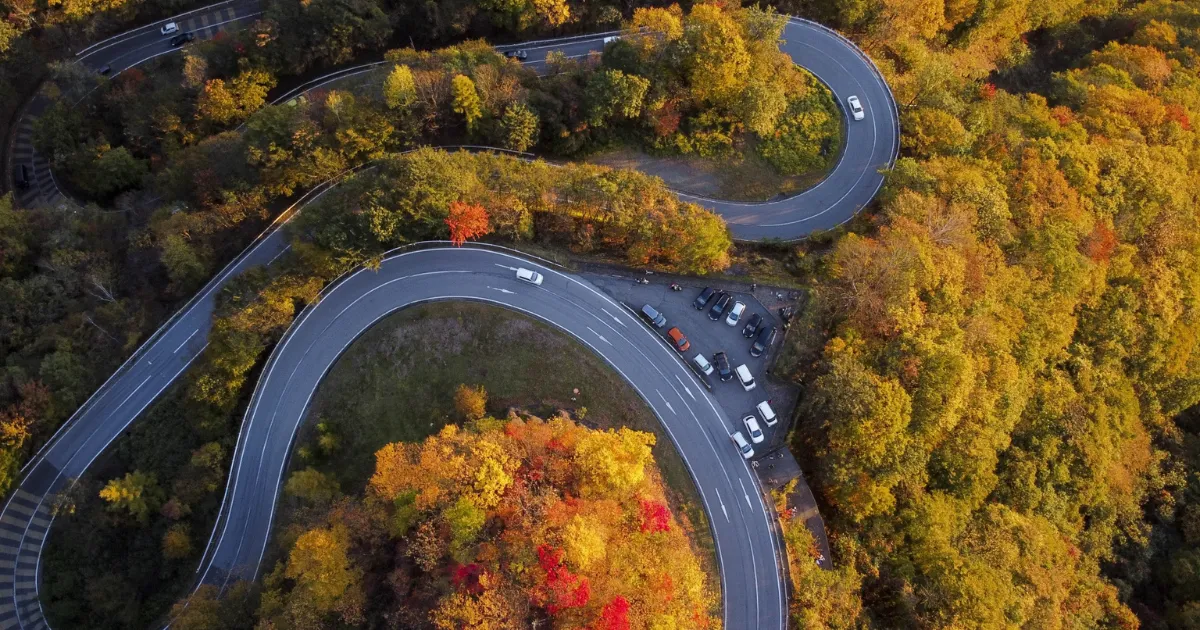
Irohazaka is the stretch of National Route 120 that climbs from Nikko town to Lake Chuzenji and Oku-Nikko, the high country of lakes and waterfalls. It is two separate one-way roads, one up and one down, with 48 hairpin bends between them and a rise of about 440 metres.
In normal traffic the climb takes about 20 minutes by car.
Every visitor going from the shrines in town to Kegon Falls or the lake travels it, by bus or by car. It is also one of Nikko's best-known autumn sights, and in October one of its worst traffic jams.
Two One-Way Roads, Uphill and Downhill
You go up one road and come down another. The Second Irohazaka is for uphill traffic only, and the First Irohazaka, the older road, is for downhill traffic only. Together they have the 48 bends.

| Road | Direction | Bends | What to know |
|---|---|---|---|
| Second Irohazaka | Uphill only | 20 | Passes Akechidaira near the top |
| First Irohazaka | Downhill only | 28 | The older road, with more bends |
The Second Irohazaka opened in 1965 to relieve the old road, which then became downhill only. Both roads were toll roads until 1984 and are now free.
Because traffic flows one way, there is no oncoming car on the bends, but there is also nowhere to turn back once you start.
Where the Name Comes From
The name comes from the iroha, a poem from the Heian period that uses each of the old Japanese syllables once and served for centuries as the Japanese "ABC". The road's 48 bends match the 48 syllables of the old iroha order, and each bend has a sign showing its syllable, counting from "i" at the bottom of the uphill road.
Children like spotting the signs and counting the bends. "Zaka" (from saka) means slope, so Irohazaka is "the iroha slope".
Long before cars, this was the pilgrims' path up to Chuzenji Temple and the sacred Mt. Nantai. The spot at the foot of the climb is still called Umagaeshi, "where the horses turn back", because the path above it was too steep for horses.
How to Ride Irohazaka by Bus
Take a Tobu bus bound for Chuzenji Onsen or Yumoto Onsen from JR Nikko or Tobu-Nikko Station. The bus goes up the Second Irohazaka, reaching the Akechidaira stop in about 35 minutes and Chuzenji Onsen, by the lake and Kegon Falls, in about 40 to 50 minutes.
Coming back, the bus takes the downhill road.
- Passes. The NIKKO PASS All Area (¥8,000 for adults, ¥4,000 for children, valid 4 days) covers these buses, the train from Asakusa and the lake cruise in season. The cheaper World Heritage Area pass does not cover the climb to the lake.
- Seats. Board early at the station to get a seat. Standing on 48 hairpins is tiring, especially with a child on your lap. In the leaf season, queue a little before departure if you want to sit together as a family.
Which pass to buy is compared in our guide to rail passes for Nikko, and the whole day from Tokyo is in our Nikko day trip guide.
Driving Irohazaka
By car from Tokyo, take the Tohoku Expressway and the Nikko-Utsunomiya Road to Kiyotaki IC, which is just below the start of the climb. The road itself is free. Drivers should know four things.

- No stopping on the bends. Pull over only at the parking areas, such as Akechidaira on the way up.
- Low gear going down. The downhill road is steep and long. Use engine braking rather than riding the brakes.
- Winter. From December to March the road can be icy or snowy. Winter tyres or chains are needed, and rental cars should be booked with winter tyres.
- Cyclists and motorbikes. The road is popular with both. Give them room on the turns.
Autumn Leaves and Traffic
Irohazaka is one of Nikko's best places for autumn colour, usually from mid-October to early November, and that is exactly when the road jams. Nikko City warns that a climb of about 20 minutes often takes 2 to 3 hours in the leaf season, and that on holiday weekends the queue has reached 6 hours.

Buses sit in the same queue as cars. Coming back down, the queue moves to the bus stop. Tobu notes that at busy times visitors wait a long time at the Chuzenji Onsen bus terminal for buses to the stations, and in 2026 it trialled priority boarding tickets for some express buses.
Four habits help you avoid the worst of it.
- Go on a weekday, not a Saturday, Sunday or public holiday.
- Start early. Be on a bus up the hill by about 9:00, and plan to come down by early afternoon.
- Choose one half of Nikko. On an October weekend, do either the shrines in town or the lake, not both.
- Stay a night at Chuzenji Onsen or Yumoto Onsen, and see the lake in the early morning.
The leaves turn from the top of the mountain down, over about a month, starting at Senjogahara and the lake, then Irohazaka, and the town last. Our guide to Japan's autumn leaves has the timing for other regions.
Akechidaira Viewpoint at the Top
Akechidaira sits near the top of the uphill road, at 35 minutes by bus from Nikko Station, and is the one place on Irohazaka where you can stop. From the car park and bus stop there are views down the valley, and the Akechidaira Ropeway used to climb 3 minutes to a deck at 1,373 metres with Kegon Falls, Lake Chuzenji and Mt. Nantai in one view.
The ropeway is closed for renewal work from 16 January 2026. Nikko City gives the closure as running to 31 August 2027, and Visit Nikko says it will reopen in about September 2027.
Older guides still send you there, so plan without it, and check the operator's notice before any visit in late 2027.

For a view of the falls in the meantime, use the free viewpoint at the top of Kegon Falls or the elevator to its lower deck.
Irohazaka with Kids
The real issue for children on Irohazaka is carsickness, because 48 hairpins in under an hour unsettle many adults too. A few things help.
- Sit at the front of the bus or car, facing forward, and look out of the window rather than at a screen.
- Eat lightly before the climb, and bring snacks and water for the top.
- Carry a plastic bag within reach, just in case.
- There are no toilets on the bus, so use the station toilets before you board. On autumn weekends the ride can last hours.
- Turn it into a game by counting the iroha signs on the way up, from "i" at the bottom.
 ONO
I don't suggest driving up Irohazaka yourself, but seeing the bends from the bus is something I do recommend.
Where Irohazaka Takes You
At the top of Irohazaka is Oku-Nikko, about 1,270 metres up and several degrees cooler than the town. These are the places most families go on to, all on the same bus line.
- Kegon Falls. This 97-metre waterfall is 5 minutes' walk from the Chuzenji Onsen stop. See our Kegon Falls guide.
- Lake Chuzenji. The lake has boats, the embassy villas and a shore walk. See our Lake Chuzenji guide.
- Ryuzu Falls and Senjogahara. Both are further up the line towards Yumoto Onsen, covered in the Lake Chuzenji guide.
Nikko with Young Children
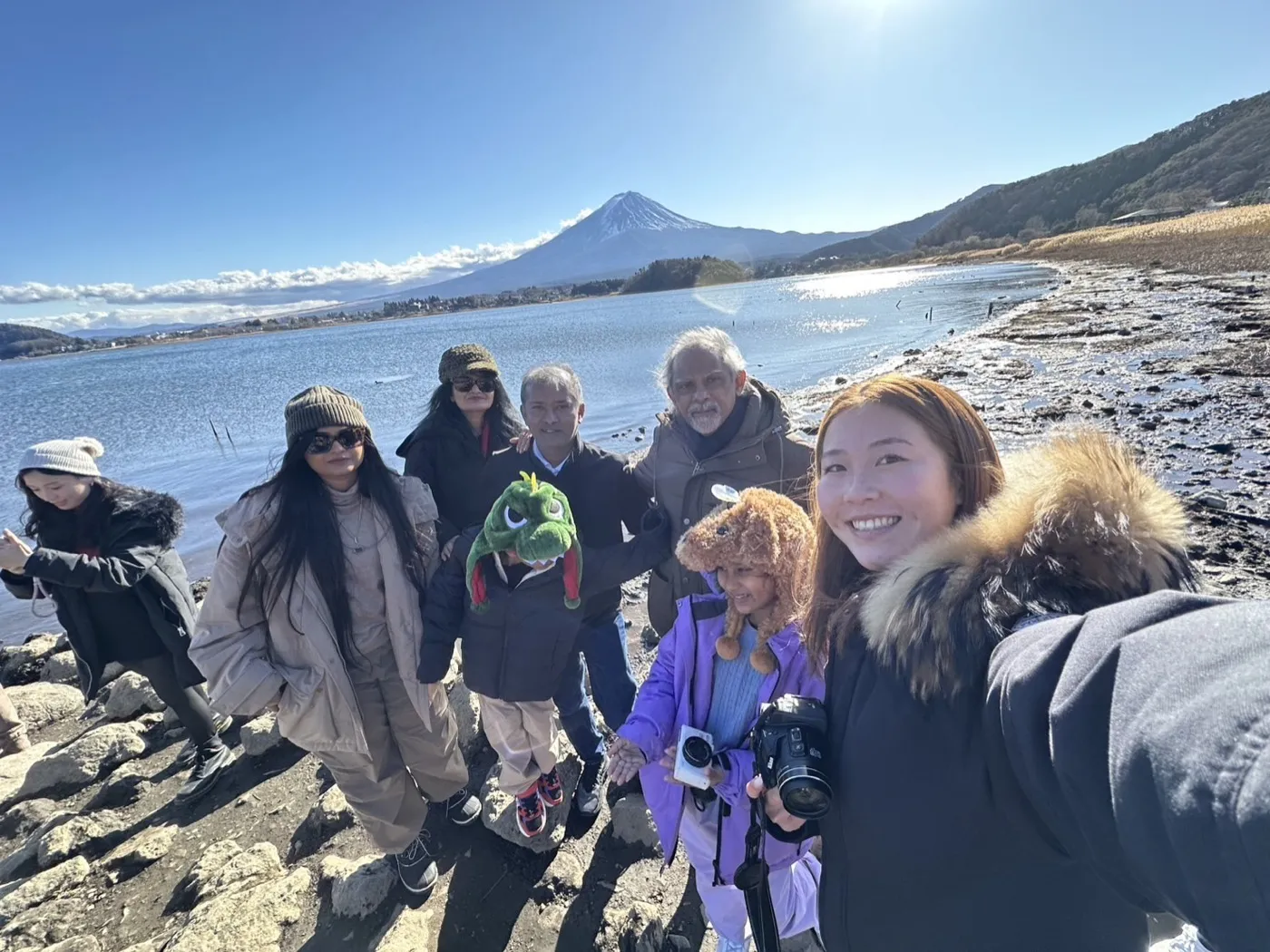
With young children, Irohazaka is the part of a Nikko day that is hardest to plan, because the traffic decides your timetable. Go up the mountain before the queues and come down before the evening jam.
Our private tours are on foot in Tokyo and Yokohama. Your guide rides the trains with you, and each of you pays your own fare with an IC card. See our Tokyo private tour with kids.

Frequently Asked Questions
- How many curves does Irohazaka have?
-
48 in total, with 20 on the uphill Second Irohazaka and 28 on the downhill First Irohazaka. Each bend has a sign with one syllable of the old iroha order.
- How long does it take to drive up Irohazaka?
-
About 20 minutes in normal traffic. In the autumn leaf season it often takes 2 to 3 hours, and longer on holiday weekends.
- How do I get to Irohazaka by bus?
-
Take a Tobu bus for Chuzenji Onsen or Yumoto Onsen from JR Nikko or Tobu-Nikko Station. It climbs Irohazaka and reaches Chuzenji Onsen in about 40 to 50 minutes.
- When is the best time to see autumn leaves at Irohazaka?
-
Usually mid-October to early November. Go on a weekday morning to avoid the worst of the traffic.
- Is the Akechidaira Ropeway open?
-
No. It closed on 16 January 2026 for renewal work and is expected to reopen around September 2027.
- Can you stop on Irohazaka to take photos?
-
Not on the bends. Stop only at parking areas such as Akechidaira on the uphill road.
Sources
https://www.nikko-kankou.org/spot/9
https://www.nikko-kankou.org/spot/19
https://www.visitnikko.jp/spots/irohazaka-slope
https://www.visitnikko.jp/en/spots/akechidaira-plateau/
https://www.tobu.co.jp/en/ticket/nikko/all.html
https://www.tobu.co.jp/cms-pdf/news/202607070912250a9kOaeDCrnP6hpZeXVBfw.pdf
Plan a Private Day with a Local

Every tour is private, for your group only, and planned with you before you arrive. From US$550 per group for a day on foot in Tokyo or Yokohama, or from US$890 for a day trip by train to Kamakura, Hakone or Mt. Fuji. Travelling with children? See our Tokyo private tour with kids.
Free Consultation

Japan Trails Newsletter
Free Newsletter Sign‑Up
Subscribe to our newsletter and receive a handpicked list of restaurants that Japanese locals go to.
-
 Shinkyo Bridge, Nikko: The Sacred Red Bridge at the Gate of the Shrines
-
 Tokyo Station Marunouchi Building: Red-Brick History, Domes and Photo Spots
You might also like
-
 Nikko Toshogu Shrine: Tickets, Highlights and the Sleeping Cat
-
 The Three Wise Monkeys at Nikko Toshogu Shrine
-
 British Embassy Villa Nikko and the Italian Embassy Villa on Lake Chuzenji
-
 Lake Chuzenji, Nikko: The Lake, Ryuzu Falls and Senjogahara
-
Shinkyo Bridge, Nikko: The Sacred Red Bridge at the Gate of the Shrines
-
 Nikko Futarasan Shrine: The Shrine of Nikko's Sacred Mountains