Nikko Futarasan Shrine: The Shrine of Nikko's Sacred Mountains

Quick answer
- Futarasan is Nikko's oldest shrine, founded in the 8th century to worship the sacred Mt. Nantai.
- The worship hall is free.
- It opens 8:00 to 17:00 from April to October and stands about 5 minutes' walk from Toshogu.
What Is Futarasan Shrine?
Nikko Futarasan Shrine (Futarasan-jinja) is the Shinto shrine of Nikko's sacred mountains and the oldest of the three religious sites of Nikko's World Heritage area, with Toshogu and Rinno-ji. Its object of worship is Mt. Nantai (2,486 m), the volcano above Lake Chuzenji, once called Futarasan, together with Mt. Nyoho and Mt. Taro.
The shrine traces its origin to the monk Shodo Shonin, who opened Nikko's mountains to worship in the late 8th century. Visit Nikko dates the founding to 766, and the shrine on the summit of Mt. Nantai to 782.
Its grounds cover about 3,400 hectares, most of the mountains of Nikko National Park, and include Kegon Falls, the downhill Irohazaka road and Shinkyo Bridge.
The shrine has three sites.
| Site | Where | For visitors |
|---|---|---|
| Honsha (main shrine) | Next to Toshogu, in town | The one most people visit |
| Chugushi (middle shrine) | North shore of Lake Chuzenji | Treasure hall, start of the Mt. Nantai climb |
| Okumiya (inner shrine) | Summit of Mt. Nantai | Reached only on foot, in the climbing season |
Fees and Opening Hours
Entering the shrine grounds and praying at the worship hall is free. The ticket is for the Shinen, the sacred garden behind the worship hall, which holds the spring, the Ghost Lantern and the smaller shrines.
| Ticket (Shinen garden) | Price |
|---|---|
| Adult, including university students | ¥500 |
| Primary, junior high and high school student | ¥200 |
In the colder months the shrine opens an hour later and closes an hour earlier.
| Season | Hours |
|---|---|
| April to October | 8:00 to 17:00 |
| November to March | 9:00 to 16:00 |
These are the fees and hours on Nikko City's official tourism site in October 2026. The ticket desk closes 30 minutes before the gates. Pay in cash, since Visit Nikko notes that the counter takes cash only.
Some older guides still give ¥300 for the garden, which is out of date.
How to Get to Futarasan Shrine
From JR Nikko or Tobu-Nikko Station, take the World Heritage Tour bus to the Taiyuin / Futarasanjinja-mae stop, about 15 minutes, and the shrine is in front of you. Or take a Chuzenji-bound Tobu bus to Nishisando-iriguchi (about 9 minutes) and walk 10 minutes.
If you are already at Toshogu, walk west along the cedar-lined lane from the Toshogu exit. It takes about 5 minutes, and most visitors see the two together.
The route from Tokyo, and how to fit the shrines into one day, are in our Nikko day trip guide.
What to See at the Main Shrine
The main shrine is compact, and an unhurried visit takes 30 to 45 minutes, including the garden. These are the four things to look for.

1. The Worship Hall and Main Hall
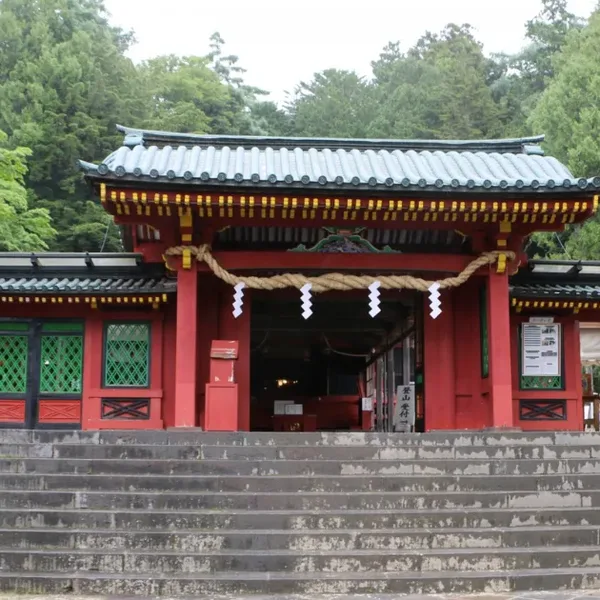
The Haiden (worship hall) is where visitors pray, and the Honden (main hall) behind it houses the three deities. According to the Japan Tourism Agency's explanation, both were given by the second Tokugawa shogun, Hidetada, in 1619.
Finished in red and black lacquer, they are simpler than the gold and carving of Toshogu next door. The three deities, Onamuchi, Tagorihime and Ajisukitakahikone, are a father, a mother and their child, and are seen as the gods of Nikko's three mountains.
2. The Shinen Garden
The paid garden behind the worship hall is a quiet walk under old cedars, past several smaller shrines. One of them, Mitomo Shrine, honours Sukunahikona, a god of learning and wisdom.

3. The Futara Reisen Spring
Inside the garden, the Futara Reisen is a sacred spring. Visitors may take some of its water during the garden's opening hours. Outside those hours, the shrine directs visitors to the purification basin, which is fed with the same water.
4. The Ghost Lantern (Bakedoro)
The Bakedoro is a six-sided bronze lantern dated 1292 by its inscription, much older than the present buildings. The story told at the shrine is that its flickering light at night looked like a ghost, and samurai on guard struck it with their swords.
It carries about 70 small cuts. Children enjoy finding the marks. Look, but do not touch.
Praying for Good Relationships
Futarasan is well known in Japan as a shrine for en-musubi, good ties between people. Visitors pray here for a partner, a happy marriage and family harmony.
Because its three deities are a family, many visitors also pray here for their children.

You will see many visitors buying omamori (amulets) and writing ema (wooden prayer plaques) at the shrine office. Both are fine for visitors from any background.
Treat them with respect. An omamori is carried, not opened, and an ema is hung at the shrine, not kept as a souvenir.
Chugushi and the Okumiya, by the Lake and on the Summit
The Chugushi is the shrine's middle site, on the north shore of Lake Chuzenji, between the main shrine in town and the inner shrine on the summit. Praying there is free, and it opens 8:00 to 17:00 from April to October and 9:00 to 16:00 from November to March.

- Getting there. Take a Tobu bus bound for Yumoto Onsen to the Futarasanjinja Chugushi stop, about 55 minutes from Nikko Station.
- Treasure hall. The shrine's treasures, including swords designated National Treasures such as a great sword dated 1366, portable shrines and objects found on the summit of Mt. Nantai, are shown at Chugushi. The shrine lists entry at ¥1,000 for adults and ¥300 for primary and junior high students. Check opening days with the shrine before you go.
- Mt. Nantai. The shrine allows the climb only from 25 April to 11 November. It is a long, steep hike of most of a day, not suitable for young children.
Etiquette at a Shinto Shrine
Futarasan is a working shrine where people come to pray, so basic shrine manners are expected. They are easy to follow, and children pick them up quickly.
- Bow at the torii gate as you enter, and walk at the side of the path rather than the centre.
- Purify at the basin. Rinse your left hand, then your right, then pour a little water into your cupped left hand and touch it to your mouth. Do not drink from the ladle.
- At the worship hall. Drop a coin in the offering box, bow twice, clap twice, put your hands together for a short prayer, and bow once more.
- Photos. Take pictures of the grounds, but not inside the halls, and not of people while they pray.
- Keep your voice down near the halls and in the garden.
Futarasan Shrine with Kids
Futarasan is one of the easier sacred sites in Nikko for young children. It is small, mostly flat and much quieter than Toshogu. The Ghost Lantern's sword cuts and the giant cedars are what children usually remember.
- Strollers. The main grounds have gravel and some steps. A baby carrier is easier in the garden.
- Timing. After Toshogu, children are often tired. Futarasan works as a calm last stop before the bus back to the station.
- Teach the bow and clap before you go in. Most children enjoy doing it properly.
 ONO
I recommend Futarasan Shrine to families. It is quieter than Toshogu next door.
Combining Futarasan with Toshogu and Rinno-ji
Futarasan is best seen straight after Toshogu, since the two are 5 minutes apart. A typical order from the stations is Shinkyo Bridge, Rinno-ji, Toshogu, then Futarasan, with Taiyuin, the mausoleum of the third shogun, next door if you still have energy.
Allow about 3 to 4 hours for the whole shrine area at a family pace. Tickets, hours and the route through Toshogu are in our Nikko Toshogu guide, and the famous monkey carvings in our guide to the Three Wise Monkeys.
Nikko with Young Children
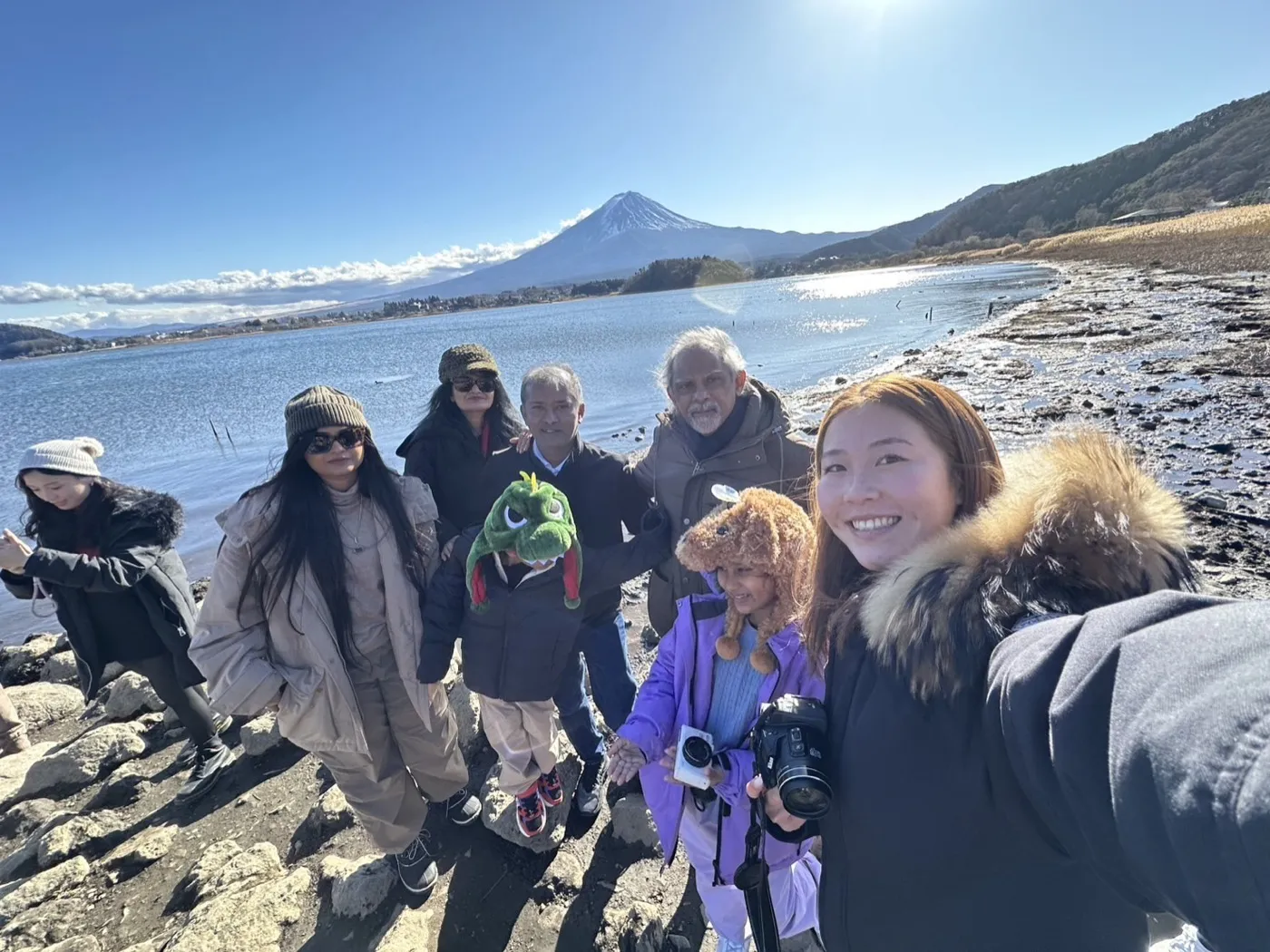
With children, the time goes on trains, buses and queues rather than the shrines themselves. Time Toshogu and Futarasan around your children's pace and lunch.
Our private tours are on foot in Tokyo and Yokohama. Your guide rides the trains with you, and each of you pays your own fare with an IC card. See our Tokyo private tour with kids.

Frequently Asked Questions
- Is Futarasan Shrine free to enter?
-
Yes. The grounds and the worship hall are free. The Shinen garden behind the hall costs ¥500 for adults and ¥200 for primary to high school students.
- What are the opening hours of Futarasan Shrine?
-
It opens 8:00 to 17:00 from April to October and 9:00 to 16:00 from November to March. The ticket desk closes 30 minutes before the gates.
- How far is Futarasan Shrine from Toshogu?
-
It is about 5 minutes on foot, along the cedar-lined lane west of Toshogu. Most visitors see the two together.
- What is Futarasan Shrine famous for?
-
It is known for the worship of the sacred Mt. Nantai, prayers for good relationships and marriage, the 1292 Ghost Lantern and the Futara Reisen sacred spring.
- What is the difference between Futarasan Shrine and Chugushi?
-
The main shrine is in town next to Toshogu. Chugushi is its middle site on Lake Chuzenji, with the treasure hall and the start of the Mt. Nantai climb.
- How long do you need at Futarasan Shrine?
-
Allow about 30 to 45 minutes for the grounds and the garden. Add an hour if you also visit Chugushi on Lake Chuzenji.
Nikko Futarasan Shrine
Address
2307 Sannai, Nikko, Tochigi 321-1431
Nearest station
Taiyuin-Futarasan Jinja-mae Bus Stop (World Heritage Meguri Bus from JR Nikko / Tobu-Nikko Stations)
Nishisando-iriguchi Bus Stop (Tobu Bus for Chuzenji Onsen from JR Nikko / Tobu-Nikko Stations)
Sources
https://www.nikko-kankou.org/spot/4
https://www.nikko-kankou.org/spot/128
https://www.visitnikko.jp/en/spots/nikko-futarasan-jinja-shrine/
https://www.visitnikko.jp/en/spots/futarasan-jinja-shrine-chugushi/
https://www.mlit.go.jp/tagengo-db/H30-00257.html
https://www.mlit.go.jp/tagengo-db/en/R2-00015.html
http://www.futarasan.jp/houmotsukan/
Plan a Private Day with a Local

Every tour is private, for your group only, and planned with you before you arrive. From US$550 per group for a day on foot in Tokyo or Yokohama, or from US$890 for a day trip by train to Kamakura, Hakone or Mt. Fuji. Travelling with children? See our Tokyo private tour with kids.
Free Consultation

Japan Trails Newsletter
Free Newsletter Sign‑Up
Subscribe to our newsletter and receive a handpicked list of restaurants that Japanese locals go to.
-
 Rail Passes for Nikko: Which One to Buy from Tokyo
-
 Shinkyo Bridge, Nikko: The Sacred Red Bridge at the Gate of the Shrines
You might also like
-
 Nikko Toshogu Shrine: Tickets, Highlights and the Sleeping Cat
-
 The Three Wise Monkeys at Nikko Toshogu Shrine
-
 British Embassy Villa Nikko and the Italian Embassy Villa on Lake Chuzenji
-
 Lake Chuzenji, Nikko: The Lake, Ryuzu Falls and Senjogahara
-
 Irohazaka, Nikko: The 48-Bend Road to Lake Chuzenji
-
Shinkyo Bridge, Nikko: The Sacred Red Bridge at the Gate of the Shrines