Omotesando Travel Guide: Tokyo's Tree-Lined Avenue with Kids
Quick answer
- Omotesando is a free, zelkova-lined avenue linking Harajuku and Aoyama, known for flagship shops and modern architecture.
- Most shops are for adults, so with children make Kiddy Land the main stop and combine it with Meiji Jingu.
- Take the Ginza, Chiyoda or Hanzomon Line to Omote-sando Station, or JR to Harajuku.
What Is Omotesando?
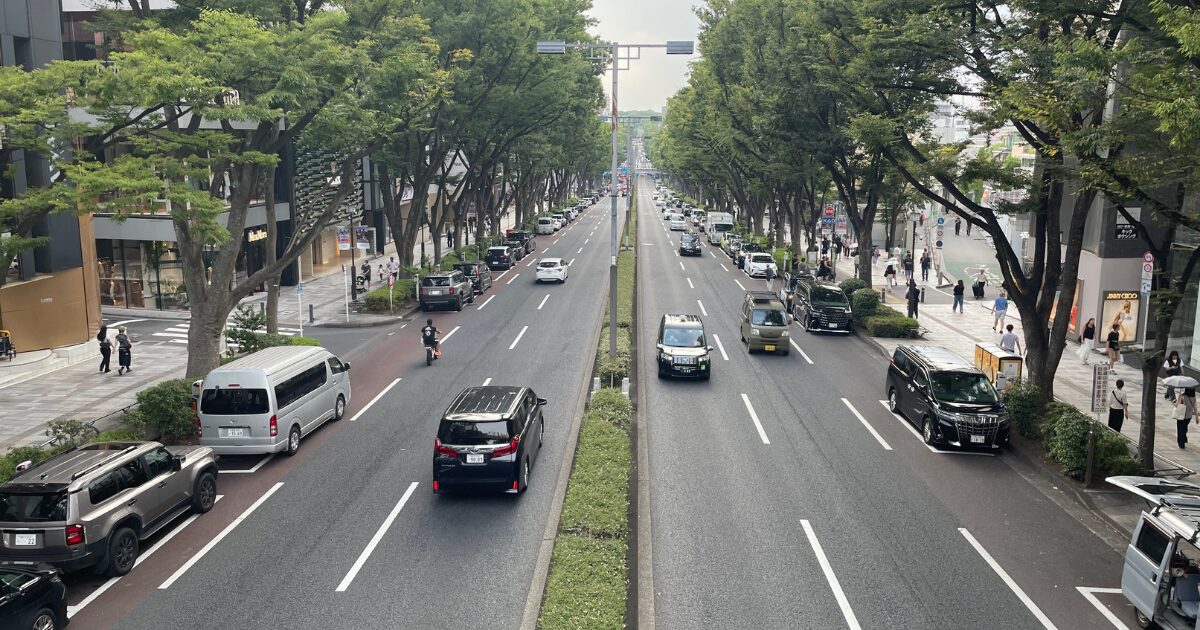
Omotesando is a broad avenue lined with zelkova trees that runs from the entrance of Meiji Jingu in Harajuku down to Aoyama-dori. It was laid out as the formal approach to the shrine, and Omote-sando means the main approach road.
Today it is one of Tokyo's best-known shopping streets, with luxury flagships, buildings by Tadao Ando, Toyo Ito and other well-known architects and side streets full of cafés.
Walking the avenue costs nothing. For a family, its appeal is that it is calm, wide and shaded compared with Takeshita Street a few minutes away.
The pavements are broad enough for a stroller, there are places to sit, and the two ends of the avenue lead to very different parts of Tokyo, with the forest of Meiji Jingu at one end and the quieter lanes of Aoyama at the other.
People sometimes call Omotesando the Champs-Élysées of Tokyo. It is shorter and slower than that. Most visitors walk down one side, cross at the big Jingumae crossing, and walk back on the other.

Is Omotesando Worth Visiting with Kids?
Yes, as part of a day in Harajuku and Shibuya, not as a whole day on its own. Most of the avenue is grown-up shopping, so on its own it will not hold a young child for long.
What makes it work for families is one big toy shop, a long gentle slope inside Omotesando Hills, and the short walk to Meiji Jingu and Takeshita Street.
A good rule is to spend one hour on the avenue itself, with Kiddy Land as the reward, and then move on. Teenagers interested in fashion or design will happily stay longer.
| Age | What works on Omotesando | Allow |
|---|---|---|
| Under 5 | Kiddy Land, the walk under the trees | 1 hour |
| 5 to 12 | Kiddy Land, Omotesando Hills, Cat Street | 1.5 to 2 hours |
| Teens | Flagship shops, architecture, cafés, Cat Street | 2 to 3 hours |
Things to Do in Omotesando
The best things to do in Omotesando are walking the avenue, going inside Omotesando Hills, shopping at Kiddy Land with children, looking at the architecture, and finishing with a café or the Nezu Museum garden.
Walk the avenue under the zelkova trees
The trees are what make Omotesando. They shade the pavement in summer and turn yellow and brown in late autumn. Start at the Harajuku end near Meiji Jingu and walk downhill towards Omote-sando Station, or the other way round.
In winter the trees are often decorated with lights. Check the dates each year before you plan around them.
Omotesando Hills
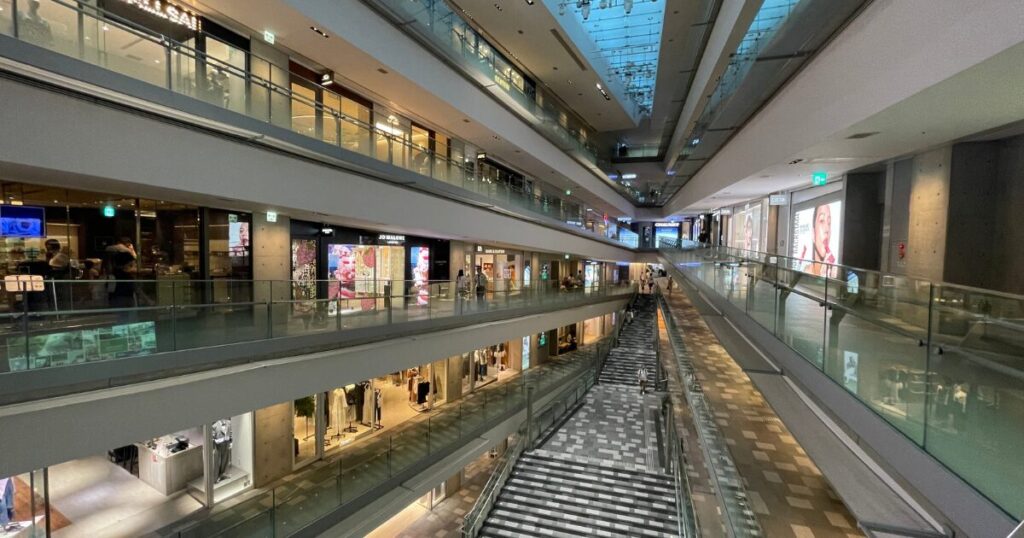
Omotesando Hills opened on 11 February 2006 on the site of the old Dojunkai Aoyama Apartments, designed by Tadao Ando. Its facade runs for 250 metres, about a quarter of the avenue, and inside there are about 100 shops and restaurants around a six-level atrium.
For children, the interesting part is the spiral slope. This ramp, about 700 metres long, circles the atrium at roughly the same gentle gradient as the avenue outside, about 3 degrees.
It means you can go up and down floors with a stroller without waiting for a lift, and children like walking the loop.
Kiddy Land Harajuku
Kiddy Land is a toy and character shop on several floors, on the Harajuku end of the avenue. This is the stop to promise children.
It is packed with character goods, from Japanese favourites to Western ones, and the floors change with new pop-up shops through the year. It is open from 11:00 to 20:00 for now, according to the shop, so it suits a late morning or an afternoon.
GYRE and the flagship stores
GYRE, with its stacked, twisted floors, is home to fashion and design shops and holds art exhibitions. Its shops open 11:00 to 20:00 and its restaurants 11:30 to 24:00, and it is 4 minutes on foot from Exit A1 of Omote-sando Station.
Along the avenue you will also pass the big luxury flagships. With older children who like design, these buildings are worth a look even if you buy nothing.
Buildings to Look For on Omotesando
Omotesando has more buildings by well-known architects in a short walk than anywhere else in Tokyo, and you can see them all from the pavement for free. These are the five most people come to see.
- Omotesando Hills by Tadao Ando. It is long, low and quiet, and kept below the tree line on purpose.
- Dior Omotesando by SANAA. It is a stack of glass boxes behind a soft white skin.
- TOD's Omotesando by Toyo Ito. Its concrete takes the shape of the zelkova branches outside.
- Louis Vuitton Omotesando by Jun Aoki. It was built to look like a pile of travelling trunks.
- Prada Aoyama by Herzog & de Meuron. It looks like a crystal of diamond-shaped glass panes and stands just off the avenue.
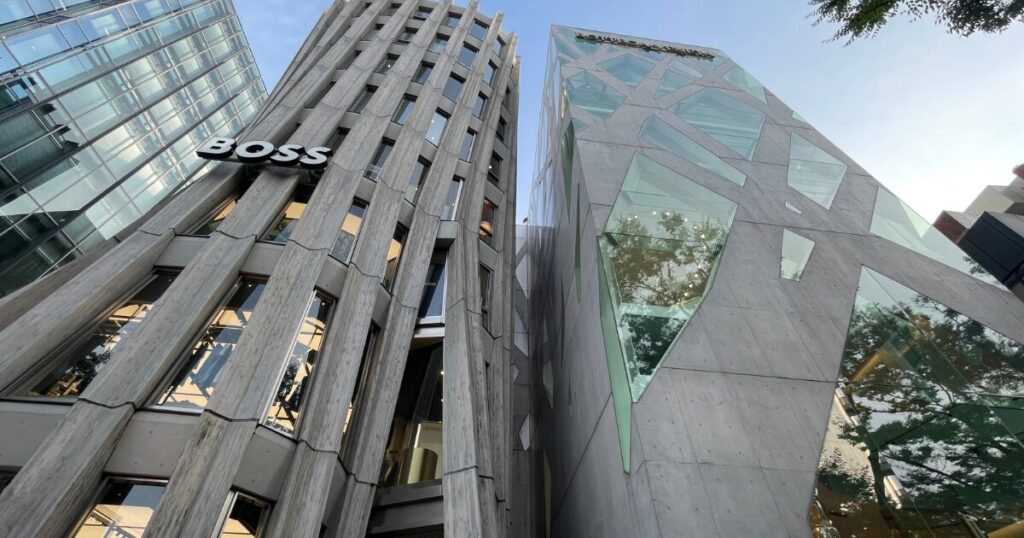
Turn the walk into a game for children. Give them the list and let them find each building. Prada is a few minutes off the avenue towards Aoyama, so leave it for last.

Cafés and Food in Omotesando
Omotesando is one of Tokyo's café areas, and the side streets are where most of them are. On the avenue itself, restaurants sit inside the big buildings, such as Omotesando Hills and GYRE, which is convenient with children because you also get lifts and toilets.
For families, three things help.
- Eat early. Lunch queues at well-known places start before noon at weekends. An 11:30 lunch is much easier than 12:30.
- Use the buildings. Department-style buildings have toilets, baby rooms and space for a stroller in a way small cafés do not.
- Save the crepes for Takeshita Street. The sweet street food children want is a few minutes away in Harajuku, not on Omotesando itself.
Nezu Museum and Its Garden
The Nezu Museum, at the Aoyama end, is the cultural stop in Omotesando. It shows Japanese and East Asian art, including several National Treasures, and has a large garden with a pond and tea houses.
It is 8 minutes on foot from Exit A5 of Omote-sando Station, or 10 minutes from Exit B3, which has a lift.
| What | Details (October 2026) |
|---|---|
| Hours | 10:00 to 17:00, last entry 16:30 |
| Closed | Mondays (Tuesday if Monday is a holiday), exhibition changes, New Year |
| Adults | Collection shows ¥1,400 online, ¥1,600 at the door, special shows from ¥1,600 online |
| Children | High school students and younger free with student ID |
Timed-entry tickets are sold online and are cheaper than at the door. The garden, café and shop are only for museum visitors. The museum closes between exhibitions, for example from 13 to 23 October 2026, so check the calendar first.
Eating and drinking are not allowed in the galleries or the garden.
With young children, the garden is the part to aim for. The galleries are quiet and suit older children.
Places Near Omotesando
Omotesando sits between Meiji Jingu, Harajuku and Shibuya, so it is easy to join it to the rest of a day.
- Meiji Jingu. The shrine's entrance is at the top of the avenue, across from Harajuku Station. Our Meiji Jingu guide covers how to pray and how long to allow with children.
- Takeshita Street. Harajuku's youth street, with crepes, candy and character shops, a short walk from the top of the avenue. See our Takeshita Street guide.
- Cat Street. A narrow, mostly car-free lane of small shops that leaves the avenue near the Jingumae crossing and runs towards Shibuya. It is the most pleasant way to walk to Shibuya with children.
- Shibuya. It is one stop on the Ginza Line, or about 20 minutes on foot via Cat Street. The Pokémon Center and Nintendo TOKYO are on the 6th floor of Shibuya PARCO.
How to Get to Omotesando
Omote-sando Station on the Tokyo Metro Ginza, Chiyoda and Hanzomon lines is at the Aoyama end of the avenue. JR Harajuku Station and Meiji-jingumae Station are at the Harajuku end.
Which one you use depends on where you want to start your walk.
| From | Route | Get off at |
|---|---|---|
| Shibuya | Ginza Line or Hanzomon Line, 1 stop, about 2 minutes | Omote-sando |
| Shinjuku | JR Yamanote Line, 2 stops | Harajuku |
| Tokyo Station | Marunouchi Line, change at Akasaka-mitsuke to the Ginza Line | Omote-sando |
| Asakusa or Ginza | Ginza Line, no change | Omote-sando |
Exits. At Omote-sando Station, Exit A1 brings you up next to GYRE and the avenue. Exit B3 has a lift.
At Meiji-jingumae, Exit 4 is about 3 minutes from GYRE. At JR Harajuku, use the Omotesando Exit.
With a stroller. In my experience the JR stations are rarely a problem, but some subway exits are stairs only, so check which exit has a lift before the day.
Exit B3 at Omote-sando and the Omotesando Exit at Harajuku are good places to start.
Best Time to Visit Omotesando
The best time is a weekday from about 11:00, when the shops have opened but the weekend crowds have not arrived. Most shops on the avenue open around 11:00, so an early start here gains you little.
Spend the early morning at Meiji Jingu instead, and come down to Omotesando when the doors open.
- Weekends are busy from midday, especially around Omotesando Hills and the Jingumae crossing.
- Late November to December brings yellow and brown leaves on the zelkova trees, and often winter lights.
- Rainy days are a good time for Omotesando. Omotesando Hills, GYRE and Kiddy Land are all indoors.
A Half-Day in Harajuku and Omotesando with Kids
This half day keeps the walking short and saves the reward for the end.
- Morning, Meiji Jingu. Arrive by 9:30, when the forest is quiet and cool.
- About 11:00, Takeshita Street. Walk over for a crepe before the crowd peaks.
- 11:30, Omotesando. Walk down the avenue, into Omotesando Hills and up the spiral slope.
- 12:30, lunch. Eat inside one of the big buildings, with toilets and lifts close by.
- Afternoon, Kiddy Land. Keep it for last, or carry on down Cat Street to Shibuya.
 ONO
I don't recommend Omotesando for children, because most of the shops are brand stores for adults. Kiddy Land is the exception, and it is worth a visit.
If you would like this day planned around your children's ages, nap times and the stations with lifts, that is what our private Tokyo tour with kids is for. For other areas to put next to it, see our things to do in Tokyo with kids and our other Tokyo tours.
Frequently Asked Questions
- What is Omotesando famous for?
-
Omotesando is known for its zelkova-lined avenue, luxury flagship stores and modern architecture by Tadao Ando, SANAA, Toyo Ito and others. It was built as the main approach to Meiji Jingu, and it links Harajuku with Aoyama.
- Is Omotesando the same as Harajuku?
-
They are neighbours. Harajuku is the area around JR Harajuku Station and Takeshita Street. Omotesando is the wide avenue that runs from there towards Aoyama. You can walk from one to the other in a few minutes.
- How long do you need in Omotesando?
-
Allow one to two hours for the avenue, Omotesando Hills and Kiddy Land. Add an hour and a half for the Nezu Museum and its garden, or combine Omotesando with Meiji Jingu and Takeshita Street for a half day.
- Is Omotesando good for kids?
-
For an hour or two, yes. The pavements are wide and shaded, Omotesando Hills has a long gentle slope that suits strollers, and Kiddy Land is a multi-floor toy shop. Most other shops are for adults, so pair it with Meiji Jingu or Takeshita Street.
- Which station is best for Omotesando?
-
Use Omote-sando Station (Ginza, Chiyoda and Hanzomon lines) and Exit A1 for the Aoyama end and GYRE. For the Harajuku end and Kiddy Land, use JR Harajuku Station or Meiji-jingumae Station.
- Is the Nezu Museum free for children?
-
Yes. High school students and younger are admitted free with student ID. Adults pay ¥1,400 online for collection exhibitions, and more for special exhibitions. The museum is closed on Mondays and between exhibitions.
Sources
https://www.omotesandohills.com/information/about/
https://gyre-omotesando.com/en/
https://www.kiddyland.co.jp/harajuku/
https://www.nezu-muse.or.jp/en/visit/
https://www.meijijingu.or.jp/en/
Plan a Private Day with a Local

Every tour is private, for your group only, and planned with you before you arrive. From US$550 per group for a day on foot in Tokyo or Yokohama, or from US$890 for a day trip by train to Kamakura, Hakone or Mt. Fuji. Travelling with children? See our Tokyo private tour with kids.
Free Consultation
Japan Trails Newsletter
Free Newsletter Sign‑Up
Subscribe to our newsletter and receive a handpicked list of restaurants that Japanese locals go to.
-
 Takeshita Street, Harajuku: A Family Guide
-
 Suica Card Japan for Tourists: Suica, PASMO and Child Cards
You might also like
-
 Jingu Gaien Ginkgo Avenue: A Family Guide for Autumn 2026
-
 SHIBUYA109: A Visitor's Guide to Tokyo's Teen Fashion Tower
-
 Things to Do in Shibuya: A Family Guide to Tokyo's Busiest Corner
-
 Shibuya Sky with Kids: Tickets, Rules and the Best Time to Go
-
Takeshita Street, Harajuku: A Family Guide
-
 Meiji Jingu: A Family Guide to Tokyo's Forest Shrine
-
 Pokémon Center Shibuya and Nintendo TOKYO: A Guide for First-Time Visitors