Sanyo–San’in Area Pass: A Complete Guide for Foreign Visitors
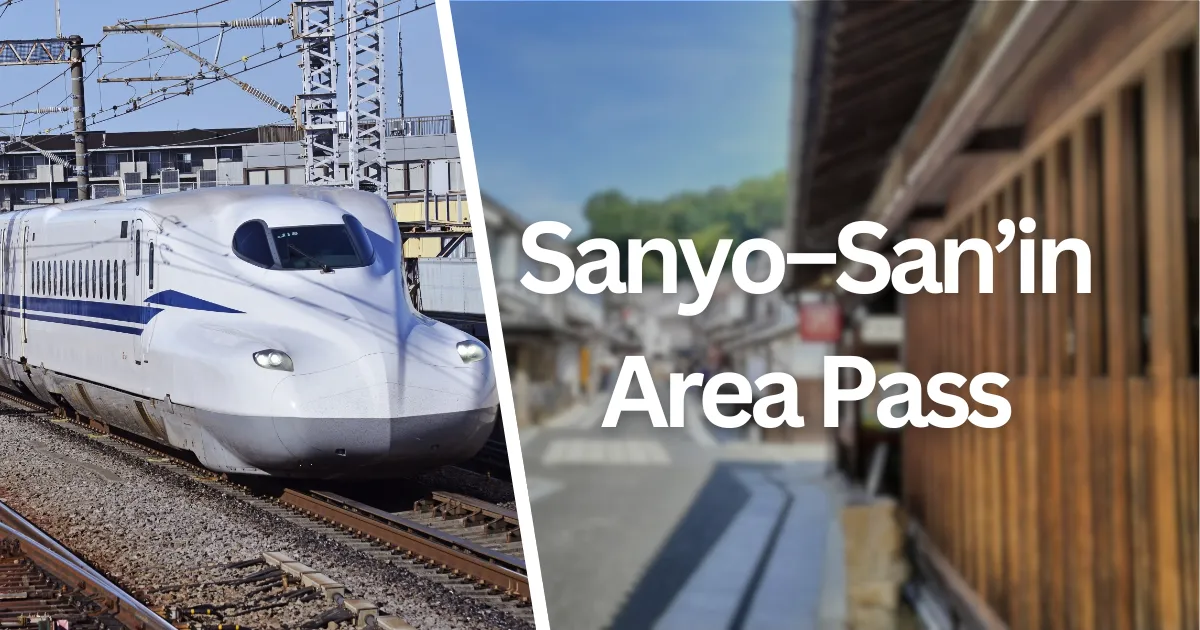
The Sanyo–San’in Area Pass is a regional rail ticket offered by JR West for international visitors exploring western Japan.
It provides unlimited train travel across the Sanyo and San’in regions, linking major cities like Osaka, Hiroshima, and Fukuoka with the scenic Sea of Japan coast.

Written by
Ono
Chief of Japan Trails.
>>>More
Sanyo–San’in Area Pass Overview

What is the Sanyo–San’in Area Pass?
The Sanyo–San’in Area Pass is a 7-day unlimited rail pass designed for foreign visitors traveling through western Japan.
It covers the Sanyo Shinkansen between Shin-Osaka and Hakata and includes JR West local, rapid, and limited express trains.
The pass makes long-distance and regional trips simple, affordable, and convenient.
Key Features & Benefits
The pass provides broad coverage and free seat reservations across JR West’s network.
It includes access to both the Sanyo and San’in regions, offering flexibility for city-to-coast travel.
With one ticket, you can move freely from bustling Osaka to quiet Izumo or scenic Miyajima while saving both time and money.
Sanyo–San’in Area Pass: Pricing and Eligibility
Price & Validity Period
The Sanyo–San’in Area Pass is valid for 7 consecutive calendar days from midnight of the first day until 23:59 on the seventh.
As of 2025, the price is as follows:
| Passenger Type | Duration | Price (JPY) |
|---|---|---|
| Adult (Age 12+) | 7 Days | ¥23,000 |
| Child (Age 6–11) | 7 Days | ¥11,500 |
Because the pass counts full calendar days, activating it early on Day 1 maximises your travel value.
Eligibility & Where to Buy
Only foreign tourists entering Japan under the “Temporary Visitor” status may use this pass.
It can be purchased online through JR West’s official website or authorised travel agencies before arrival.
After purchase, exchange the voucher at major JR West stations—such as Shin-Osaka, Kyoto, Hiroshima, or Hakata—by presenting your passport.
Sanyo–San’in Area Pass Coverage & Routes
Rail Lines and Transportation Included
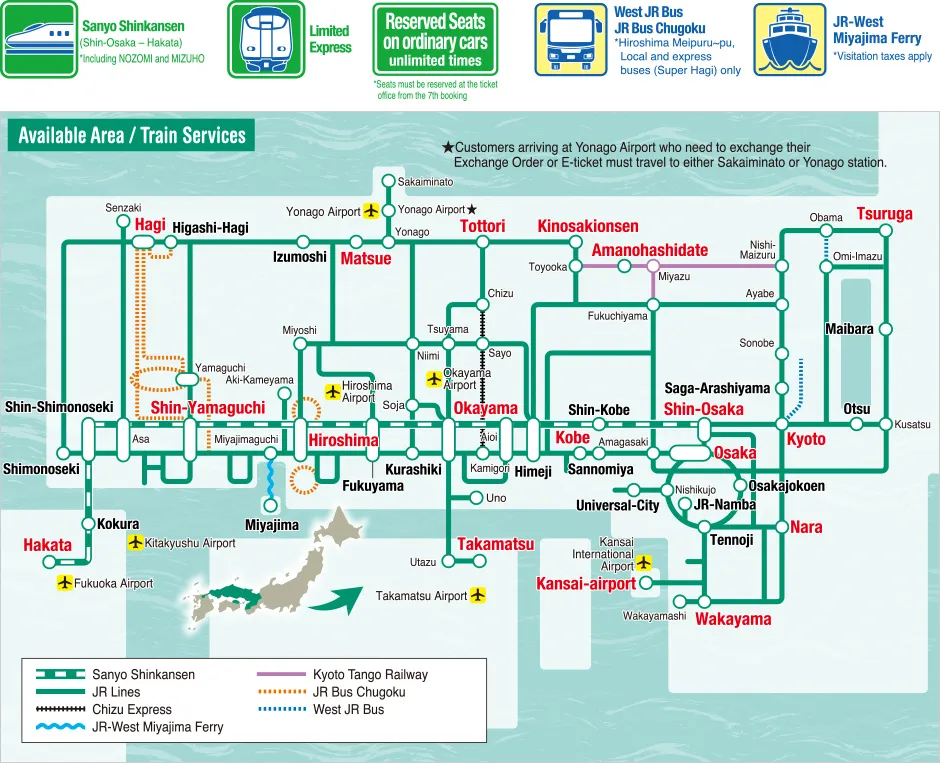
The pass offers access to an extensive JR West network.
It includes the Sanyo Shinkansen between Shin-Osaka and Hakata, local and rapid trains connecting cities such as Okayama, Hiroshima, Matsue, and Izumo, and limited express routes like “Yakumo” and “Super Oki.”
The JR West Miyajima Ferry to Itsukushima Shrine is also included, adding maritime access to one of Japan’s most iconic World Heritage sites.
Areas Covered and Major Cities Accessible
The Sanyo–San’in Area Pass connects Japan’s industrial and cultural heartlands with serene coastal landscapes.
Travellers can explore urban Kansai (Osaka, Kyoto, Kobe), historic Okayama and Kurashiki, and the peace memorial sites of Hiroshima.
Further north, it reaches the rural charms of Tottori, Matsue, and Izumo in the San’in region, and even extends to Hakata in Kyushu.
Sanyo–San’in Area Pass: Value Analysis
Breakdown: Pass vs Individual Tickets
Buying individual tickets for these routes quickly exceeds the pass price.
| Route (Round Trip) | Individual Fare | Covered by Pass |
|---|---|---|
| Shin-Osaka → Hiroshima | ¥22,000–24,000 | ✅ |
| Hiroshima → Matsue | ¥16,000 | ✅ |
| Local San’in travel | ¥8,000 | ✅ |
| Total without pass | ≈ ¥46,000–48,000 | |
| 7-day Pass Cost (Adult) | ¥23,000 | ✅ |
Even two long Shinkansen trips plus regional travel offset the cost, making this pass a strong value for long-distance travellers.
Who Should Use the Sanyo–San’in Area Pass?
This pass is ideal for visitors planning a wide-ranging itinerary across western Japan.
It suits travellers who enjoy frequent movement and diverse scenery rather than staying in one city.
Recommended users include:
- Travellers planning multi-prefecture routes covering Kansai, Chugoku, and the San’in coast.
- Those interested in combining historic sites with scenic local experiences.
- Visitors aiming for flexibility, convenience, and predictable travel costs.
>>> Purchase Sanyo–San’in Area Pass
Sanyo–San’in Area Pass: Usage Guide
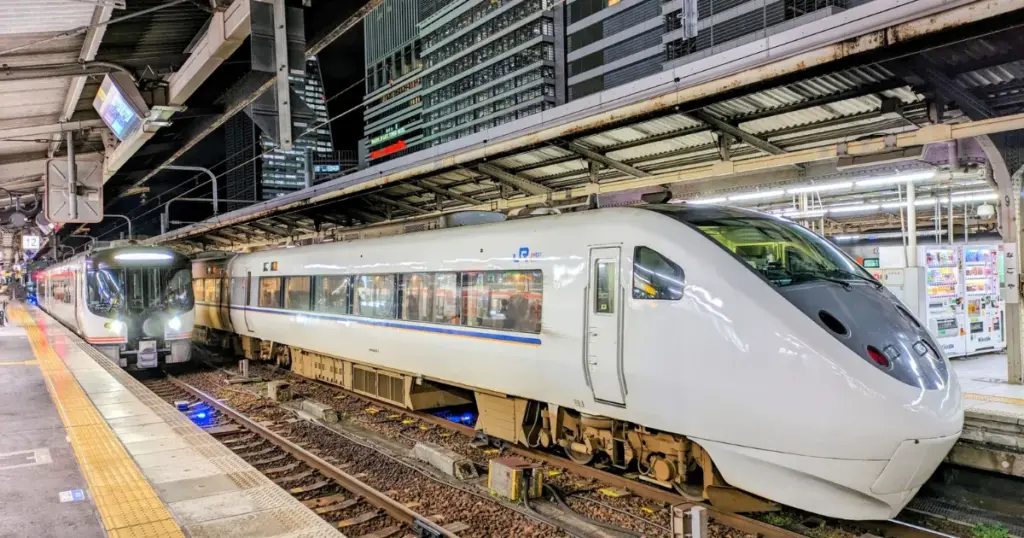
Using the pass should feel simple and predictable from purchase to daily rides.
This guide consolidates everything into clear actions you can follow.
Step-by-Step Booking and Exchange Process
Booking ahead secures a smoother first day and better seat availability.
You will buy online before arrival, then exchange the voucher in Japan.
Choose an activation date that matches your first long ride.
Buy on the JR West official site or an authorised partner (e.g., Klook, JR Pass.com) and receive your Exchange Order (voucher).
Go to a JR West service counter (e.g., Shin-Osaka, Kyoto, Hiroshima, Hakata), present your passport with “Temporary Visitor” status and the voucher, and set the activation date.
Collect the physical pass and immediately make free seat reservations for your first long-distance ride.
Activating & Using the Pass on Trains and Ferries
Activation follows calendar days from 00:00 to 23:59, so starting Day 1 early maximises value.
Always carry your passport together with the pass for eligibility checks.
Use staffed gates, make reservations before boarding, and show the pass on eligible ferries.
- Enter and exit via manned gates and present the pass when asked.
- Make free seat reservations at machines or ticket counters before limited-express/Shinkansen.
- Use the JR West Miyajima Ferry by showing the pass at boarding.
- If you travel beyond the valid area, pay the fare difference at your destination.
Seat Reservations and Limitations
Reservations are free but not automatic, and some services are fully reserved on weekends and holidays.
Knowing what the pass excludes prevents surprise costs at the gate.
If you overrun the covered area, you must settle the extra fare before exiting.
- Reservations:
Book early once plans are set and keep the reservation ticket with your pass. - Limitations:
Not valid on the Tokaido Shinkansen (Kyoto–Tokyo), private railways (Hankyu, Hanshin, Keihan, etc.), or non-JR subways/buses. - Overruns:
Travelling outside the network or past a covered station requires paying the additional fare.
Sanyo–San’in Area Pass: Travel Tips & Restrictions
Tips for Maximizing the Pass
Smart planning ensures you get full value from your seven days.
Travellers who combine long-distance journeys with local excursions typically benefit most.
Using the pass from early morning on Day 1 is key to maximising its return.
Helpful tips:
- Plan at least one long-distance ride each day.
- Reserve Shinkansen seats early, especially during peak seasons.
- Keep your passport handy for ID checks.
- Mix major cities and rural destinations for variety and efficiency.
- Use included transport like the Miyajima Ferry to maximise coverage.
Limitations & What’s Not Covered
The pass covers JR West-operated services only.
Private railway, subway, and city bus lines are not included.
Knowing these boundaries prevents unnecessary costs.
Not covered:
- The Tokaido Shinkansen (Kyoto ↔ Tokyo).
- Private railway companies (Hankyu, Hanshin, Keihan, etc.).
- Non-JR subways and municipal buses.
Common Mistakes to Avoid
Awareness of common pitfalls helps ensure a smooth journey.
Mistakes often involve timing, coverage misunderstandings, or missing identification requirements.
Common errors:
- Activating the pass on a low-travel day.
- Forgetting to carry a passport for verification.
- Boarding private lines not included in the pass.
- Neglecting seat reservations on busy trains.
Recommended 7-Day Sample Itinerary
A well-planned seven-day itinerary helps you get the most from this pass.
The goal is to alternate long Shinkansen journeys with local sightseeing days, reducing travel fatigue while maximising distance covered.
The sample below provides an achievable route combining major landmarks and off-the-beaten-path experiences.
Day 1–2: Osaka / Kobe → Okayama / Kurashiki
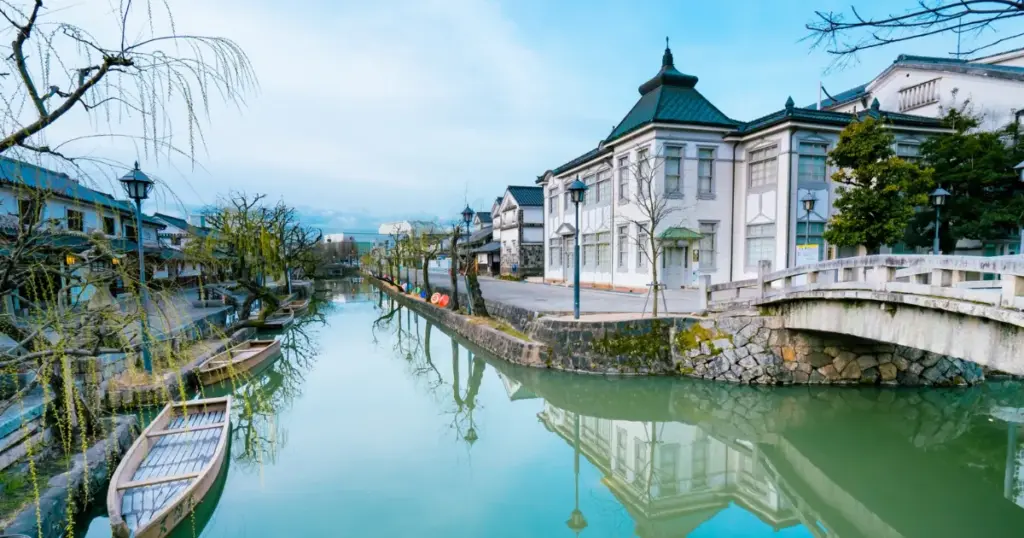
Begin your journey from Osaka or Kobe and activate the pass before boarding the Sanyo Shinkansen to Okayama (approx. one hour).
Visit Korakuen Garden and Okayama Castle, then head to Kurashiki’s Bikan Quarter, known for Edo-era canals and preserved merchant houses.
On the second day, explore local museums or take a side trip toward Uno Port before continuing north.
Day 3–4: Okayama → Matsue / Izumo (San’in Region)
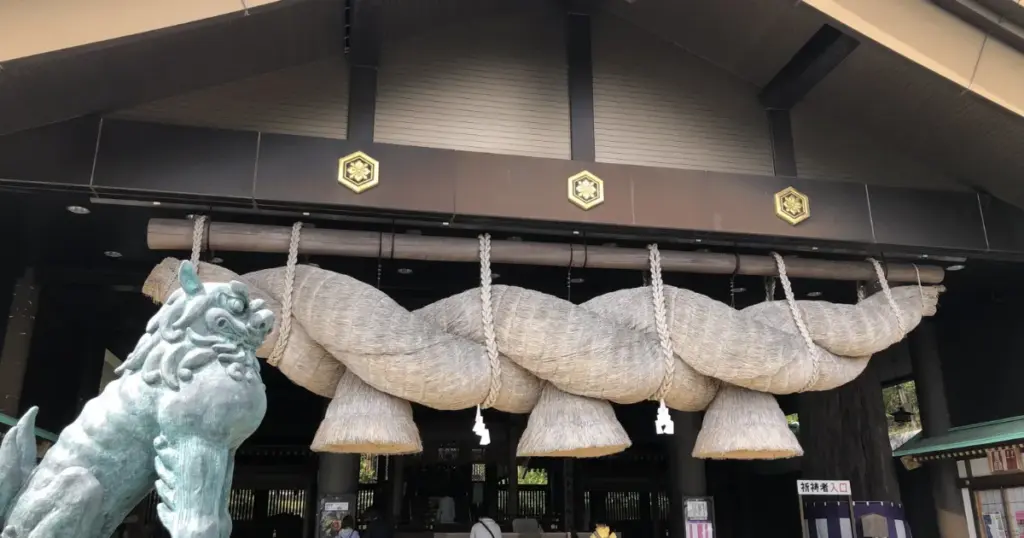
Depart Okayama by limited express train toward Matsue. Discover Matsue Castle, one of Japan’s few original castles, and stroll along Lake Shinji’s sunset promenade.
Continue to Izumo Taisha, among Japan’s oldest shrines, deeply rooted in mythology.
Spend a night in the San’in region to enjoy slower travel and local onsen hospitality.
Day 5–6: Matsue → Hiroshima / Miyajima
Return south to Hiroshima via express and Shinkansen connections.
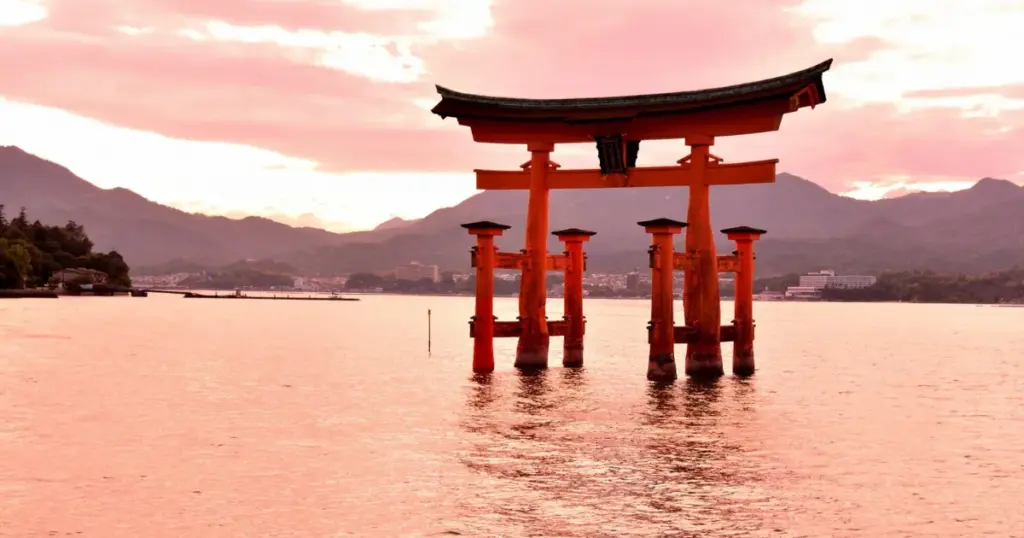
Visit the Peace Memorial Park, Hiroshima Castle, and take the JR Miyajima Ferry (covered by the pass) to Itsukushima Shrine.
Staying overnight on Miyajima allows you to see the illuminated torii gate reflected on the evening tide.
Day 7: Hiroshima → Fukuoka or Return to Kansai
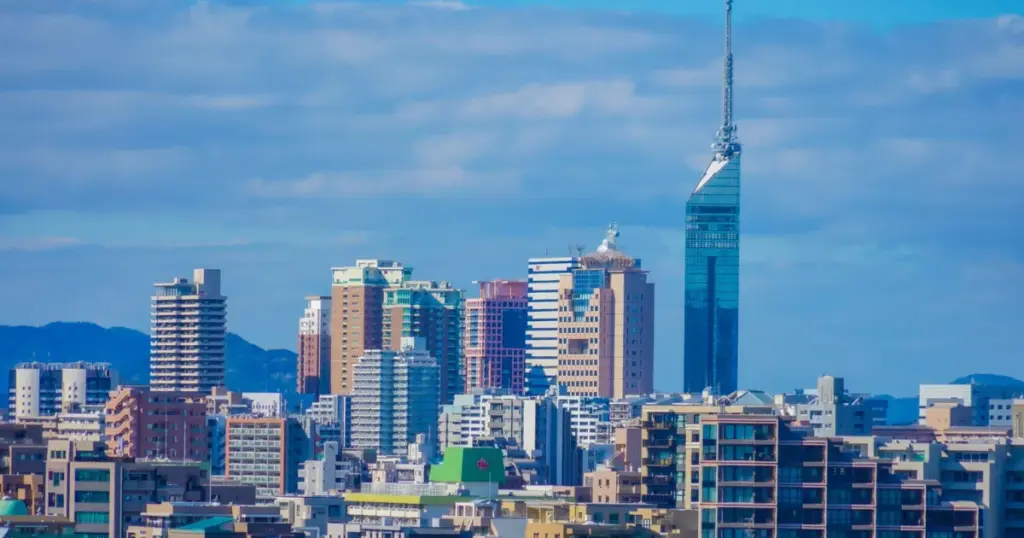
On the final day, ride the Sanyo Shinkansen westward to Hakata (Fukuoka) or return east to Osaka/Kyoto.
Use your remaining time for last-minute sightseeing or shopping before the pass expires at midnight.
Sanyo–San’in Area Pass Comparison
Sanyo–San’in vs Kansai Area Pass
The Kansai Area Pass covers Osaka, Kyoto, Nara, and Himeji but stops short of Hiroshima and the San’in region.
The Sanyo–San’in Area Pass goes much farther—ideal for longer routes reaching the Chugoku and San’in areas.
While the Kansai Pass is cheaper, it’s more suitable for short regional trips.

Sanyo–San’in vs Kansai Wide Area Pass
The Kansai Wide Area Pass expands coverage around Kansai yet excludes much of the San’in coast and the western reach to Hakata.
For travellers venturing across both regions or prioritising flexibility, the Sanyo–San’in Area Pass remains the best-value option.

FAQ About the Sanyo–San’in Area Pass
- Who can use this pass?
-
Only foreign visitors with “Temporary Visitor” status may purchase and use it.
- Are seat reservations free?
-
Yes. Reservations on all eligible JR West trains are included at no additional cost.
- Does the pass include the Miyajima Ferry?
-
Yes. The JR West-operated ferry between Miyajimaguchi and Miyajima is fully covered.
- Can I use it on the Tokaido Shinkansen?
-
No. The line between Kyoto and Tokyo is excluded from coverage.
- Can two travellers share one pass?
-
No. The pass is personal, non-transferable, and tied to your passport.
- Does it cover Kyushu beyond Hakata?
-
No. The coverage area ends at Hakata Station in Fukuoka.
- What if I lose my pass?
-
Lost passes cannot be replaced, so handle it with care.
- Can I get a refund?
-
Refunds are possible only before activation and according to the vendor’s policy.
Final Thoughts on Sanyo–San’in Area Pass
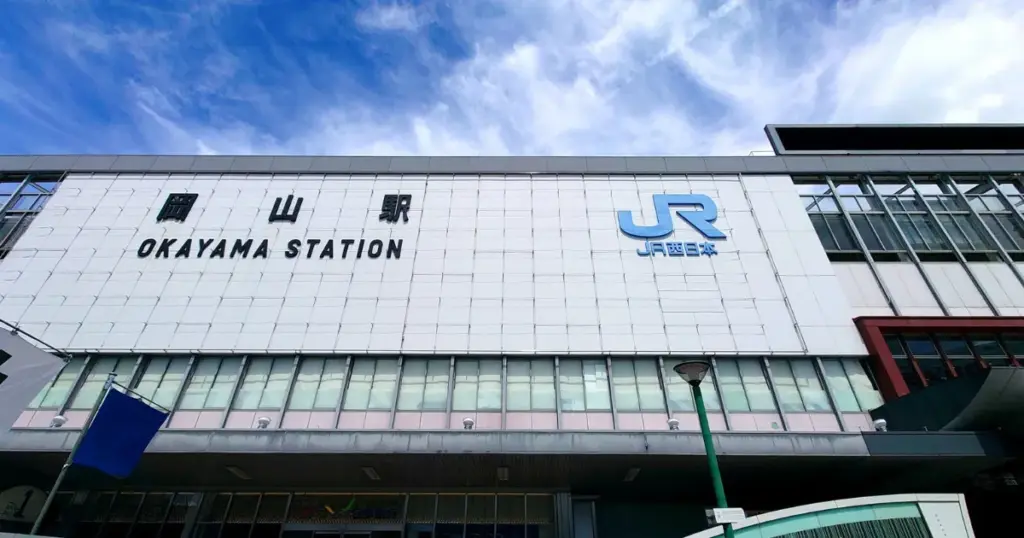
The Sanyo–San’in Area Pass offers one of the most comprehensive rail experiences in Japan for travellers seeking both convenience and diversity.
It connects vibrant cities, cultural heritage sites, and tranquil coastal towns within a single affordable ticket.
For visitors spending a week in western Japan, this pass provides the perfect balance of value, efficiency, and adventure.
Explore Tokyo with a Local!!

We offer tailored private tours designed for small groups. Prices start from 200 USD per person, and every itinerary can be fully customized.