Engawa oshizushi in Japan: flounder fin pressed sushi

Engawa oshizushi is one of those quiet discoveries that stays in your memory long after the trip is over.
It turns a rare cut of flatfish into a compact block of rice and fish that is easy to carry, share, and photograph.
For travelers who know only nigiri or sushi rolls, this style of pressed sushi opens a new window into regional Japanese food culture.
Engawa oshizushi overview and background

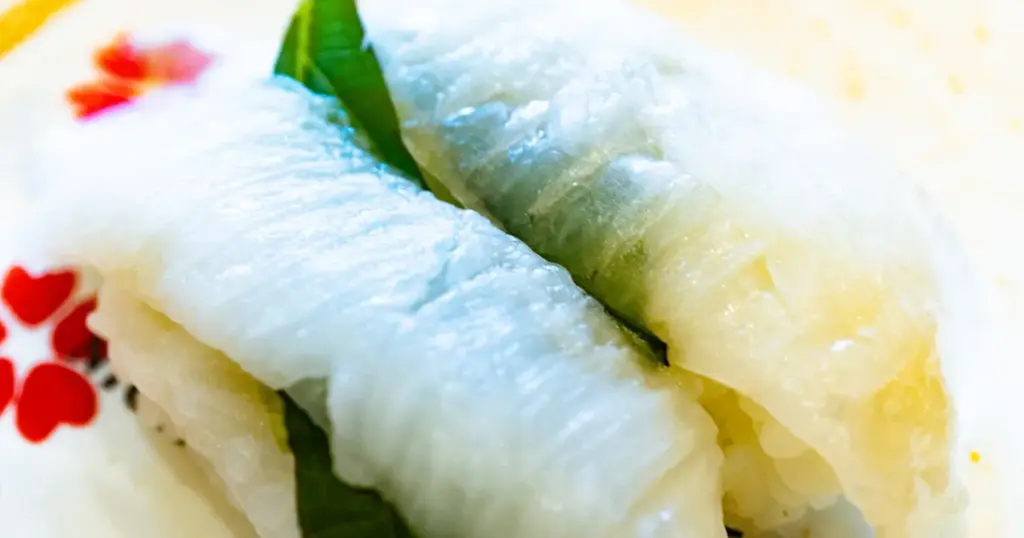
Engawa Oshizushi is a pressed sushi using the rich, chewy fin muscle of flounder.
The engawa’s fat and collagen match perfectly with vinegared rice when pressed into a compact block.
Originating from traditional preservation techniques in Kansai and Hokuriku, it is now enjoyed as a flavorful and elegant sushi style.
Engawa oshizushi historical timeline
Understanding the history of oshizushi helps you see why pressed sushi feels so at home in ekiben and travel culture.
It began as a preservation method, then shifted toward convenience and aesthetics.
| Period | Key developments related to oshizushi |
|---|---|
| 8th–10th century | Narezushi appears as an early fermented fish dish. |
| 14th–15th century | Early haya-zushi develops, eaten more quickly. |
| 16th–17th century | Vinegar replaces long fermentation, speeding sushi preparation. |
| 18th–19th century (Edo) | Modern oshizushi forms as fish and rice are pressed in wooden molds. |
| Late 19th–20th century | Pressed sushi spreads as festive food and for travelers’ boxed meals. |
| Late 20th–21st century | Regional pressed sushi adapts to ekiben and depachika, including engawa oshizushi. |
Engawa oshizushi flavor and texture
Engawa oshizushi stands out for its rich umami, combining chewy, fatty engawa with vinegared rice in a small, concentrated bite.
Light kombu resting or marination deepens the flavor without overpowering the natural sweetness of the rice.
As you eat, umami spreads through every grain, offering a buttery finish and a satisfying bite unique to engawa.
Typical tasting impressions
- Engawa umami absorbed into the vinegared rice, not just sitting on top
- Chewy yet tender texture that hints at collagen and freshness
- Noticeable but well balanced fat that coats the tongue without becoming greasy
- Flavor that intensifies with each chew and leaves a long, satisfying finish
Engawa oshizushi ingredients and how it is made
Engawa oshizushi uses just a few ingredients—engawa from flatfish and vinegared rice—so each flavor stands out clearly.
The engawa may be lightly seasoned, while the rice is dressed warm to let vinegar soak into every grain.
Balance is key: the right fish-to-rice ratio keeps the block firm and delivers a clean, focused taste.
Engawa oshizushi and the flounder fin cut

Engawa oshizushi uses the fin muscle of flatfish, a rich, collagen-filled cut prized for its chew and flavor.
Only a small amount can be taken from each fish, making engawa a premium ingredient often highlighted in sushi bars.
For oshizushi, chefs score the meat to keep the bite tender, resulting in a translucent, marble-like finish when pressed over rice.
Engawa oshizushi pressing technique and kombu use
Engawa oshizushi is shaped using a wooden mold, with vinegared rice and neatly arranged engawa pressed into a compact block for clean cutting.
Some versions use konbujime marination, adding kelp-driven umami while keeping the fish’s subtle flavor intact.
The finished block divides into firm, travel-friendly pieces that hold their shape perfectly for bento and ekiben.
Engawa oshizushi where to find it in Japan
Engawa oshizushi appears in several contexts, and understanding them helps you spot it on menus and in display cases.
Some versions are sold as ekiben, the boxed meals offered at major railway hubs, while others appear at sushi restaurants or department store food halls.
Engawa oshizushi ekiben at major stations
Engawa oshizushi makes an excellent ekiben because it holds its shape well, travels easily, and feels premium without being too heavy.
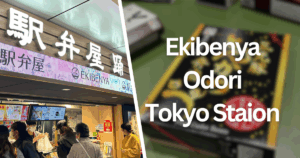
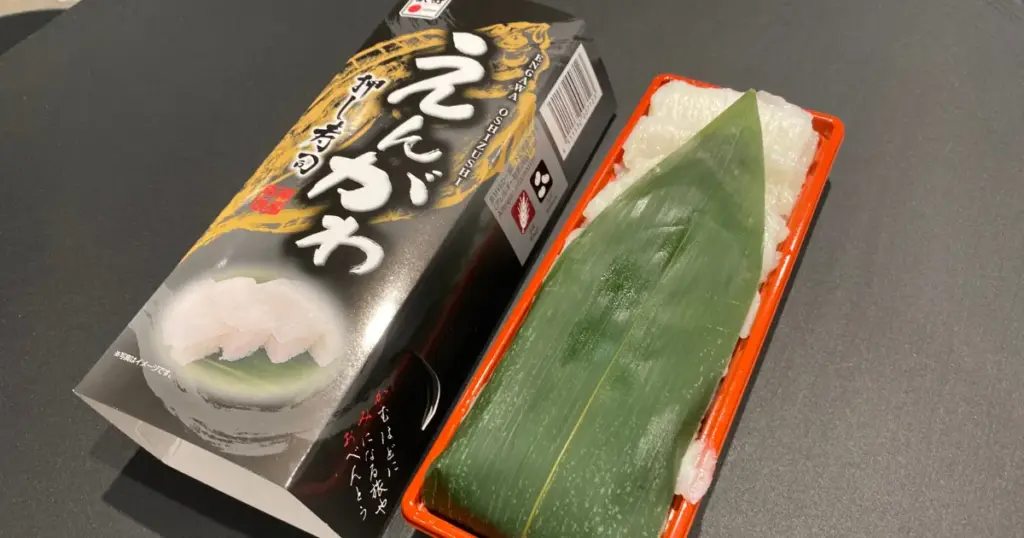
Kamio Bento’s version is commonly sold at Tokyo Station’s Ekibenya Matsuri and Ekibenya Odori for around 1,680 yen, also appearing at stations like Niigata and Sendai.
As a style of railway bento rooted in 19th-century tradition, ekiben highlights regional flavors—making engawa oshizushi a fitting choice for train journeys.
Engawa oshizushi at sushi bars and food halls
Engawa oshizushi can be found in regions known for pressed sushi like Kansai and Hokuriku, sometimes sold in small molded blocks or mixed sets.
Department store depachika also offer convenient takeaway options—check labels for “engawa” even when other fish are featured.
Conveyor belt sushi chains usually serve engawa nigiri, though oshizushi versions appear only as limited or special items.
Engawa oshizushi how to order and eat respectfully
Ordering engawa oshizushi is easy—look for 縁側 with 押し寿司/押寿司, or English labels like “Engawa Pressed Sushi.”
Check allergen notes, best-before times, and storage instructions, especially when traveling with raw or lightly cured fish.
On trains, keep the box cool, eat considerately, and use the provided bag for tidy disposal to match local etiquette.
Engawa oshizushi pairing ideas for drinks and sides
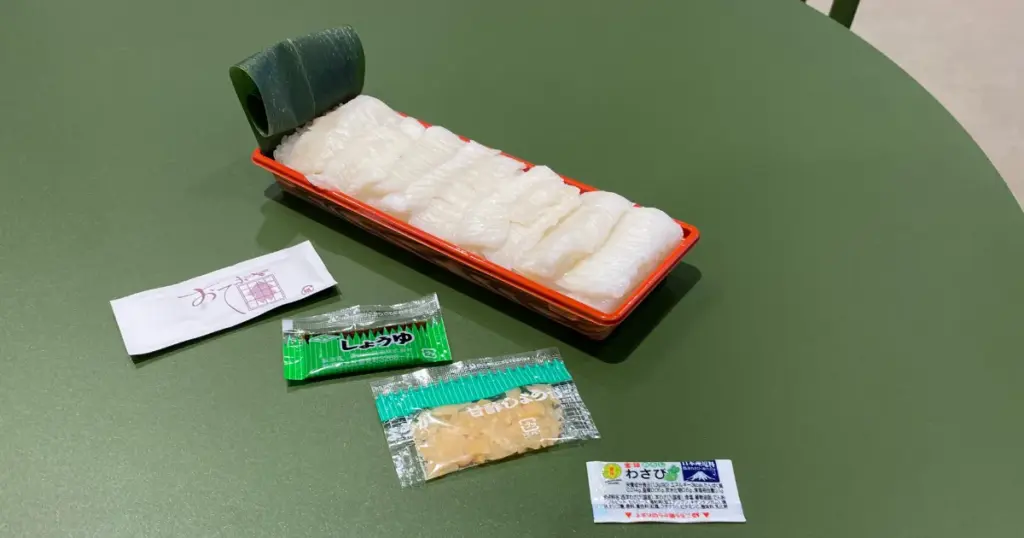
Engawa oshizushi pairs best with light, refreshing drinks and sides that cut through its rich fat, such as chilled junmai or honjozo sake, green tea, or even sparkling water with citrus.
Pickled ginger plays an important role as a palate cleanser, helping reset the taste between bites.
Adding miso soup or a simple clear broth warms the palate and enhances the delicate flavor of the engawa.
Engawa oshizushi price guide and value for travelers
Engawa oshizushi tends to fall in the mid to high price range, typically around 1,500–2,000 yen for a single-portion box at major stations or department stores.
Conveyor belt sushi chains offer affordable engawa nigiri, making it an easy way to try the flavor before committing to a full pressed sushi bento.
In restaurants, prices vary and can rise depending on the chef’s reputation and the quality of the fish.
Engawa oshizushi we bought at Ekibenya Matsuri
We purchased an Engawa Oshizushi box at Ekibenya Matsuri inside Tokyo Station, made by Kamio Bento of Niigata.
The same product is also sold at stations like Niigata and Sendai.
The best-before time was short, so it’s best eaten on the day of purchase.
Example price and portion guide
| Type of serving | Typical price | What you get | Notes for travelers |
|---|---|---|---|
| Ekiben boxed engawa oshizushi set | Around ¥1,680 | Box of pressed sushi pieces plus condiments | Ideal for Shinkansen or limited express, may sell out daily |
| Department store take out tray | ¥1,500–¥2,000 | Mixed pressed sushi including some engawa slices | Good option if you stay near a major station |
| Sushi restaurant pressed sushi portion | ¥2,000 and up | Freshly made oshizushi, sometimes seasonal | Ask about fish origin and preparation for deeper insight |
FAQ About Engawa oshizushi
- Is engawa raw or cooked in engawa oshizushi?
-
In most cases the engawa is served raw or lightly cured in vinegar or kombu, rather than being fully cooked.
- Which fish is used for engawa oshizushi?
-
Engawa usually comes from flounder and other flatfish, which provide the thin, fatty fin muscle that gives this sushi its distinctive texture.
- Is engawa oshizushi safe to eat on a long train ride?
-
Even though ekiben are made for travel, follow the best-before time and keep the box away from direct sunlight.
Final thoughts on Engawa oshizushi
Engawa oshizushi is not the loudest or most famous sushi style, but it rewards travelers who seek it out.
It turns a rare cut of flatfish into a portable, beautifully structured meal where kombu aroma, vinegared rice, and concentrated fin umami work together.
For many visitors, a single box eaten on the Shinkansen becomes one of the most vivid food memories of the trip.
Explore Tokyo with a Local!!

We offer tailored private tours designed for small groups. Prices start from 200 USD per person, and every itinerary can be fully customized.