Kokyo Gaien (Imperial Palace Outer Gardens) A Complete Guide

Kokyo Gaien, widely known in English as the Imperial Palace Outer Gardens, is one of the most understated yet meaningful open spaces in central Tokyo.
Located between the Imperial Palace and the Marunouchi business district, it offers international visitors a rare opportunity to experience Japanese history, national symbolism, and everyday urban life in a single walk.
Unlike theme-style attractions or commercial sightseeing spots, Kokyo Gaien is defined by openness, scale, and quiet dignity.
Kokyo Gaien Overview

Kokyo Gaien is the expansive public grounds surrounding the Imperial Palace’s outer perimeter.
Rather than a traditional Japanese garden, it is a civic space designed to frame the Emperor’s residence while remaining open to the public.
This balance of formality and accessibility makes it unique within Tokyo.
History of Kokyo Gaien and Its Role in Modern Tokyo
Understanding Kokyo Gaien requires knowing its historical background, as the area has transformed dramatically through Japan’s political transitions.
Originally part of Edo Castle’s defensive zone, it was redesigned after the Meiji Restoration and World War II to symbolize peace and openness.
Today, it serves as a public space that quietly reflects Japan’s postwar values.
Difference Between Kokyo Gaien and the Imperial Palace East Gardens
Kokyo Gaien is often confused with the adjacent Imperial Palace East Gardens, but they differ significantly in role and atmosphere.
Kokyo Gaien is an open, always-accessible space for walking and views, while the East Gardens are curated grounds with limited hours and castle ruins.
Visiting Kokyo Gaien alone provides strong historical context without time constraints.
Kokyo Gaien Location and Access from Tokyo Station
Accessibility is one of Kokyo Gaien’s greatest strengths, with its central location making it easy to fit into any Tokyo itinerary.
It lies directly west of Tokyo Station, bordered by Marunouchi and surrounded by major transportation hubs.
This flexibility makes it especially convenient for short visits, even for first-time travelers to Japan.
Walking Access from Tokyo Station (Marunouchi Area)
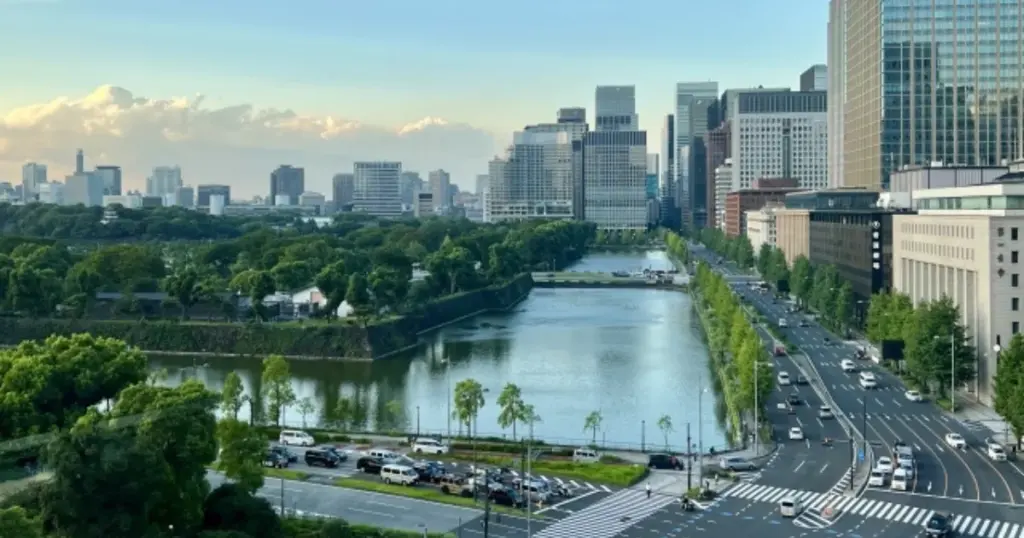
Walking from Tokyo Station is the most intuitive way to reach Kokyo Gaien, with the route itself highlighting Tokyo’s contrast between modern architecture and historic space.
The 10 to 15-minute walk from the Marunouchi side features wide sidewalks and clear sightlines for easy navigation.
The gradual transition from dense buildings to open lawns makes the journey part of the experience.
Nearest Subway Stations and Exit Tips
Subway access provides additional flexibility for visitors arriving from other parts of Tokyo.
Several lines serve stations around Kokyo Gaien.
Because exits and walking distances vary, times should be treated as general guidelines.
| Option | Station / Line | Example Exits | Typical Walk |
|---|---|---|---|
| Closest to Nijubashi views | Nijubashimae (Chiyoda Line) | Exit 2 or B6 | About 2–5 minutes |
| Central access | Tokyo Station (JR Lines) | Marunouchi side | About 10–15 minutes |
| Multiple route access | Otemachi (Various Lines) | Depends on line | 10–15+ minutes |
Kokyo Gaien Things to See: Landmarks Inside the Gardens
At first glance, Kokyo Gaien may appear minimal.
However, its landmarks carry deep symbolic meaning.
Each feature represents a different layer of Japanese history and values.
Rather than concentrating attractions in one area, Kokyo Gaien encourages slow exploration.
Visitors who take their time are rewarded with a deeper sense of place.
This contemplative quality sets it apart from other Tokyo sightseeing spots.
Nijubashi Bridge Viewpoints and Photo Spots
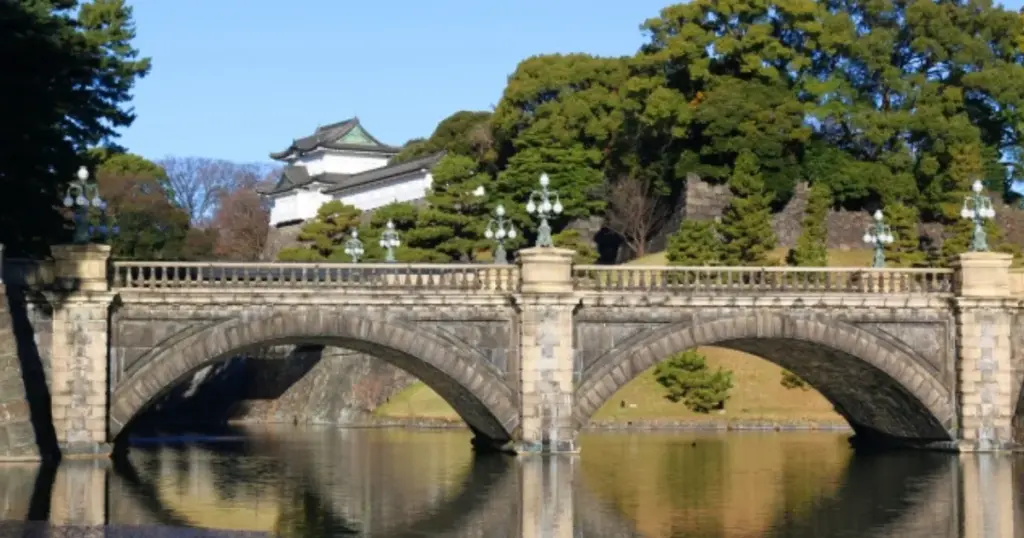
Nijubashi Bridge is the most iconic visual associated with Kokyo Gaien.
It serves as the symbolic gateway toward the Imperial Palace.
For many international visitors, this is the highlight of the area.
The bridge is viewed from designated public viewpoints rather than crossed.
Reflections in the water, stone walls, and palace greenery create balanced compositions.
Early morning offers quiet conditions, while late afternoon provides softer light.
Statue of Kusunoki Masashige Explained Simply
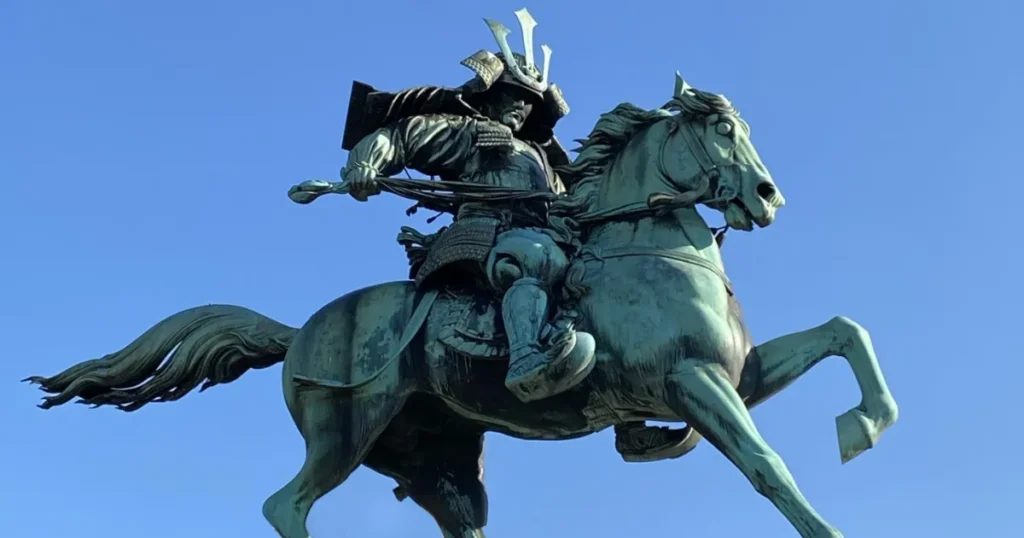
The statue of Kusunoki Masashige is one of Kokyo Gaien’s most historically significant monuments.
Many visitors pass it without understanding its meaning.
Kusunoki Masashige was a 14th-century samurai celebrated for his loyalty to the Emperor.
His statue symbolizes devotion and moral integrity.
Its placement near the palace reinforces values still respected in Japanese society.
Wide Lawns and Seasonal Scenery (Spring, Autumn, Winter)
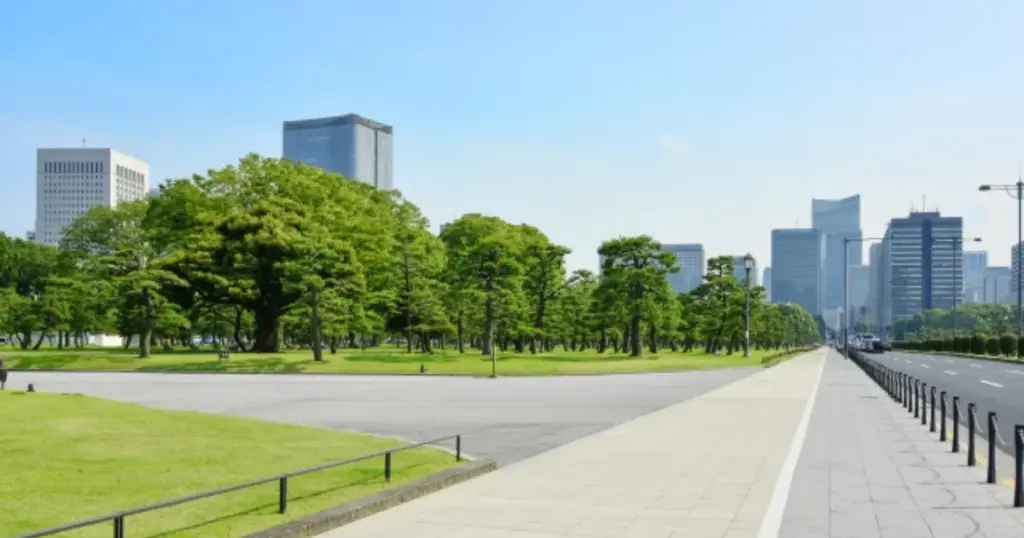
Kokyo Gaien’s defining feature is its wide, uncluttered lawns.
These open spaces create a sense of calm rarely found in central Tokyo.
Spring brings modest cherry blossoms along paths.
Autumn offers crisp air and clear skies.
Winter emphasizes contrasts between pine trees, gravel paths, and stone walls, creating a solemn, reflective mood.
Kokyo Gaien Visiting Tips for First-Time Visitors
Despite being free and open, Kokyo Gaien requires some practical awareness.
Knowing what to expect helps visitors avoid discomfort or confusion.
Because the area is large and mostly uncovered, weather conditions matter.
Comfortable shoes and season-appropriate clothing are essential.
Visitors should also be mindful of etiquette due to the site’s national importance.
Opening Hours, Entrance Rules, and Costs
Kokyo Gaien does not operate like a typical tourist attraction.
While it is generally accessible every day, conditions can change during official events.
| Item | Details |
|---|---|
| Admission Fee | Free |
| General Access | Open every day |
| Restrictions | Temporary limits during national or state events |
| Security Checks | None for outer public areas |
Photography Rules and Etiquette Near the Imperial Palace
Photography is generally permitted within Kokyo Gaien.
However, respectful behavior is expected at all times.
This is not only a park but also a national symbol.
Tripods may attract attention from security staff.
Photographing guards or restricted facilities should be avoided.
Remaining on public paths ensures a smooth visit.
Best Time of Day to Visit Kokyo Gaien
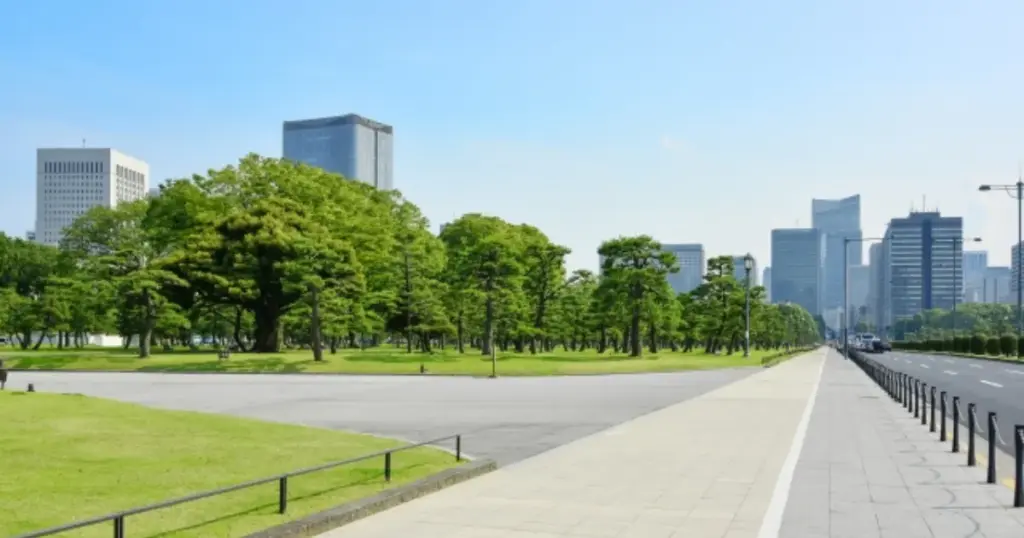
Timing strongly affects the atmosphere of Kokyo Gaien.
While it can be visited at almost any time, certain periods are more comfortable and visually appealing.
Early mornings are quiet and reflective.
Late afternoons offer warm light and views of office workers passing through.
Midday can feel exposed in summer due to limited shade.
Kokyo Gaien Seasonal Highlights and Best Months to Visit
Seasonal changes at Kokyo Gaien are subtle rather than dramatic.
Unlike flower-focused parks, the appeal here lies in atmosphere.
Visitors expecting dense cherry blossom crowds may be surprised.
Instead, Kokyo Gaien rewards careful observation.
Its seasonal moods make repeat visits worthwhile.
Spring and Cherry Blossom Views Around Kokyo Gaien
Spring remains popular despite the modest number of cherry trees.
Blossoms appear along edges and pathways, allowing relaxed walking even during peak season.
The contrast between pale blossoms and historic stone walls creates elegant scenery.
Early April is typically the best time for spring visits.
Autumn Foliage and Clear Winter Views
Autumn emphasizes clarity rather than intense color.
Red and yellow leaves appear in scattered clusters.
Combined with blue skies, the scenery feels crisp and refined.
Winter reveals Kokyo Gaien’s architectural lines.
Bare trees open sightlines to palace walls and surrounding buildings.
The calm atmosphere suits reflective walks.
Kokyo Gaien Walking Routes and Model Itineraries
Because of its size, Kokyo Gaien benefits from planned walking routes.
Structured itineraries help visitors manage time effectively.
This is especially useful for travelers with limited schedules.
Routes can be adjusted easily.
Whether you have 30 minutes or half a day, Kokyo Gaien adapts well.
30-Minute Kokyo Gaien Walk (Short Stay Plan)
Not every traveler has the luxury of spending hours around the Imperial Palace area.
This short walking plan is designed for visitors with limited time, such as those between train transfers or business appointments.
Even within 30 minutes, Kokyo Gaien offers enough visual impact and historical context to feel rewarding rather than rushed.
- Start from Tokyo Station (Marunouchi side)
- Walk toward the Nijubashi Bridge viewpoints
- Stop by the Kusunoki Masashige statue
- Return via a parallel path to experience different sightlines
Half-Day Route Including Marunouchi and Tokyo Station
Longer visits allow Kokyo Gaien to be combined with surrounding districts.
This approach blends nature, history, and urban culture.
- Morning walk through Kokyo Gaien
- Coffee break in Marunouchi
- Explore nearby museums or shops
- Return to Tokyo Station for onward travel
Kokyo Gaien and Nearby Attractions to Combine
Kokyo Gaien functions best as part of a broader central Tokyo experience.
Its location makes it easy to connect with nearby districts.
This minimizes travel time while maximizing variety.
Rather than treating Kokyo Gaien as a standalone stop, consider it a connector between attractions.
The surrounding area offers architecture, dining, and culture.
Marunouchi Area Cafes and Architecture
Marunouchi contrasts sharply with Kokyo Gaien’s openness.
Modern buildings and refined cafes define the district.
Together, they showcase Tokyo’s dual identity.
Many cafes offer outdoor seating with views toward the gardens.
This creates a natural transition from walking to resting.
Architecture enthusiasts will also appreciate the area’s urban design.
Imperial Palace East Gardens vs Kokyo Gaien Comparison
Comparing the two spaces helps visitors allocate time wisely.
Each represents a different interpretation of imperial space.
Visiting both provides a complete narrative.
Kokyo Gaien emphasizes openness and symbolism.
The East Gardens focus on curated paths and historical ruins.
Together, they illustrate Japan’s layered history.
Kokyo Gaien FAQs for International Travelers
First-time visitors often share similar questions about Kokyo Gaien.
Addressing them directly reduces uncertainty.
Clear answers support better planning.
These FAQs reflect common concerns among international travelers. Reviewing them before visiting is recommended.
- Is Kokyo Gaien Free to Enter?
-
Yes, Kokyo Gaien is completely free. No tickets or reservations are required. Visitors can enter at their convenience.
- Can You Enter the Imperial Palace from Kokyo Gaien?
-
No,Kokyo Gaien does not provide direct access to the Imperial Palace residence.
Inner areas require special arrangements or guided tours.
Restricted zones must be respected.
- How Long Should You Spend at Kokyo Gaien?
-
Most visitors spend 30 minutes to 1.5 hours.
Photography enthusiasts or relaxed walkers may stay longer.
The flexible layout supports varied pacing.
Kokyo Gaien (Imperial Palace Outer Gardens)
Adress
Tokyo, Chiyoda City
Nearest station
Tokyo Station, Nijubashimae (Chiyoda line)
Japan Trails Newletter