National Museum of Nature and Science Tokyo: Complete Guide

The National Museum of Nature and Science Tokyo (commonly known as “Kahaku”) stands as Japan’s oldest and most comprehensive science museum.
Founded in 1877, this premier institution in Ueno Park features over 25,000 exhibits across two buildings exploring natural history, dinosaurs, space exploration, and Japanese scientific heritage.
With affordable admission of just ¥630 for adults and free entry for visitors under 18, Kahaku offers extraordinary educational value for international travelers.
National Museum of Nature and Science History
National Museum of Nature and Science history begins in 1877 when Japan established its first national museum during the Meiji Restoration’s modernization push.
Originally called the Education Museum under the Ministry of Education, the institution evolved through several names including Tokyo Museum, Tokyo Science Museum, and National Science Museum before adopting its current name in 2007.
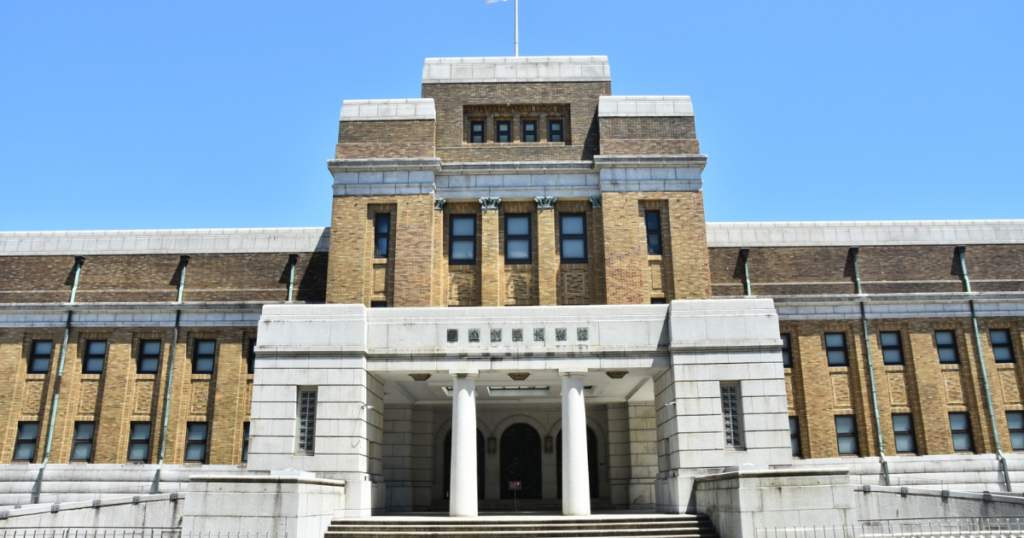
The museum survived the Great Kanto Earthquake and World War II bombings, with its iconic Neo-Renaissance Japan Gallery building completed in 1931 as part of post-earthquake reconstruction.
The Founding Era (1877): Japan’s First National Museum During Meiji Modernization
The Education Museum opened as Japan’s first national museum facility dedicated to science and natural history.
The Meiji government established this institution to modernize Japanese education and introduce Western scientific knowledge.
Early exhibits focused on minerals, plants, and educational materials that would support Japan’s rapid industrialization.
The museum’s founding reflected Japan’s determination to match Western scientific advancement.
Government officials visited European and American museums to study their collection management and exhibition techniques.
These international exchanges shaped the museum’s development philosophy and exhibition standards.

Private tour for your group only!!
From $600 per group.
Architectural Heritage: The Neo-Renaissance Japan Gallery Building (1931)
The current Japan Gallery building was completed in September 1931 as the main building of the Tokyo Science Museum.
Designed by engineer Kenzo Kasuya from the Ministry of Education’s Architecture Division, this Neo-Renaissance style structure replaced buildings destroyed in the 1923 Great Kanto Earthquake.
The building’s elegant facade and symmetrical design represented Japan’s commitment to preserving scientific knowledge.
On June 9, 2008, the Japan Gallery building received designation as an Important Cultural Property of Japan. This recognition honors the building’s architectural significance and its role in Japanese scientific education history.
The structure’s survival through World War II and subsequent decades demonstrates remarkable durability and historical continuity.
Modern Evolution: Comprehensive Science Museum and Research Institution (2007-Present)
In 2007, the institution adopted its current name: National Museum of Nature and Science. This rebranding emphasized the museum’s dual mission of public education and scientific research.
Today, the museum maintains extensive research facilities in Tsukuba, housing approximately 5 million specimens and conducting cutting-edge natural history research.
The museum has evolved into one of Asia’s leading natural history institutions.
Its collections include approximately 14,000 specimens on permanent display, with 100,000 new items added annually through field research and donations.
Research staff collaborate internationally on biodiversity studies, paleontology, and conservation science.
Museum Buildings and Exhibition Philosophy

National Museum of Nature and Science Tokyo architecture consists of two distinct buildings: the historic Japan Gallery (Nihonkan) and modern Global Gallery (Chikyukan).
The museum’s exhibition philosophy centers on the theme “Aiming for the coexistence of humankind and nature,” presenting systematic displays that help visitors understand humanity’s relationship with the natural world.
The 14.4-hectare campus includes outdoor exhibits, a rooftop garden, and the innovative Theater 36Ō immersive cinema.
Japan Gallery: Neo-Renaissance Architecture and Japanese Natural Heritage
The Japan Gallery occupies the 1931 Neo-Renaissance building, featuring three floors of exhibits exploring “The Nature of the Japanese Archipelago and Us.
” The building’s traditional architecture creates an appropriate setting for understanding Japan’s unique geological history, endemic species, and cultural relationship with nature.
Natural lighting from large windows illuminates specimens collected from Hokkaido to Okinawa.
Exhibits trace the formation of the Japanese archipelago through tectonic plate movements over millions of years.
Visitors discover how Japan’s varied climate zones from subarctic to subtropical created exceptional biodiversity.
The gallery showcases endemic species found nowhere else on Earth, explaining evolutionary processes on isolated island ecosystems.
The Japan Gallery’s most famous exhibits include Hachiko (the loyal Akita dog whose stuffed remains are preserved here) and Taro and Jiro (the Sakhalin Huskies that survived Antarctica).
These beloved animal exhibits connect visitors emotionally to Japan’s cultural history and scientific achievements.
Global Gallery: Modern Design and Universal Natural History
The Global Gallery presents “The History of Life on Earth and Humanity” in a contemporary architectural space completed in the 2000s.
This modern building features open floor plans, dramatic multi-story atriums, and state-of-the-art exhibition technology.
Interactive displays engage visitors of all ages in understanding evolution, biodiversity, and scientific discovery.
The Global Gallery’s basement contains the museum’s spectacular dinosaur collection.
Full skeletons of Tyrannosaurus rex, Triceratops, and Apatosaurus dominate the space, suspended dramatically to show natural postures.
The Triceratops specimen represents one of the most complete fossils ever discovered, making it scientifically invaluable.
Upper floors explore diverse themes including space exploration (featuring a moon rock sample), deep-sea ecosystems, evolutionary biology, and technological innovation.
The museum’s taxidermy collection rivals world-class natural history museums, with over 2,000 beautifully preserved animal specimens arranged in ecological contexts.
Theater 36Ō: Japan’s First Spherical Cinema Experience
Theater 36Ō (pronounced “Theater San-Roku-Maru”) opened as Japan’s first 360-degree spherical theater.
Visitors stand on a bridge suspended inside a 12.8-meter diameter sphere, surrounded completely by projection screens.
This immersive experience creates the sensation of floating through space, diving in oceans, or witnessing Earth’s formation.
The theater’s name combines “36Ō” (360 degrees) with “〇” representing a sphere.
Programs rotate regularly, covering topics like planetary formation, deep-sea exploration, and the beauty of Earth from space.
Shows last approximately 10-15 minutes and require separate tickets (¥320 adults).
Must-See Exhibits at National Museum of Nature and Science Tokyo

National Museum of Nature and Science Tokyo exhibits include world-class dinosaur fossils, beloved cultural icons like Hachiko, and Important Cultural Properties of Japan.
The museum’s 14,000 permanent displays span natural history, anthropology, science history, and space exploration.
With over 5 million total specimens in storage and research facilities, Kahaku represents one of Asia’s most significant scientific collections.
Dinosaur Hall: Complete Skeletons and Paleontological Wonders
| Dinosaur Species | Period | Characteristics | Display Location |
|---|---|---|---|
| Tyrannosaurus rex | Late Cretaceous | Apex predator, 12m length | Global Gallery B2F |
| Triceratops | Late Cretaceous | Three-horned herbivore | Global Gallery B2F |
| Apatosaurus | Late Jurassic | Long-necked giant, 21m | Global Gallery B2F |
| Futabasaurus suzukii | Late Cretaceous | Japanese plesiosaur fossil | Japan Gallery 1F |
| Stegosaurus | Late Jurassic | Plated dinosaur | Global Gallery B2F |
The Dinosaur Hall represents Kahaku’s most popular attraction, drawing families and paleontology enthusiasts worldwide.
The Triceratops skeleton displayed here ranks among the world’s most complete specimens, with over 85% original fossilized bone.
Scientists study this specimen to understand Triceratops growth patterns and behavior.
Futabasaurus suzukii holds special significance as a marine reptile discovered in Fukushima Prefecture.
This complete plesiosaur fossil demonstrates that ancient seas covered parts of modern Japan.
The specimen’s excellent preservation allows detailed study of soft tissue attachment points and swimming mechanics.
Hachiko and Taro-Jiro: Japan’s Most Beloved Animal Exhibits
The taxidermied remains of Hachiko the Akita dog occupy a place of honor in the Japan Gallery.
Hachiko became internationally famous for waiting at Shibuya Station every day for nine years after his owner’s death in 1925.
After Hachiko’s death in 1935, his body was preserved and donated to the museum, where it remains one of Japan’s most visited exhibits.
Taro and Jiro, the Sakhalin Husky dogs that survived a year alone in Antarctica, are displayed together in the Japan Gallery.
These dogs were part of the 1958 Japanese Antarctic Research Expedition. When the team evacuated suddenly due to harsh conditions, the dogs were left behind.
Against all odds, Taro and Jiro survived until rescue teams returned a year later, becoming national heroes.
Scientific Instruments Collection: Important Cultural Properties
The museum houses three nationally designated Important Cultural Properties representing Japan’s scientific heritage.
The Celestial Globe and Terrestrial Globe created by Shibukawa Shunkai in 1695-1697 demonstrate Edo-period astronomical knowledge.
These exquisite instruments show how Japanese scholars studied Western astronomy while maintaining traditional observation methods.
A Myriad Year Clock made in 1695 displays remarkable mechanical complexity, calculating astronomical phenomena over vast timescales.
The Troughton & Simms astronomical telescope from the 19th century represents Japan’s embrace of Western scientific instruments during modernization.
The Milne horizontal pendulum seismograph holds particular significance as Japan pioneered seismology studies.
This instrument represents early earthquake detection technology that evolved into Japan’s world-leading seismic monitoring systems.
Q&A
Essential visitor questions focus on admission fees, access routes, operating hours, and exhibit highlights.
These practical details help international travelers plan their museum visit efficiently.
The following FAQ addresses the most important logistics for first-time visitors.
- What are the admission fees?
-
Category Admission Fee Adults & University Students ¥630 High School Students & Under 18 Free Seniors 65+ Free Disabled + 1 Attendant Free Free Admission Days: May 18 (International Museum Day), November 3 (Culture Day)
- What are the opening hours?
-
Day Hours Tuesday – Sunday 9:00 – 17:00 (last entry 16:30) Friday & Saturday 9:00 – 20:00 (last entry 19:30) Closed Mondays (or Tuesday if Monday is a holiday) Year-end Closure December 28 – January 1 Extended hours during Golden Week and summer holidays may apply. Check the official website for current schedules.
- How do I get to the museum from major Tokyo locations?
-
Departure Point Transportation Time Fare Details JR Ueno Station Walk 5 min Free Take Park Exit (Koen-guchi) Narita Airport Narita Express + Walk 70 min ~¥3,000 To Ueno Station Narita Airport Keisei Skyliner + Walk 50 min ¥2,470 To Keisei-Ueno Station Tokyo Station JR Yamanote Line + Walk 12 min ¥140 To Ueno Station Shibuya Tokyo Metro Ginza Line + Walk 30 min ¥210 To Ueno Station Shinjuku JR Chuo + Yamanote Line + Walk 23 min ¥210 To Ueno Station The museum is located in the northeast corner of Ueno Park.
From Ueno Station Park Exit, walk straight into the park and turn right.
The museum entrance is approximately 5 minutes on foot.
- Can I take photos inside the museum?
-
Yes, photography is generally permitted in permanent exhibitions for personal, non-commercial use without flash, tripods, or selfie sticks.
However, some special exhibitions prohibit photography due to copyright restrictions.
Always check signage at exhibit entrances. Group photography is not permitted inside exhibition halls.
Conclusion
National Museum of Nature and Science Tokyo conclusion emphasizes the institution’s extraordinary value as Japan’s premier science education facility and research institution.
The museum’s comprehensive coverage of natural history, paleontology, space science, and Japanese cultural heritage provides unmatched educational experiences.
For international visitors to Tokyo, Kahaku offers exceptional quality at remarkably affordable prices, making world-class science accessible to all.
National Museum of Nature and Science Tokyo
Adress
7 – 20 Uenokoen, Taito City, Tokyo
Nearest station
Ueno Station (Shinkansen / Keihin-Tohoku / Yamanote / Utsunomiya / Ueno-Tokyo / Takasaki / Jyoban / Ginza)
Explore Tokyo with a Local!!

We offer tailored private tours designed for small groups. Prices start from 200 USD per person, and every itinerary can be fully customized.