Top 10 Ekiben in Japan
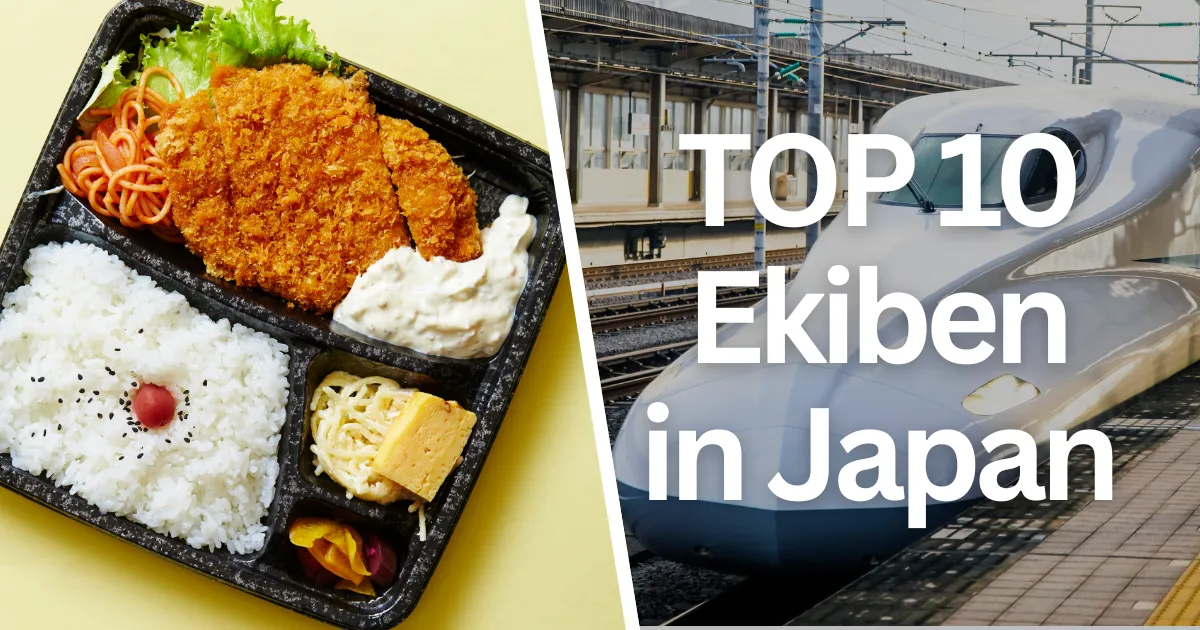
Japan’s rail journeys are incomplete without ekiben.
These station bento boxes bring together local flavors, ingenious packaging, and history, making them more than just meals.
This guide highlights the Top 10 ekiben in Japan — specific, named bentos that travelers can actually buy, along with tips on where, when, and how to enjoy them.
Ekiben Japan: What Makes a Great Station Bento?

Ekiben Japan is more than simple boxed food .
It represents regional pride and culinary craftsmanship.
Since the first boxed meal was sold at Utsunomiya Station in 1885, ekiben have grown into a nationwide culture.
The artistry lies not just in taste but in presentation, packaging, and storytelling.
To be considered one of the best ekiben, a bento must showcase its region’s unique agriculture or seafood.
It should be easy to eat on a moving train, beautifully packaged, and consistently popular with both locals and visitors.
Availability is another factor: some ekiben are sold daily at major stations, while others are rare finds.

Private tour for your group only!!
From $600 per group.
Best Ekiben Japan – The Definitive Top 10 List
Every region of Japan boasts famous ekiben, but these ten stand out for their history, taste, and accessibility.
They appear regularly in media, ekiben fairs, and even foreign guidebooks.
To help travelers plan, here’s a quick reference table before diving into details.
OGINOYA Tōge no Kamameshi — Gunma (Yokokawa)

Tōge no Kamameshi, sold since 1958, is one of the most legendary ekiben.
It comes in a ceramic pot designed to be reused, making it both a meal and souvenir.
Inside, seasoned rice is topped with chicken, quail egg, bamboo shoots, shiitake, and chestnuts.
Travelers appreciate its balance of savory and sweet flavors, as well as the warmth the pot retains.
Originally sold at Yokokawa on the Shinetsu Main Line, it’s now available at major stations and even ekiben fairs in Tokyo.
The pot itself is a collectible item for many.
OGINOYA Tōge no Kamameshi
Price:¥1,200 ($8.1)
Where to Buy:Gunma (Yokokawa)
Hipparidako Meshi — Hyogo (Nishi-Akashi)

Hipparidako Meshi, introduced in 1998, comes in a charming small clay pot with octopus motifs.
The rice is flavored with soy-based broth and topped with tender octopus, bamboo shoots, and vegetables.
The container itself references Akashi’s famous octopus fishing.
The name means “pulling up octopus,” capturing the spirit of Akashi’s fishing culture.
Its popularity skyrocketed thanks to its memorable packaging, now a favorite souvenir.
For many travelers, the pot itself is as treasured as the meal inside.
Kiyoken Shiumai Bento — Kanagawa (Yokohama)

Perhaps the most famous daily-seller ekiben, the Shiumai Bento is synonymous with Yokohama.
Introduced in 1954, it contains shumai dumplings, rice, fried chicken, omelet, pickles, and even apricot jelly.
Its flavor balance has remained unchanged for decades.
Priced under ¥1,000, it offers great value and is widely available at Yokohama Station, Shin-Yokohama, and even Tokyo.
For locals, it’s a nostalgic taste of home, and for travelers, an affordable entry into ekiben culture.
Its ubiquity makes it a must-try.
Ikameshi — Hokkaido (Mori)

Ikameshi is a World War II-era creation from Mori Station, designed to use limited rice supplies efficiently.
Whole squids are stuffed with rice and simmered in sweet soy broth until tender.
The result is rich, chewy, and deeply flavorful.
It remains so iconic that “Ikameshi” is now trademarked, with nationwide fans seeking it at ekiben events.
While small in size, its umami impact is huge.
Travelers often buy multiple boxes, knowing they’ll crave more later.
Gyuniku Domannaka — Yamagata (Yonezawa/Shinjo)

This bento celebrates Yonezawa beef, one of Japan’s premium wagyu varieties.
Thin slices of beef, both simmered and minced, cover a bed of rice cooked with soy broth. The flavor is rich yet not greasy, satisfying meat lovers.
Its name “Domannaka” means “right in the center,” referencing both its popularity and its placement on Japan’s map.
It’s widely praised at ekiben competitions and fairs. A single bite showcases Yamagata’s proud beef culture.
Anago-meshi Bento — Hiroshima (Miyajimaguchi)

First sold in 1901, this is one of Japan’s oldest continuously sold ekiben.
The box contains rice topped with thick slices of grilled conger eel (anago), brushed with a savory-sweet sauce.
Each slice is meticulously prepared, giving it a refined yet comforting taste.
It’s most famous at Miyajimaguchi Station, gateway to Itsukushima Shrine, making it both a culinary and spiritual pilgrimage.
The recipe has remained unchanged for over a century.
Anago-meshi Bento
Price:¥2,000 ($13.6)
Where to Buy:Hiroshima (Miyajimaguchi)
Amiyaki Gyutan Bento — Miyagi (Sendai)

Sendai is famous for beef tongue, and this bento lets travelers taste it hot on the train.
The box contains a heating string: pull it, and the meal warms itself.
Inside are slices of grilled beef tongue over rice, with side dishes.
This self-heating feature makes it one of the most fun ekiben to eat.
The aroma fills the train car, delighting passengers around you. It’s both a culinary and experiential highlight of Tohoku.
Momotaro no Matsuri-zushi — Okayama

Okayama is known as the land of Momotaro, the Peach Boy legend, and this bento celebrates that folklore.
It comes in a peach-shaped container filled with colorful chirashi-style sushi, topped with shrimp, vegetables, and egg.
The visual appeal is unmatched.
It’s a festive meal, often eaten on special occasions, but available daily at Okayama Station.
The packaging is so charming that many keep the box as a souvenir.
Masu no Sushi — Toyama

Masu no Sushi is a pressed sushi, sold in a round wooden container lined with bamboo leaves.
Trout fillets are pressed over vinegared rice, forming a pie-like shape that can be sliced into wedges.
It has a refreshing, clean taste.
Dating back to the early 20th century, it remains Toyama’s pride.
Its durability makes it ideal for long trips. Unwrapping the bamboo leaves feels ceremonial, adding to the journey.
Kanimeshi — Hokkaido (Oshamambe)

Kanimeshi has been a Hokkaido favorite since 1950.
It features rice topped with generous amounts of shredded crab and bamboo shoots, flavored with soy broth.
The aroma of crab makes it an indulgent choice.
Originally sold on trains passing through Oshamambe, it still holds nostalgic value for locals.
Today, it remains one of the best-selling ekiben in Hokkaido.
FAQ: Best Ekiben in Japan
- Can I bring ekiben on all trains in Japan?
-
Yes, you can bring ekiben on nearly all long-distance trains such as the Shinkansen and limited express.
- How much do ekiben usually cost?
-
Most ekiben range between ¥900 and ¥2,000, with premium items slightly higher. The price reflects regional ingredients, packaging, and sometimes collectible containers.
- Where is the best place to buy multiple ekiben at once?
-
Tokyo Station’s Ekibenya Matsuri is the largest hub, offering over 150 types daily.
- Are there seasonal or limited edition ekiben?
-
Yes, many makers release seasonal versions featuring ingredients like chestnuts, matsutake mushrooms, or cherry blossoms.
- Can I keep the packaging as a souvenir?
-
Absolutely. Many ekiben use ceramic pots, wooden molds, or peach-shaped boxes designed for reuse. Collecting these containers has become part of the ekiben fan culture.
Table: Top 10 Ekiben Highlights
| Ekiben | Main Station/Area | Price (approx) |
|---|---|---|
| Tōge no Kamameshi | Gunma | ¥1,200 ($8.1) |
| Hipparidako Meshi | Nishi-Akashi (Hyogo) | ¥1,200 ($8.1) |
| Shiumai Bento | Yokohama (Kanagawa) | ¥950 ($6.5) |
| Ikameshi | Mori (Hokkaido) | ¥880 ($6.0) |
| Gyuniku Domannaka | Yonezawa/Shinjo (Yamagata) | ¥1,350 ($9.2) |
| Anago-meshi Bento | Miyajimaguchi (Hiroshima) | ¥2,000 ($13.6) |
| Amiyaki Gyutan Bento | Sendai (Miyagi) | ¥1,350 ($9.2) |
| Momotaro no Matsuri-zushi | Okayama | ¥1,280 ($8.7) |
| Masu no Sushi | Toyama | ¥1,800 ($12.2) |
| Kanimeshi | Oshamambe (Hokkaido) | ¥1,400 ($9.5) |
Final Thoughts on Top Ekiben in Japan

The best ekiben in Japan are more than meals.
They are edible postcards of place and history. From Hokkaido’s squid and crab to Hiroshima’s anago and Yamagata’s beef, each tells a story.
Collecting and tasting them is part of the joy of train travel.
Whether you buy them at their home stations or at Tokyo’s giant ekiben market, you’ll experience Japan’s culinary geography bite by bite.
Bring home the packaging, photos, and memories — because ekiben are as much about culture as they are about food.
Japan Trails Newletter

Explore Tokyo with a Local!!

We offer tailored private tours designed for small groups. Prices start from 200 USD per person, and every itinerary can be fully customized.